How AI Decision-Making is Improving Enterprise Outcomes
Blog

Showing 1-9 (9)

 19 Aug 2025
 WHITEPAPER ON AI-POWERED HEALTHCARE FRAUD DETECTION: EXPANDING POSSIBILITIES FOR THE UAE HEALTHCARE SECTOR
As the healthcare sector advances, healthcare fraud and unnecessary billing cost billions each year, diverting resources away from patient care. This whitepaper, "Building a Healthcare Fraud Detection System: Insights from DE-SynPUF Data Analysis," is based on AI-powered healthcare fraud detection. It reveals how Artificial Intelligence (AI) and AI-based fraud detection systems can support the UAE healthcare sector in detecting and preventing suspicious healthcare claims.
Role of AI-Powered Fraud Prevention in Healthcare
Fraud detection is not just about reducing costs; it’s about ensuring fairness, transparency, and accountability within the healthcare system. AI-based fraud detection systems are changing the way organizations identify suspicious claims by:
• Automating manual review processes to reduce human error.
• Flagging duplicate, inflated, or fabricated claims with precision.
• Enhancing fraud detection accuracy through continuous learning.
Learn how AI can transform fraud detection in healthcare billing and claims: Download the Whitepaper!
Future of AI in Fraud Prevention: Learn How AI-based Fraud Detection Supports Healthcare Billing and Claims
The future of AI in healthcare fraud prevention is marked by speed, scalability, and self-learning capabilities. As claim volumes rise, AI ensures faster analysis, effortless retraining, and stronger fraud prediction accuracy.
This whitepaper on AI-powered healthcare fraud detection explores how an advanced AI system can automatically flag potentially fraudulent claims and enhance your fraud prevention strategy.
You’ll learn:
• How automated data pipelines can gather, organize, and enrich raw claims data for deeper insights.
• How advanced AI models like Isolation Forest and LightGBM uncover unusual billing patterns with high accuracy.
• How combining unsupervised and supervised methods enables fraud detection even with limited labeled data.
• How automated financial and behavioral metrics boost detection precision.
• How modern AI ensures fast, scalable deployment and effortless retraining for continuous monitoring.
Download the Whitepaper Now
 29 Mar 2023
 HEALTHCARE INSIGHTS & FORESIGHTS ECOSYSTEM: A CONCEPT PAPER
HIFE, or Healthcare Insights & Foresights Ecosystem, is an ecosystem concept fashioned by Beinex that aims to bring together healthcare providers, technology companies, researchers, and other stakeholders to explore the possibilities of Health Care 4.0, the next wave of healthcare that envisions a smart and connected healthcare ecosystem. The platform intends to identify the key drivers of change and innovation in healthcare and provide insights and foresight into how the industry can evolve to meet the needs of patients and providers.
HIFE aims to enable a more patient-centric approach to healthcare by giving people more control over their health data and helping healthcare providers personalize treatment plans and improve outcomes. HIFE can also help reduce healthcare costs significantly by improving the efficiency of healthcare delivery and using predictive analytics to identify patients at risk of developing chronic conditions and intervening early to prevent costly hospitalizations.
The platform focuses on various types of healthcare, including preventive healthcare, curative healthcare, elimination of chronic diseases, and ultra-high-tech holistic healthcare. Ultimately, HIFE has the potential to transform the healthcare industry and improve the lives of millions of people by providing a dynamic platform that can provide real-time insights into potential health risks.
How can HIFE transform the whole healthcare industry?
The Healthcare Insights & Foresights Ecosystem (HIFE) has the potential to transform the healthcare industry in several ways. By imparting:
More Patient-Centric Care: HIFE can enable a more patient-centric approach to healthcare by providing patients with more control over their health data, and healthcare providers can use this data to personalize treatment plans and improve outcomes. With the help of digital health tools, patients can also manage their health more effectively, reducing the need for hospital visits and improving overall health outcomes.
Data-Driven Healthcare: HIFE can leverage Big Data to identify patterns and trends in patient health, which can help healthcare providers make informed decisions about patient care. This includes using predictive analytics to identify patients at risk of developing chronic conditions and intervening early to prevent costly hospitalizations.
Smart and Connected Healthcare: HIFE can leverage the power of technology to enhance patient care and improve outcomes. This includes using IoT devices to monitor patient health in real-time, AI to analyze medical data and provide personalized treatment plans, and Big Data to identify patterns and trends in patient health.
Improved Efficiency: By using data and technology to improve the efficiency of healthcare delivery, healthcare providers can reduce the cost of care while improving patient outcomes. This includes using advanced analytics to provide foresight into potential healthcare risks and emerging trends. This can help patients proactively manage their health and prevent potential health problems before they become serious.
Holistic Healthcare: HIFE can provide a platform that combines cutting-edge medical technology with a holistic view of the human body and mind. This approach recognizes that health is a complex interplay of various factors, including genetics, environment, lifestyle, and social factors. By using the latest medical technologies, healthcare professionals can provide personalized and effective treatments that consider the whole person, including their physical, mental, and emotional well-being.
Read this white paper to understand how HIFE can potentially transform the healthcare industry by enabling a data-driven, and connected healthcare ecosystem that improves the quality of care, reduces healthcare costs, and imparts healthcare that is more patient-centric.
Download the Whitepaper Now
 30 Oct 2022
 DIGITAL BANKING WITH VMWARE CLOUD ON AWS
Design patterns for building a digital banking environment with VMware Cloud on AWS and AWS native services
AWS and VMware teamed together to produce the integrated cloud service known as VMware Cloud on AWS. By extending and transferring your on-premises VMware vSphere-based infrastructures to the AWS Cloud, which Amazon Elastic Compute Cloud powers, you can provide a highly scalable and secure service (Amazon EC2).
For all workloads based on vSphere, VMware Cloud on AWS is AWS's preferred offering. Enterprise-class SDDC software from VMware is brought to the AWS Cloud with optimised access to native AWS services by VMware Cloud on AWS. The compute, storage, and network virtualisation products from VMware (VMware vSphere, VMware vSAN, and VMware NSX), as well as VMware vCenter Server management, are integrated into VMware Cloud on AWS, which VMware Cloud Foundation powers and optimised to run on dedicated, elastic, bare-metal AWS infrastructure.
For all vSphere-based workloads, VMware prefers AWS as its public cloud partner. You may minimise the complexity and hazards of managing various environments by utilising VMware Cloud on AWS, which offers uniform and interoperable infrastructure and services between VMware-based data centres and the AWS cloud. Offering native access to AWS services and innovation, VMware Cloud on AWS increases the value of enterprise applications throughout their lifespan.
How does VMware Cloud on AWS transform the banking sector?
Digital client interaction and automation technologies are still making enormous strides in the banking sector, which has opened many prospects for the industry. The banks experienced significant time and cost reductions, which improved their capacity to handle new clients’ needs. The cost savings, productivity, resilience, and agility of the cloud were advantageous.
Banks may focus on business transformation rather than running on-premises data centres using VMware Cloud on AWS. The banks use the high throughput and low latency link between the VMware Cloud SDDC and AWS to innovate and optimise business processes. More than 200 native Amazon Web Capabilities (AWS) services, such as those for analytics, machine learning, artificial intelligence (AI), and the Internet of Things (IoT), may help them modernise the processes.
The partnership enables the banks to offer their clients cutting-edge services like conversational AI. They can use a proprietary casual AI system that uses automatic speech recognition and natural language comprehension to quickly handle client calls and runs on native AWS services.
Maintaining customer trust in banking is difficult, complex, and prone to losses. Banks can develop better client experiences employing VMware Cloud on AWS technology solution, which also increases operational effectiveness.
With VMware Cloud on AWS, rapid migration to the AWS cloud is possible even for:
- Core banking solutions (such as Fiserv)
- Corporate and retail banking solutions
- Hosted Independent Software Vendor (ISV) solutions
- Manage multiple SDDCs as a single logical entity-simplifying operation
AWS native service can be helpful to:
- Set up and govern your new, secure, multi-account AWS environment based on best practices established through AWS’ experience working with thousands of enterprises
- Account groups and organisational units (OUs) should be based on function or standard controls, starting with security and infrastructure
- Organise resources into accounts based on categories of service, such as (6a) networking or (6b) security tooling
- Transit Gateway provides high-bandwidth, simplified connectivity within the AWS estate or traffic flows where a resource within the SDDC is not one of the endpoints.
- Seamlessly integrate your VMware workloads with AWS analytics and machine learning services to start driving new insights and value from your data
.jpg) 09 May 2022
09 May 2022 AWS OUTPOSTS HIGH AVAILABILITY DESIGN ARCHITECTURE CONSIDERATIONS
Build highly available on-premises application environments.
AWS Outposts is a platform that offers access to a logical pool of cloud computing, storage, and networking resources. Customers can use endorsed AWS managed services in their on-premises environments with Outposts, including Elastic Amazon Compute Cloud (Amazon EC2), Amazon Elastic Block Store (Amazon EBS), and Amazon Simple Storage Service on Outposts (Amazon S3 on Outposts), and other AWS services.
You can build, manage, and scale highly available on-premises applications using familiar AWS cloud tools and resources by effectively utilizing AWS Outposts infrastructure solutions. AWS Outposts is ideal for workloads requiring low latency access to on-premises systems, local data processing, data residency, and application migration with local system interdependencies.
This white paper can be beneficial to IT managers and system architects who want to deploy, migrate, and operate applications on the AWS cloud platform while also running those applications on-premises with AWS Outposts.
You will learn how to:
- Introduce architecture patterns, anti-patterns, and best practices for building highly available systems with AWS Outposts.
- Manage your AWS Outposts capacity
- Set up highly available AWS Outposts infrastructure solutions using networking and data centre facility services.
Download the Whitepaper Now
.jpg) 09 May 2022
09 May 2022 DEPLOYING PRIVATE MOBILE NETWORKS ON AZURE
Bringing the power of hyper-scale to operator-enabled private mobile networks
The fourth industrial revolution, Industry 4.0 has taken the stage for a while now and has beckoned the enterprises to adopt new industrial applications to handle the mounting workload. To address the growing needs, businesses require LTE/ 5G networks for speed, security, mobility, and quality of service they need to process data efficiently.
By combining Azure cloud and Stack Edge and Affirmed LTE/ 5G mobile core, Microsoft has introduced a fully integrated private mobile network service. It has the unique capability to resolve cost and complexity challenges faced by mobile operators and enterprises in the deployment of private mobile networks. It is sure that LTE/ 5G networks are going to change the telecommunication landscape profoundly. Global enterprises can create private wireless networks that are ultra-fast, stable, and customizable, and can enjoy the benefits of powerful cloud analytics applications.
This white paper illustrates how to:
- Use Azure services to establish private networks for enterprises.
- Harness the benefits of a hyper-scale cloud and embedded MEC architecture and considerably lower CapEx/ OpEx.
- Increase the rate of innovation and create new revenue prospects.
Download the Whitepaper Now
 29 Aug 2021
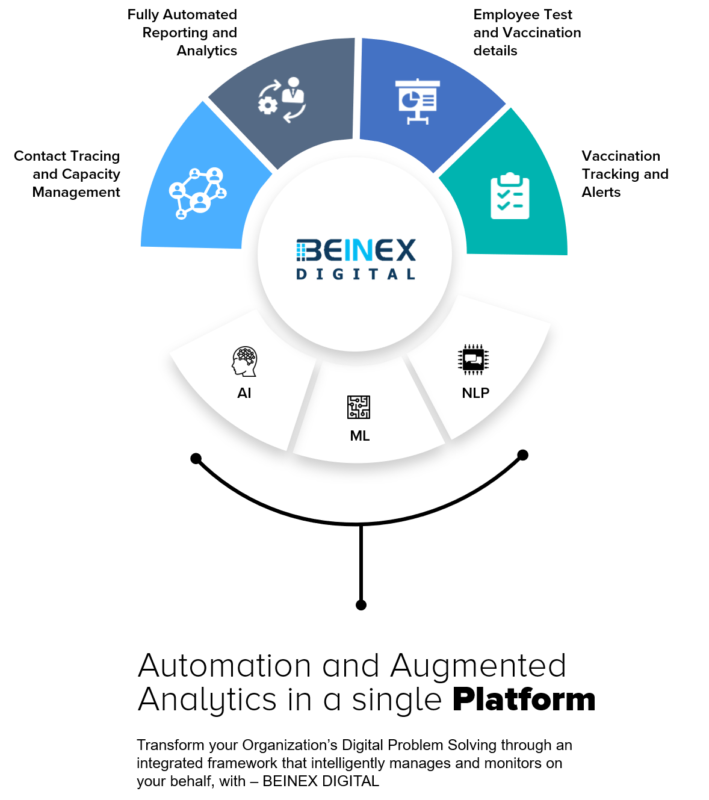
 Learn How to Ensure 100 Covid Safety in Your Organisation Using AI Powered Digital Solutions
.jpg) 28 Aug 2021
28 Aug 2021 KNOW HOW TO SOAR UP YOUR ORGANIZATION’S PERFORMANCE WITH EPMS(ENTERPRISE PERFORMANCE MANAGEMENT SYSTEM) TOOL
To stand at par with the competitors, organizations should strive hard to maintain the enterprise performance no matter what. The traditional methods of enterprise performance management give only a partial glance of an entire organization’s performance, through tedious and time-consuming processes. However, organizations started realizing the value of data that enables flexible and transparent performance tracking to drive better decisions. But It requires smarter ways to capture data from unstructured sources in less time and with minimum resources.
Read this whitepaper to learn how Enterprise Performance Management System yields an unparalleled performance ratio by addressing all the challenges and roadblocks an organization faces. In this paper, you’ll learn more about;
- Key Business Challenges Faced by Organizations that Contribute to Performance Gaps.
- The Right Solution for All the Identified Problems and Business Gaps.
- Key Strategic Benefits of the Enterprise Performance Management System.
.jpg) 27 Aug 2021
27 Aug 2021 GET READY FOR A BRIGHTER FUTURE WITH WORKFORCE ANALYTICS
Human Resource data collection and analysis accelerates the workforce performance of organizations. The data-backed insight on what is working well and what is not working for a company paves the way for the organizations to plan more effectively for the future.
In today’s competitive world, there is no room for assumptions, and the role of concrete data and analytics stands as the Magnum Opus of many technological innovations. Forethought is precarious if you don’t have the information to base your actions. This is applicable in all the realms of businesses and Human Resources does not stand apart.
Read this white paper to identify and analyze the different challenges the HR department face as a whole in line with their roles and responsibilities and how the application of analytics can help address those challenges.
Get a deeper insight into the below challenges and how Analytics can turn the tables;
- Increase in Overall Workforce
- Identification of Top Talents
- Creation of Quality Employee Experience
- Fostering a Culture of Continuous Learning & Creativity
- Developing the Leaders of Tomorrow
 17 Aug 2021
 HOW COVID-19 ACCELERATES DIGITAL TRANSFORMATION ACROSS GOVERNMENT SECTOR IN MIDDLE EAST
The COVID-19 pandemic has brought many irreversible changes to mankind and to the economy. It has changed the way that businesses operate and how the workforce coordinate. The companies that have adopted successful digital transformation can seamlessly navigate the crisis and can look ahead. As we are getting ready for the ‘new normal’, it is important for businesses to understand the priorities to move ahead by leveraging the power of technology and data.
Our Digital Transformation experts have considered the main factors that drive digital transformation in these unprecedented times and laid out some major takeaways that can help organizations prepare for the ‘new norm’
- Data Driven Organization
- Analytics Modernization
- IT Modernization
- Data Monetization
- Enhanced Customer Experience
Download this whitepaper and understand how your organization can navigate the pandemic by leveraging the power of data and the right technology.
Get to know more about our Services
AI reshapes industries by improving efficiency, enhancing customer experiences, and enabling data-driven decisions. We provide tailored AI solutions designed to help businesses optimize operations and drive sustainable growth.
Learn how Beinex AI services can transform your experience with tailored and innovative solutions that drive real success and empower your business every step of the way.