How AI Decision-Making is Improving Enterprise Outcomes
Blog
Share 
Thrive in Synergy: Leveraging the Confluence of Business Intelligence & Advanced Analytics
 4 April 2022
 Sumi S
In this data-driven world, enterprises are dependent on humongous quantities of data that are subsequently analysed to uncover trends previously hidden and to carry out business functions. New tools, techniques, and technologies like those of Business Intelligence, Advanced Analytics, Machine Learning are used to analyse data and devise insights-informed strategies.
Also, they help entrepreneurs by guiding them to plan day-to-day operations, ensure fast and accurate reporting, increase revenue, identify new revenue streams, identify revenue leakage…the list is virtually endless.
Advanced Analytics
Gartner explains Advanced Analytics as an autonomous or semi-autonomous examination of data or content using sophisticated techniques and tools to discover deeper insights, make predictions, or generate recommendations. It uses Machine Learning, Artificial Intelligence, Predictive Analytics, Data Visualisations, and Text Mining to examine large data sets.
In fact, Advanced Analytics is generally comprised of two divisions:
- Predictive Analytics
- Prescriptive Analytics
Predictive Analytics: What might happen in the future
Predictive Analysis is the third and most critical process of Advanced Analytics. It uses techniques like artificial intelligence, data mining, machine learning, modelling, and statistics to make predictions. Predictive modelling helps businesses like healthcare, marketing, sales, supply chain etc. to optimize operations, improve customer satisfaction, manage budgets, identify new markets, anticipate the impact of external events, develop new products and set business, marketing and pricing strategies.
Prescriptive Analytics: What should be done
Prescriptive analytics is a vital tool used in creating data-driven decisions. optimizing operations, growing sales, managing risks formulating strategies, and reaching organizational goals. It uses statistics and modelling to recommend future actions by applying data to the decision-making process.
Advanced Analytics and Business Intelligence Market Size
The Advanced Analytics market is showing continual progress as enterprises embrace these tools to effectively manage complex business processes. Reportlinker.com predicts that the global Advanced Analytics market size may grow from USD 33.8 billion in 2021 to USD 89.8 billion by 2026, at a Compound Annual Growth Rate (CAGR) of 21.6%.
A similar trend can be noticed in the case of the Business Intelligence market too. To quote Fortune Business Insights, “the Business Intelligence market is set to reach USD 43.03 Billion by 2028 in connection with rapid digitisation and robust demand for data personalisation to foster market development”.
Business Intelligence
Advanced Analytics is all about predicting future strategies, whereas Business Intelligence is focused on past performance, relying on methods such as querying, reporting, and dashboards. It uncovers trends and presents findings through visualization tools. The results show that companies adopt new approaches to increase operational efficiency and improve sales and customer relations through real-time analysis.
Functions of Business Intelligence are listed below:
Data Mining
Data mining is the process of unearthing information and patterns from massive datasets to visualizing in dashboards to generate inferences to assist the decision-making process. By adopting various techniques and procedures, knowledge is extracted to solve business problems to promote sales and marketing.
Process Mining
Powered by Data Mining and Power Analytics, Process Mining extracts insights from the existing data and helps to find the bottlenecks that hinder efficiency and compliance. It ensures a better customer experience, loT process improvement, identifies and analyses supply chain management weak links, optimises procurement and speed-up payment collection.
Complex Event Processing
CEP employs a set of techniques to analyse Big Data for real-time benefits. Opportunities and threats in business operations are identified and monitored to pave the way to success. Companies adopt CEP for fraud prevention and detection, real-time marketing, stock market trading and allied areas.
Business Performance Management
Widely known as Corporate Performance Management (CPM), BPM implies all processes or methodologies that optimise business performance. It also initiates the achievement of business goals like budgeting, planning, and forecasting and helps to improve employee performance. It identifies risks, selection of goals for progressive development, and streamlines financial processes.
Benchmarking
Benchmarking process is evaluating the management practices of one company with its best counterpart. Comparing the organisational processes in relation to the best performances allows companies to evolve by developing plans to improve their tactics.
Top 5 Advanced Analytics Tools
Alteryx: A self-service platform that can help users extract, clean and analyse data through an automated process.
Anaconda: It is an open-source Python and R-focussed platform to analyse and visualise data.
Google Cloud Platform: Known to be one of the enormous machine learning stacks, Google Cloud AI offers many products to analyse and manage data in real-time.
Knime: An open-source software that visualises data flows and helps discover new insights with minimal or no programming.
MS Azure: It is a platform (PaaS) that combines data from various sources, then stores and finally transforms it for different purposes.
Top 5 Business Intelligence Tools
Tableau: Tableau supports multiple data sources to easily analyse and visualise data in handy dashboards.
Power BI: This business analytics tool which can be accessed from anywhere helps in identifying real-time trends and delivering reports via real-time dashboards.
Qlik sense: It is a popular and complete Business Intelligence tool with its unique search and conversational analytics platform that discover new observations using natural language.
Micro strategy: It offers high speed and powerful dashboarding, cloud solutions and hyper-intelligence that can be accessed from a laptop or mobile.
IBM Cognos Analytics: Designed to discover even hidden patterns, Cognos Analytics interprets and presents data in a visualised pattern.
Conclusion
Business Intelligence and Advanced Analytics go hand in hand, from assisting business operations to improving customer satisfaction. Yet they are distinct from each other in their own ways. The amalgamation of these two technologies – Advanced Analytics and BI – improves the efficiency of business operations, delivering predictions based on historical and present data and enhancing performance in sales, maintenance, and customer satisfaction.
Advanced Analytics and Business Intelligence transform businesses by identifying the weak spots in enterprises that need redressal, detecting employee churn, and helping upgrade investment decisions. Business Intelligence answers the questions ‘what happened’ (historically), whereas Advanced Analytics answers ‘what is expected to happen in the future (operationally). These processes throw light into plans that should be adopted for the business’s progress. And at the core of these operations is situated, data.
Related Articles
LOD (Level of Detail) Expressions in Tableau
Types of LOD Expressions in Tableau
- FIXED
- INCLUDE
- EXCLUDE
There are three types of LOD expressions in Tableau:
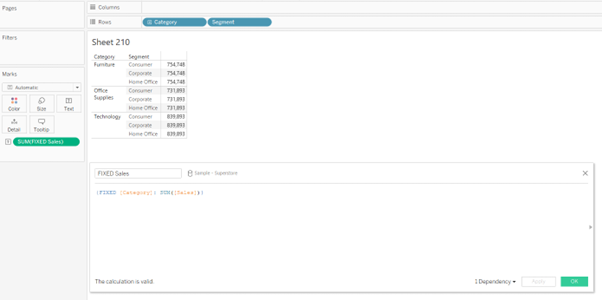
FIXED: The FIXED LOD expression calculates values based on specific dimensions, regardless of the dimensions present in the visualisation. It creates a virtual level of detail for the calculation. For example, {FIXED [Category]: SUM([Sales])} would calculate the total sales for each category, irrespective of other dimensions used in the visualisation.
INCLUDE: The INCLUDE LOD expression calculates values at the specified level while incorporating the dimension(s) used in the visualisation. It allows you to aggregate data for a specific dimension while considering other dimensions in the visualisation. For example, {INCLUDE [Region]: AVG([Profit])} would calculate the average profit for each region, considering all other dimensions in the visualisation.

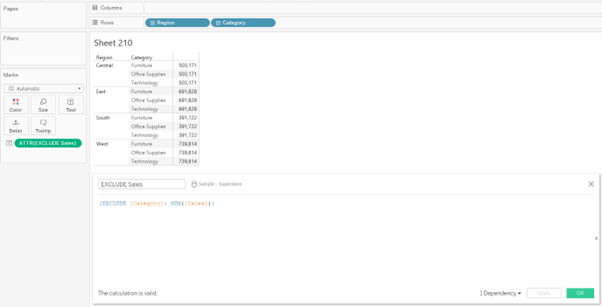
EXCLUDE: The EXCLUDE LOD expression calculates values at the specified level while excluding the dimension(s) used in the visualisation. It enables you to aggregate data for a specific dimension while ignoring other dimensions in the visualisation. For example, {EXCLUDE [Product]: SUM([Revenue])} would calculate the total revenue for each product, excluding any other dimensions present.
FIXED LOD Tableau Function
In Tableau, the FIXED Level of Detail (LOD) is the widely used function that allows you to perform calculations using specific dimensions, irrespective of the dimensions present in the visualisation. It creates a virtual level of detail for the calculation, providing precise control over your analysis's granularity.
Steps to Create a FIXED Level of Detail Tableau Function
In Tableau, the FIXED Level of Detail (LOD) function allows you to perform calculations using specific dimensions, irrespective of the dimensions present in the visualisation. It creates a virtual level of detail for the calculation, providing precise control over your analysis's granularity.
The steps to create the FIXED LOD function are as follows:
- • Create a calculated field. (This can be done by clicking on the drop-down next to the “Search” bar in the dimension pane or by selecting “Analysis” and selecting “Create Calculated Field”)
- • Type in the FIXED LOD Formula in the calculated field and drop the field into the view.
- • We can obtain the syntax of the FIXED expressions when we search for “Aggregate” functions in the calculated field.

Example
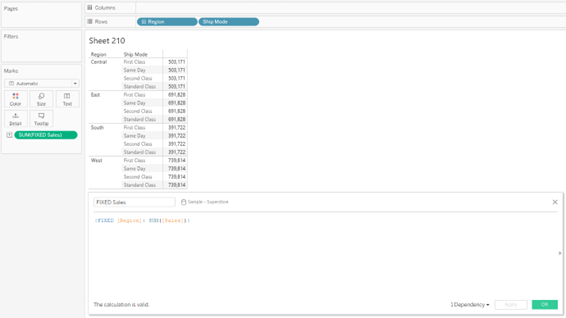
The following FIXED level of detail expression computes the sum of sales per region:
Beinex+ Tableau Offerings
Beinex has 100 years of combined experience in Tableau and is led by professionals who have successfully delivered Tableau projects in the region for large private and public sector organisations. Our team of Tableau-certified consultants are real-life Tableau business users passionate about Tableau and providing a world-class experience. In addition to providing sustainable analytics solutions, Beinex will help organisations to build superior data visual analytics capabilities internally through our bespoke training programs.

Alteryx Data Governance Best Practices
How User Roles and Permissions Facilitate Implementing Data Governance
The Alteryx Server helps enterprises implement effective data governance by ensuring every user operation is based on pre-defined user roles and permissions. It optimizes processes and access control and ensures data integrity. User Roles Defining user roles helps businesses ensure a safe and efficient analytics setting that aligns with best data governance practices. Each role assigned to users ensures they have the right level of access to perform their tasks. • Curator /Server Admin: Accessing the admin interface to run administrative tasks- crucial in enforcing governance policies. • Artisan: Publishing, running, and sharing workflows in their private studio and shared collections- ensures control over their workspace. • Member: Running workflows that are shared with them via collections – supports collaboration without giving excess control while adhering to data regulations. • Viewer: Running public workflows on the Server UI home page and in districts – ensures workflow integrity by limiting them to consumption roles. • No Access: No access to all Server assets- ensures data security for confidential data. User Permissions Besides user roles, you can set user permissions to decide what users can do in the Server UI. User permissions are paramount to upholding robust data governance and ensuring that users can only perform tasks within their scope of responsibility. • Scheduling workflows to run at a planned time – ensures timely task completion without manual intervention. • Prioritizing jobs to run those with the highest priority first- facilitates effective resource allocation and alignment with requirements. • Tag a specific worker to run a workflow- ensures resources are allocated right. • Create new collections within a defined structure- supports collaboration without risking data privacy. • Granting server API access to users- enables task automation without compromising governance • Allowing users to create or edit DCM assets- controls access to shared credentials and connections. • Sharing DCM Connection Credentials to run on the server- ensures data security, which is crucial for governance. • Sharing DCM Connection Credentials for collaboration- strengthens data governance by securely handling confidential and sensitive data. • Managing generic vaults- enables secure handling of credentials and sensitive data. • Blocking the user from accessing the Server UI- ensures that only authorized individuals can interact with sensitive data.
How to ensure Effective Data Governance?
For organizations to cater to their specific requirements, implementing and maintaining an effective data governance process is required, which is briefed below: • Identifying the data assets of your organization. • Classifying your data based on significance and prioritizing data governance actions • Ensuring accuracy, completeness, and consistency of your data for efficient data quality management. • Safeguarding data from unauthorized access • Controlling data access, including giving and withdrawing access to data • Managing your organizational data throughout its lifecycle
Data Governance in Alteryx: Best Practices
The blog gives you a walkthrough of the best practices about how Alteryx handles data governance by ensuring data management and quality.
1. Authenticating and Authorizing Data:
The initial aspect to address in data governance strategies is how data is accessed. Alteryx supports the existing safety measures implemented at the database level; it utilizes your username and password when connecting to your data. These credentials authenticate users and ensure they can only access the data permitted. Alteryx also supports pass-through authentication, facilitating access to data using network identity and authenticating users with the same credentials they use for access. It eliminates the need to manage separate usernames or passwords within Alteryx. In short, Alteryx easily integrates with your organization's existing security infrastructure, leveraging authentication mechanisms to ensure secure data access.
2. Managing Data Effectively:
A standout factor in Alteryx's data management is that it does not require the creation of a distinct persistence layer for data storage during processing. The Alteryx server is designed to support multi-tenancy, using in-memory processing and handling temporary data in a sandboxed setting. This means that a single instance of an Alteryx Server can manage multiple workflows simultaneously. Different departments can use the same platform without the risk of unauthorized data access between them.
3. Tracking Data Lineage
The drag-and-drop interface of Alteryx offers robust visualizations of the transformations occurring within the workflow. Organizations get a detailed knowledge of the data sources, how they are collected, prepared, blended, and analyzed, the workflows being run, and the count of records read and written.
4. Defining Data Ownership and Stewardship
Establishing clear data ownership and stewardship and assigning responsibilities for data sets and workflows is important, especially in an environment like Alteryx where multiple users engage with data. Data ownership is about taking responsibility for the accuracy, privacy, and availability of a data set. Data Stewardship ensures data integrity and quality by implementing policies and ensuring proper documentation. Defining these roles clearly within the organization fosters accountability and reduces data misuse risk.
5. Leveraging Metadata and Data Cataloging
Metadata is integral to comprehending your data's context and lineage. The Alteryx Connect tool helps handle metadata and build a centralized data catalog. Data catalogs allow users to discover available data easily, track where the data comes from, and enhance collaboration by sharing and reusing datasets and workflows.
6. Ensuring Data Security and Access Controls
When using Alteryx, enforcing appropriate security measures ensures that only authorized users can access sensitive data. To minimize the risk of a data breach, Alteryx helps organizations by providing robust user access control options, supporting encryption of sensitive data, and establishing validating processes for workflows.
7. Monitoring Data Quality
Data quality is paramount to effective data governance. Alteryx streamlines and automates data quality monitoring by:
• Providing data profiling and validation tools to check for duplicates, inconsistencies, and missing values.
• Utilizing Alteryx Server to schedule periodic audits, maintaining data integrity over time.
• Setting up alerts or automated reports to notify data owners or stewards of any data quality issues that arise.
Data governance is beyond data management. It extends to the policies and processes that decide how an organization should use data while aligning with its goals. With effective data governance, businesses can boost data accuracy and security, enhance efficiency, and boost business value by complying with regulations, tracking data quality, and eliminating discrepancies. With Alteryx's built-in capabilities and powerful tools, organizations can manage the multidimensional challenges of data governance.
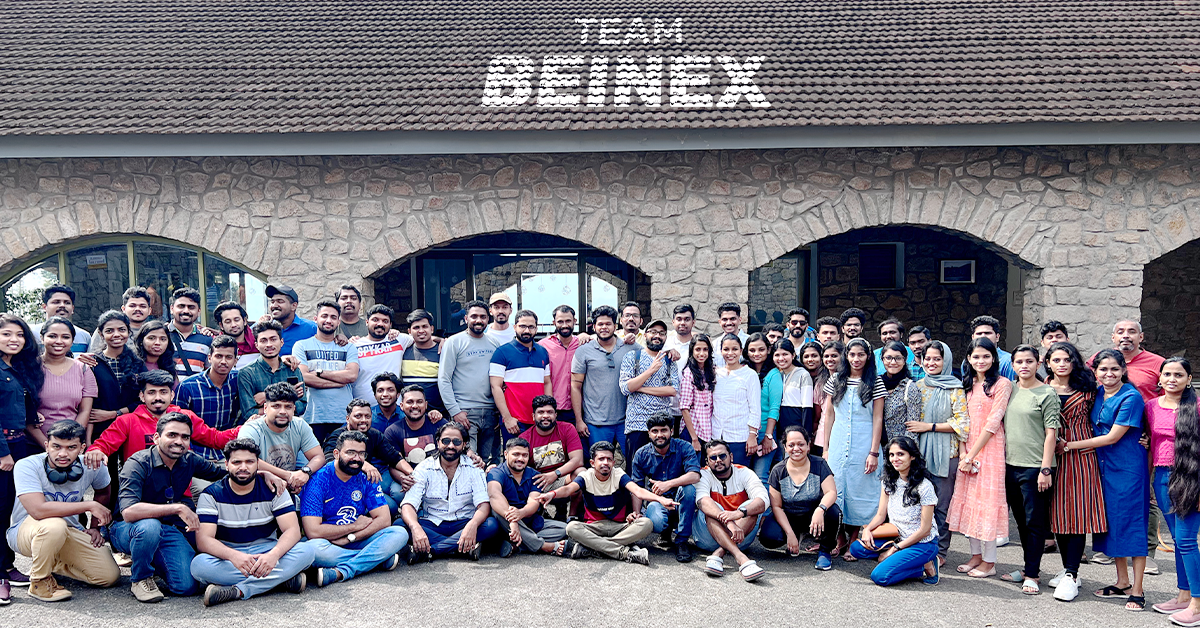
Just Go Wild: Beinex Offsite Visit to Munnar
We all boarded after breakfast from Edapally into the buses waiting as planned. Our journey to Munnar resembled the long-lost college trips, filled with songs, dances and ‘Antaksharis’. Finally, we reached our destination passing vast expanses of tea estates and dewy mountains.
Munnar is an exotic place with a breath-taking landscape and scenic spots. The chilly hill station stole our minds with its exotic flora and fauna. Our team stayed in a luxury resort: Mountain Club. The cottages chosen for us resembled the colonial architecture from the bygone era. The bedrooms were cosy, with a balcony open to the rustic surroundings.
The lunch was a luxurious affair that included starters to desserts. We used the mealtime to get to know more about each other. Then, we all attended the motivation speech by Sibu Varghese which was quite insightful, followed by an interactive session. Then, we interacted with and introduced each other. Personal interaction creates tight bonds and has an integral role in team building. We all broke the ice by sharing our stories and telling jokes. It was fun to get to know each other.
 In the evening, we had a wild-theme based gala party, and all got dressed up in sync with the theme, ‘Just Go Wild’. It was fun to watch everyone from the Manager to the employees dressed up in the same theme. We had an exhilarating DJ party manned by Darryl Gaulbert which made us all shake a leg to the tune. We danced and roared to the music. It was indeed wild!
The following day after breakfast, we met our founder Indumon Das, who had a chat with us regarding the journey of Beinex and his vision. It inspired us all to have a dream and pursue it fearlessly. Some of us accessed the infinity pool late afternoon and had great fun swimming and playing pool ball.
It was a blissful evening based on an ethnic wear theme. We competed for the best ethnic outfit of the evening. The different hues and styles made the evening stunning. Everyone flaunted the traditional wear in style. We had a musical evening with a live barbeque and a sumptuous dinner.
Finally, the day of leaving Munnar dawned; March 19. We all had breakfast in the morning and packed our backpacks. Most of us were pretty reluctant to leave Munnar as we were not ready to lose the bond we created together. Nonetheless, we vowed to stay connected. We boarded the buses around 10 AM and waved goodbye to Munnar.
When we reached Edapally in the evening, a surprise goody bag was waiting. It was an impressive and admirable gesture from our firm. Beinex has a culture of nurturing growth and spreading positivity, and employees’ comfort is the priority here.
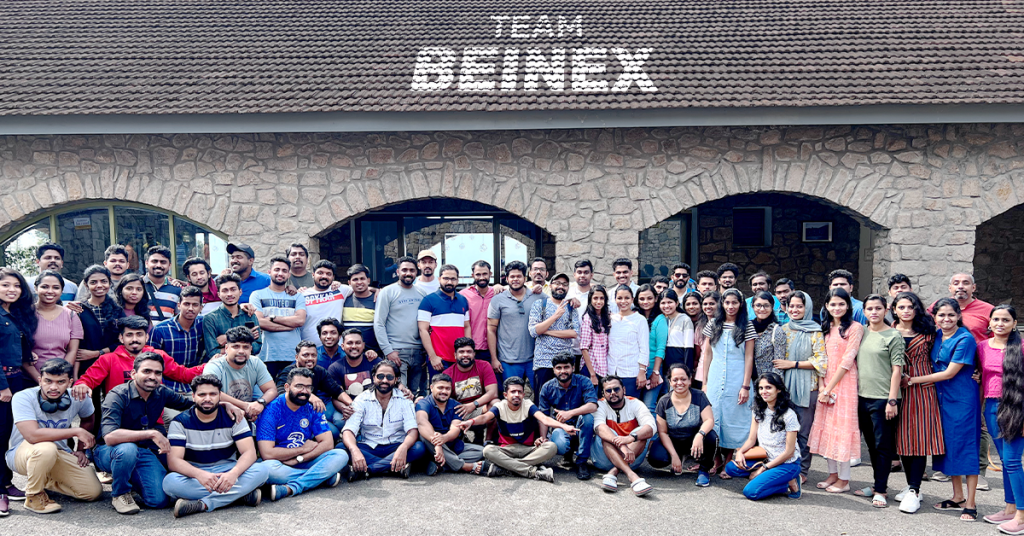 Yes, we had a fantastic time together. After this retreat, our rejuvenated and motivated minds are ready to bounce back to work with enhanced spirit. We are looking forward to more team building sessions in the future to meet each other more often.
In the evening, we had a wild-theme based gala party, and all got dressed up in sync with the theme, ‘Just Go Wild’. It was fun to watch everyone from the Manager to the employees dressed up in the same theme. We had an exhilarating DJ party manned by Darryl Gaulbert which made us all shake a leg to the tune. We danced and roared to the music. It was indeed wild!
The following day after breakfast, we met our founder Indumon Das, who had a chat with us regarding the journey of Beinex and his vision. It inspired us all to have a dream and pursue it fearlessly. Some of us accessed the infinity pool late afternoon and had great fun swimming and playing pool ball.
It was a blissful evening based on an ethnic wear theme. We competed for the best ethnic outfit of the evening. The different hues and styles made the evening stunning. Everyone flaunted the traditional wear in style. We had a musical evening with a live barbeque and a sumptuous dinner.
Finally, the day of leaving Munnar dawned; March 19. We all had breakfast in the morning and packed our backpacks. Most of us were pretty reluctant to leave Munnar as we were not ready to lose the bond we created together. Nonetheless, we vowed to stay connected. We boarded the buses around 10 AM and waved goodbye to Munnar.
When we reached Edapally in the evening, a surprise goody bag was waiting. It was an impressive and admirable gesture from our firm. Beinex has a culture of nurturing growth and spreading positivity, and employees’ comfort is the priority here.
Yes, we had a fantastic time together. After this retreat, our rejuvenated and motivated minds are ready to bounce back to work with enhanced spirit. We are looking forward to more team building sessions in the future to meet each other more often.
What’s New in Tableau's 2024.1 Release: Tableau Pulse, Metrics Layer, Viz Navigation, and More
Tableau's 2024.1 Release: What’s in it for you
Do your employees struggle to understand complex data visualizations? Does your organization lack a consistent approach to defining metrics? Are you looking for ways to make data more accessible for everyone? If you answered yes to any of these questions, then the new features in Tableau 2024.1 are for you! This release addresses these common challenges head-on, offering solutions like Viz Navigation for Text Tables, the Metrics Layer in Tableau Pulse, and more. Keep reading to learn more about these innovations and how they can revolutionize your data analysis workflows:
1. Tableau Pulse: Personalized Insights Delivered
Tableau Pulse is a real lifesaver, transforming how your organization interacts with data. Here's how it empowers your workforce:
To learn more about Tableau Pulse, click here: https://beinex.com/topics/tableau-ai-and-tableau-pulse-tableaus-dynamic-duo/
2. The Metrics Layer: Building a Unified Language for Data
Achieving consistency and clarity in data analysis is key to making informed decisions. The Metrics Layer within Tableau Pulse tackles this challenge by providing a central hub for defining and managing metrics.
Here's how it works:
By creating a unified language for data, the Metrics Layer empowers collaboration and drives data-driven decision making throughout your organization.
3. Tableau Pulse on Mobile: Stay on Top of Your Data Anywhere
Monitor key metrics and gain actionable insights, even when you're on the go. Tableau Pulse seamlessly integrates with Tableau Mobile, allowing you to access your personalized AI-powered insights directly from your smartphone or tablet.
Get a quick snapshot of your metrics:
Dive deeper for a comprehensive analysis:
This one-click access empowers everyone in your organization to make data-driven decisions, regardless of location. Tableau Pulse is available on both iOS and Android versions of Tableau Mobile.
4. Tableau Available Through AWS Marketplace: Streamlined Procurement and Deployment
For organizations leveraging the power of AWS cloud infrastructure, Tableau Cloud is now available on the AWS Marketplace. This integration offers several benefits:
5. Viz Navigation for Text Tables: Enhanced Accessibility
Tableau 2024.1 introduces a groundbreaking feature for exploring data visualizations: Viz Navigation for Text Tables. This innovative capability empowers users to navigate and interact with text tables using their keyboard or assistive technologies, removing the need for a mouse.
Benefits for all users:
This new feature signifies Tableau's commitment to making data accessible to everyone, regardless of their ability or preferred method of interaction.
6. Tableau Prep: Identify Duplicate Rows
Tableau Prep enables you to take control of your data quality. By removing or correcting duplicates, you can build trust in your data and generate reliable insights that drive better business decisions.
Effortlessly Spot Duplicates:- Remove identified duplicates to ensure a clean and accurate dataset.
- Fix the underlying issues causing the duplication, preserving valuable data points.
A New Era of Data-Driven Decision Making
With Tableau 2024.1 and Tableau Pulse, you have everything you need to democratize data across your organization. Empower your employees to leverage insights and make data-driven decisions that drive real business impact.
How Beinex Can Assist You
Beinex, a premier Tableau partner, provides sustainable analytics solutions to organizations and help to build superior data visual analytics capabilities internally through our bespoke training programs. Our team of Tableau-certified consultants are real-life Tableau business users who are passionate about Tableau and delivering a world-class experience. Connect with us for a Tableau free trial.
Top 4 Ways on How Marketing Leaders Use Alteryx AI & Analytics Automation for Business Success
Four Ways Alteryx Automation and AI Can Transform Your Marketing Strategy:
While there are numerous objectives marketing teams can achieve with data analytics, this blog highlights four ways Alteryx automation and AI can transform your marketing strategy:
1. Centralize Your Data
As the marketing landscape prepares for a cookie-less future, having a unified view of your data is essential. Staying ahead of customer needs, competition, and campaigns requires gathering all your data in one place.
With analytics automation, you can easily integrate data from various sources—whether cloud or on-premises, first-party data, or marketing applications like web analytics and CRMs—to gain a comprehensive view of your customers. This enables marketing teams to react to market shifts in real time.
Use case:
For example, a multinational retailer leveraged analytics automation to bring together data from all customer interactions, resulting in a 37x improvement in processing efficiency. This allowed them to better understand customer behavior across multiple channels.Unlike traditional spreadsheets, which have limitations on data capacity, analytics automation platforms offer limitless capabilities, allowing you to manage vast amounts of customer and product data in one place.
How Alteryx Helps:
• Drag-and-Drop Data Integration: Simplify complex data workflows with easy-to-use, drag-and-drop tools that eliminate manual coding and reduce time to insight.
• Automated Data Cleaning: Utilize pre-built data preparation tools to clean, standardize, and transform data in just a few clicks, ensuring high-quality data for analysis.
• Cluster Analysis: Automatically group similar data points (e.g., customer segments) using clustering tools, enabling precise targeting and personalization without manual intervention.
2. Enhance Your Marketing Campaigns
Marketing success depends on speed and agility, especially when it comes to predicting market trends and competitor behavior. Optimizing targeting, pricing, or strategy without the right insights becomes a challenge. Analytics automation helps you find the right combination of offers and tactics to increase conversions and boost revenue.
Use Case:
A retail chain with 500+ stores struggled to predict customer buying patterns and optimize promotions. By implementing analytics automation, they processed customer data in real time, enabling hyper-personalized marketing campaigns that boosted conversion rates by 35%.
They also used machine learning to predict demand and optimize inventory, preventing stockouts during key promotions. Additionally, they automated pricing analysis, reducing adjustment times from weeks to hours. By integrating spatial analytics, they could identify high-performing stores and strategically allocate resources, further enhancing their marketing and sales efforts. They also automated pricing analysis based on regional market dynamics, reducing adjustment times from weeks to hours and ensuring competitive pricing across all locations.
How Alteryx Helps:
• Predictive Modeling: Leverage machine learning models to forecast demand, optimize pricing strategies, and predict customer churn, allowing for proactive campaign adjustments. • Market Basket Analysis: Identify products that are frequently purchased together to optimize cross-selling and upselling opportunities, increasing revenue per customer. • Real-Time Analytics: Process large volumes of data in real-time to quickly adjust marketing strategies and promotional offers based on current performance metrics. • Spatial Analytics: By analyzing geographic data, marketing teams can optimize store placements, allocate resources more effectively, and improve overall sales performance.
3. Maximize Your Talent and Resources
Many marketing teams struggle to turn data into valuable business insights. According to Gartner, only 53% of marketing decisions are informed by data analytics. Limited staff and time often prevent teams from fully utilizing their data potential.
Analytics automation bridges this gap by enabling teams to achieve more with fewer resources. It automates the time-consuming tasks of data cleaning and preparation, allowing marketing teams to save significant hours and focus on more strategic projects.
Use Case:
For example, a leading digital advertising agency transitioned from using spreadsheets for social media analysis to implementing analytics automation. This resulted in a 99.5% faster analysis, saving 180 weekly analyst hours. By automating routine tasks, your team can dedicate more time to high-impact initiatives, ultimately enhancing overall business value.How Alteryx Helps:
• Self-Service Analytics: Empower non-technical users to perform complex data analyses without relying on IT or data science teams, accelerating time to insight. • Workflow Automation: Automate repetitive tasks like data cleansing, transformation, and reporting, significantly reducing manual effort and minimizing the risk of errors. • Scalable Solutions: Handle vast amounts of data effortlessly, allowing your team to focus on high-impact projects without being bogged down by data management issues.4. Achieve Immediate Results While Preparing for the Future
Marketing leaders often juggle the challenge of balancing short-term returns with long-term strategic goals. Analytics automation solutions can provide quick wins while also laying a foundation for future success.
By choosing a solution that is user-friendly and easy to implement, you can skip lengthy training sessions and start seeing results quickly. Moreover, the best analytics tools are designed with the future in mind, offering integration with cloud services and AI-driven insights.
Use Case:
For example, a premier company specializing in technology services, utilized analytics automation to analyze 250 broadcast campaigns, resulting in an 88% time savings and a 25% increase in time spent on advanced analytics. The right automation tools not only generate fast results but also ensure you're ready for future growth.How Alteryx Helps:
• Quick Implementation: Start generating insights rapidly with intuitive tools that require minimal training. Alteryx’s user-friendly interface means your team can hit the ground running without lengthy onboarding sessions. • Future-Ready Integration: Alteryx seamlessly integrates with cloud services, AI platforms, and advanced analytics tools, ensuring your marketing strategy evolves alongside technological advancements. • Comprehensive Analytics Suite: From spatial analysis to text mining, Alteryx provides a wide range of analytical tools that help you address complex business questions and prepare for emerging trends.
How Marketing Teams Can Benefit from Alteryx
With Alteryx, marketing teams can benefit from:
• Self-Service Analytics: A user-friendly, drag-and-drop interface, you can easily access and analyze data without technical expertise.
• Pre-Built Analytical Tools: Utilize pre-configured tools for market basket analysis, spatial analytics, and more without needing custom development.
• Seamless Integration: Integrate Alteryx with your existing marketing tech stack for a cohesive, end-to-end analytics solution.
Alteryx+ Beinex Offerings
Our Premier partnership with Alteryx empowers business users to automate manual data cleansing and transformation tasks in minutes through a simple visual workflow while incorporating the latest technological advancements.
Connect with us for a free demo: https://beinex.com/alteryx-partner/