How AI Decision-Making is Improving Enterprise Outcomes
Blog
Share 
The Top 11 Cloud Computing Trends to Look Out for in 2023
 3 February 2023
  Sumi S
 What could be the Cloud computing trends to look forward to in 2023? Let’s have a look
- Utilising Edge Computing
- AI and ML Services
- Disaster Recovery
- Multi and Hybrid Cloud Solution
- Cloud Security and Resilience
- Cloud Gaming
- Kubernetes and Docker
- Serverless Computing
- Blockchain
- Metaverse
- IoT
Let’s deep-dive:
1. Utilising Edge Computing
In the world of cloud computing, edge computing is one of the most popular trends. Here, data is evaluated geographically nearer to its source and stored and processed at the network's edge. As modern internet technologies emerged, the internet speed has helped in reducing latency, technologies such as 5G is used more frequently, and processing can be done swiftly. Greater privacy, quicker data transmission, security, and improved efficiency are just a few of the primary advantages of edge computing. Edge computing is expected to be at the core of every cloud strategy in 2023, making it the most important development in this area.
2. AI and ML Services
Two technologies that are closely related to cloud computing are artificial intelligence and machine learning. Due to the volume of data processed for the machine to learn patterns, this area demands faster processing and abundant storage requirements for training algorithms and data collection respectively. Due to the availability of virtually infinite computational capability, on-cloud AI and ML services are more cost-effective on the cloud. Cloud computing is used for handling enormous amounts of data to raise productivity at tech firms. Increased self-learning and automation capabilities, improved data security, and more individualised cloud experiences are the main trends that are most likely to arise in this fiel
3. Disaster Recovery
The ability to have a DR site in a geographically remote area helps to quickly restore vital services in the event of a natural or man-made disaster. It describes the process of employing cloud-based resources to recover from a disaster in the event such as power outages, data loss, or device failure/problems.
4. Multi and Hybrid Cloud Solution
Many businesses have embraced a multi-cloud and hybrid IT approach that mixes legacy platforms, on-premises, dedicated private clouds, and several public clouds. They provide a mix of public and private clouds tailored to the requirements of particular firms where several business drivers matter for instance like those of insurance, banks, etc. Multi-cloud and hybrid cloud solutions will thus be among the most popular cloud computing trends in 2023 and the years to come.
5. Cloud Security and Resilience
When companies shift to the cloud, there are still several security vulnerabilities. Investment in cyber security and building resilience against everything from data theft to the consequences of a pandemic to global trade will become more crucial and major variables in the coming years. The use of managed "security-as-a-service" providers, AI, and predictive technologies will increase in 2023 as a result of this trend to identify risks before they result in problems. Studies say that leading vendors of cloud computing invest over a billion dollars every year to protect their customers’ data.
6. Cloud Gaming
Cloud gaming platforms operate similarly to remote desktops and video-on-demand services; games are stored and executed remotely on a provider's dedicated hardware and streamed as video to a player's device via client software. It can be advantageous as it eliminates the need to purchase expensive computer hardware or install games directly onto a local game system. Cloud gaming can be made available on a wide range of computing devices, including mobile devices such as smartphones and tablets, digital media players, or proprietary thin client-like devices. Microsoft, Sony, Nvidia, and Amazon all offer video game services. But video game streaming requires more data and is only doable with fast internet. With the launch of 5G in 2023, the cloud gaming sector will grow significantly.
7. Kubernetes and Docker
The main trend is the growing use of container orchestration tools like Kubernetes and Docker. Large-scale deployments that are extremely scalable and effective are made possible by this technology. These are expandable, open-source platforms that manage services and workloads from a central location while running applications from a single source. Both platforms offer high scalability and efficiency. Over the following several years, Kubernetes and Docker will continue to play a significant role in cloud computing trends as they are developing quickly.
8. Serverless Computing
Because of the advent of the sharing economy, serverless computing entered the computing sector. Instead of being deployed on physical servers in this case, compute resources are offered as a service. This indicates that instead of needing to maintain its servers, the company only pays for the resources it uses. Additionally, serverless cloud solutions are growing in popularity because of how simple they are to use and how rapidly one can design, deploy, and expand a cloud solution. Overall, this technology is a trend that is just starting and is becoming more and more popular.
9. Blockchain
Blockchain, which users continue to follow more and more, is a connected list of blocks containing records. Blocks of data are stored using cryptography. It has outstanding decentralisation, security, and transparency. In conjunction with the cloud, it is currently utilised more frequently. It can securely and affordably process enormous volumes of data and regulate documents. For many industrial applications, the new technology is beginning to hold out a great deal of promise.
10. Metaverse
The days are not long for the Metaverse and cloud computing to become inextricably linked to each other. The metaverse will compel businesses to migrate to cloud infrastructures to host their virtual worlds. Massive amounts of workloads will be migrated, paving the path for even more innovations to model their virtual worlds. Considering the difficulties of building a metaverse without highly available and scalable premises and hosting grounds, the adoption of cloud computing will be inevitable. As more layers of complexity will be added to the metaverse as it matures, the need for a strong foundation to support the whole thing and to deliver a flawless user experience with no backend issues will arise. Consequently, cloud providers engaged in the metaverse will create metaverse-compatible solutions to assist businesses in quickly establishing their virtual space.
11. IoT
In the realm of cloud computing, IoT is a well-known trend. Connectivity between computers, servers, and networks is maintained by this technology. It performs the role of a middleman, guarantees effective communication, and helps gather data from distant devices. Due to the enormous data produced by IoT devices, it requires many terabytes of storage. Since the cloud, the storage of data has become cheaper. In recent years storing and processing machine-generated data has become relatively easier. In the coming years, businesses would be able to efficiently analyse data from IoT devices and make informed decisions.
Summing Up
Even though cloud computing has been present for more than a decade, its popularity has skyrocketed in recent years. Given this growth trajectory, cloud computing is on track to become the most discussed technology in 2023. Recent studies show that by 2028, the cloud computing market is anticipated to be worth more than $1 trillion. Being the game changer, its impact will grow along with the adoption in the coming years too.
Beinex Offerings
Beinex is all about transforming the way organizations work with data to bring out the best in Business, Technology and People. Our association with Snowflake, a leading cloud-first data warehouse service, is a partnership that we leverage to support the data analytics solutions that we offer our clients.
Cloud computing has emerged as an inevitable tool for the business realm as a practical method for storing and sharing data. It is prevalent in fields including corporate operations, system infrastructure, and application and infrastructure software. To provide accelerated innovation, adaptable resources, and scale economies, cloud computing makes computer system resources and services, including servers, storage, databases, networking, software, analytics, and intelligence, available on-demand and delivered over the internet. Every business that wants to cut costs, maintain business continuity, and increase future scalability has ardently adopted it.
Related Articles

Governing Agentic AI: How Organizations Can Balance Autonomy, Risk, and Accountability
Agentic AI is redirecting AI to autonomous systems that can plan, decide, and execute tasks independently. These AI agents can manage workflows, interact with software systems, and trigger actions without continuous human input. While this autonomy promises efficiency and scalability, it also introduces new governance challenges.
Research shows that 86% of enterprises expect higher risk levels with agentic AI, yet only 2% of organizations currently meet responsible AI standards. This gap highlights a critical reality: organizations must adopt a structured agentic AI governance framework to balance autonomy with accountability.

Generative AI and AWS: Enhance Customer Engagement and Business Growth with AWS AI Services
AWS AI services
AWS pre-trained artificial intelligence (AI) services easily integrate with your applications to address common use cases such as personalized recommendations, modernizing your contact center, improving safety and security, and increasing customer engagement. Because we use the same deep learning technology that powers Amazon.com and our machine learning services, you get quality and accuracy from continuously learning APIs. Explore purpose-built AWS AI services:
- Amazon Bedrock
- Amazon Q
- Amazon Transcribe
- Amazon Polly
- Amazon Textract
- Amazon Rekognition
- Amazon Lex
- Amazon Translate
- Amazon Personalize
- Amazon Augmented AI
- Amazon Comprehend
- Amazon Fraud Detector
- Amazon Kendra
Amazon Bedrock
Amazon Bedrock simplifies the development of generative AI applications by offering a fully managed environment with robust security and privacy features. It provides access to top-performing models from leading providers like AI21 Labs, Anthropic, Cohere, Meta, Stability AI, and Amazon, ensuring a wide range of AI capabilities. Businesses can customize these models using their proprietary data through fine-tuning and retrieval-augmented generation (RAG), enabling tailored solutions. Seamless integration with familiar AWS services through serverless deployment minimizes operational overhead. Additionally, Amazon Bedrock supports HIPAA compliance and adheres to GDPR regulations, ensuring data privacy and regulatory compliance.
Amazon Q
Amazon Q is a generative AI assistant that enhances work efficiency in organizations. It offers specialized features for software developers, business analysts, contact center staff, and supply chain analysts, helping them gain insights and complete tasks faster. With Amazon Q, companies can streamline processes, make quicker decisions, and improve productivity.
Amazon Transcribe
Amazon Transcribe is a fully managed automatic speech recognition (ASR) service that converts spoken language into written text. Utilizing a state-of-the-art, multi-billion-parameter speech model, it provides highly accurate transcriptions for both streaming and recorded speech. Thousands of customers rely on Amazon Transcribe to automate tasks, gain valuable insights, enhance accessibility, and improve the discoverability of their audio and video content.
Amazon Polly
Amazon Polly is a fully managed service that converts text into lifelike speech. It offers a variety of voices in multiple languages, allowing applications to cater to global linguistic, accessibility, and educational needs. With advanced neural networks and generative voice engines operating in the background, Amazon Polly synthesizes high-quality speech suitable for a wide range of use cases.
Amazon Textract
Amazon Textract is a machine learning service that automatically extracts text, handwriting, layout elements, and data from scanned documents. Unlike traditional OCR (optical character recognition) software, Amazon Textract employs machine learning to process various document types, including PDFs, images, and forms. Its capability to extract data in minutes rather than hours or days allows businesses to automate document workflows and enhance efficiency.
Amazon Rekognition
Amazon Rekognition enables businesses and developers to address computer vision requirements without needing machine learning expertise. Its scalable and cost-effective capabilities include facial analysis, object detection, and text recognition for various applications.
Amazon Lex
Using technology similar to Alexa, Amazon Lex allows developers to create conversational AI interfaces through natural language processing. It facilitates both voice and text interactions, making applications more intuitive and improving customer experiences.
Amazon Translate
Amazon Translate enables the localization of content for a diverse global audience, allowing for the translation and analysis of large volumes of text to facilitate cross-lingual communication among users.
Amazon Personalize
Amazon Personalize enhances customer experience through AI-driven personalization. With the Amazon Personalize recommendation engine, you can provide hyper-personalized user experiences in real-time at scale, thereby boosting user engagement, customer loyalty, and business outcomes.
Amazon Augmented AI
Amazon Augmented AI (Amazon A2I) enables you to conduct human reviews of machine learning (ML) systems to ensure accuracy. You can implement human reviews and audits of ML predictions tailored to your specific requirements, which may include multiple reviewers. Accelerate your time to market with prebuilt workflows, and continuously retrain your models to improve performance. Additionally, you can integrate human judgment and AI into any ML application, whether it operates on AWS or another platform.
Amazon Comprehend
Gain valuable insights from various types of text, including documents, customer support tickets, product reviews, emails, social media feeds, and more. Streamline your document processing workflows by extracting text, key phrases, topics, sentiment, and other relevant information from documents like insurance claims. Differentiate your business by training a model to classify documents and identify specific terms, all without requiring machine learning (ML) experience. Ensure the protection and control of your sensitive data by identifying and redacting Personally Identifiable Information (PII) from your documents.
Amazon Fraud Detector
Build, deploy, and manage fraud detection models without previous machine learning (ML) experience. Gain insights from your historical data, plus 20+ years of Amazon experience, to construct an accurate, customized fraud detection model. Start detecting fraud immediately, easily enhance models with customized business rules, and deploy results to generate critical predictions.
Amazon Kendra
The Amazon Kendra GenAI Index is a new feature in Kendra designed for retrieval-augmented generation (RAG) and intelligent search. It aims to help enterprises build digital assistants and create intelligent search experiences more efficiently and effectively. This index provides high retrieval accuracy by utilizing advanced semantic models and the latest information retrieval technologies. The Kendra GenAI Index can be integrated with Bedrock Knowledge Bases and other Bedrock tools to develop RAG-powered digital assistants. It can also be used with Q Business for a fully managed digital assistant solution. This index addresses common challenges faced when building retrievers for Generative AI assistants, such as data ingestion, model selection, and integration with various Generative AI tools. Key features of the Kendra GenAI Index include a managed retriever with high semantic accuracy, a hybrid index that combines vector and keyword search, pre-optimized parameters, connectors to a variety of enterprise data sources, and user permissions filtering based on metadata.
AWS Beinex Partnership
Generative AI’s potential is vast, from automating content creation to transforming entire industries. AWS’s secure infrastructure and AI services empower businesses to innovate confidently while safeguarding data integrity. Beinex is an AWS consulting partner, and we empower customers with AWS-managed services to host their BI solutions and much more on the cloud. Our cloud migration experts bring in best-in-class stability and reliability by understanding your business strategy and working closely with you to deploy AWS infrastructure as a service. Beinex has also achieved a Gold-level ranking for Cloud Consulting services in the Middle East by Consultancy-me for our excellence in client services and solutions in 2024.

Four Ways to Enhance Customer Experience in the Metaverse
These days we are into the 2-D screen of our mobile phones and watch videos and shows and engage in many more activities. But we are not carried away to that place or get immersed in it. Through the metaverse, that is possible. Here you can have an avatar which can act as a replica of your physical self. You can indulge in anything from hanging out with pals, participating in sports or workout sessions, learning new courses or activities, attending events, or shopping.
What are the possibilities Metaverse offers?
Using the limitless opportunities, you can virtually own digital clothing, buy land, construct buildings, start businesses, visit nightclubs and shopping centres, and even buy digital artworks. Non-fungible Tokens (NFTs) are used in the metaverse to digitally represent physical assets like art, music, in-game goods, and videos. They can be purchased and sold online. An evolving business strategy called "Direct-to-avatar" (D2A) makes it possible to sell and buy goods directly to avatars or other digital identities in virtual environments. Here, the possibilities are just boundless. Considering the future prospects, many brands like Adidas, Nike and Gucci, to name a few, have invested in the metaverse. As Gen Z and millennials are already spending a considerable amount of time in the virtual world, it is anticipated that by the end of 2022, the global VR sector will generate over $6.71 billion in revenue, and by 2024, it will be around $12.19 billion.
Metaverse generates value in customer experience by providing real-life interactions and can revolutionise user experience. Let’s see how it can be done:
1. Providing Unique Customised Experiences
Customisation plays a crucial part in today’s business world, as does in the metaverse. Businesses struggle to tailor the experience for each consumer, whether they prefer to purchase online or go to a physical store. Thankfully, the metaverse can guarantee that each customer's experience in an online store is distinctive. Customers can browse products geared toward their unique needs rather than browsing products that are of no interest to them. Additionally, the metaverse encourages connectedness, so consumers may share their experiences with other metaverse users and read reviews of goods and services before making a purchase.
Sports gear giant Adidas is one step ahead of the game by providing virtual gear for the virtual world and metaverse. Major apparel retailers like Macy's, Adidas, and Modcloth have already adopted virtual dressing rooms to enable customers to visualise a garment on their body without actually trying it on. The Swedish furniture retailer IKEA has already released an augmented reality catalogue app that lets you view how various pieces of furniture would look in your home. Nike owns Nikeland, a virtual world which is a free immersive sports space where you participate in sporting events from your computer or phone through your unique avatar.
2. Trials Using Virtual and Augmented Reality
Earlier trials were provided only for digital products, but with the help of the metaverse, we can experience every product virtually. For instance, we can choose a hotel to stay in after virtually experiencing the facilities provided by it. That’s cool, isn’t it? The metaverse uses augmented and virtual reality to give users a fully immersive experience. Customers who engage in immersive experiences may be able to do things that they otherwise might not have been able to do or uniquely do things. From buying lipstick after a virtual trial to buying a car after a virtual drive allows customers to explore and experience more realistically. Customers can currently utilise augmented reality through apps in a limited way, but the metaverse will allow them to experience the product from a close-up and personal perspective. For instance, Hyundai’s mobility adventure enables a vivid virtual experience.
BMW's augmented reality experiences enable automobile buyers to modify their desired vehicles in showrooms with the help of their tablets or smartphones. Alternatively, consumers can don virtual reality goggles to experience what it's like to drive cars, which will help them comprehend their options and select the best option available for their new car.
3. Accessible from Anywhere
The metaverse offers businesses plenty of advertising opportunities, but it also enables customers to interact with the people, places, and brands that interest them. Businesses can provide customers with experiences that let them explore their interests in greater detail without leaving the comfort of their homes and provide free samples of real-world events.
For people for whom it is not always feasible or economical to attend events in real life, the metaverse is the ideal replacement. Through 3D virtual worlds and avatars, users can enjoy affordable front-row access to various events with a level of immersion that must be experienced. Thanks to simple navigation, which places them in a metaverse tailored to their interests.
If you want to go shopping and there is no time for that, you can access it virtually from anywhere. To cite an example, for interior designing of your house, you can try different pieces or types of furniture from a virtual shop by arranging those in a digital representation of your house. Customers could quickly see whether the sofa would go with the colour scheme of their floor or wall or whether a wardrobe would fit in the available area. Ikea, the furniture brand, has already provided virtual experiences for customers. Buying land without the help of an agent is possible through Upland, a virtual real estate software that lets users browse and buy virtual property connected to actual towns and cities.
4. Strengthen Customer Experience
Companies now offer advice and assistance in addition to goods and services. Metaverse enables businesses to develop natural relationships with clients that weren't feasible with earlier forms of technology. Through virtual reality, customers experience ‘story-living’ rather than just ‘story-telling’. Shoppers can have a distinctive customer experience as they can purchase through experiencing it, have opinions about it, interact with other users and ask questions in the metaverse itself.
The businesses are testing out virtual and augmented retail on various platforms. Within the Roblox online multiplayer game, Gucci and Nike have unveiled fashion shows. In Fortnite, Balenciaga has begun offering high-end clothing. Additionally, the South Korean social avatar app Zepeto, Ralph Lauren, and Adidas have introduced interactive experiences. In the meantime, Charlotte Tilbury has established a virtual cosmetic store.
The journey doesn't end with how companies interact with customers in the metaverse. Businesses that use the metaverse's advantages ensure their clients have a customised experience that develops at the same rate as the metaverse. It's time for businesses to be prepared to adopt the impending metaverse and become early adopters before it is too late. Even though the metaverse is the next frontier of internet technology and consumer experience enhancement, massive adoption and accessibility are crucial. It's vital for business owners to begin learning about how these virtual worlds function, what opportunities and problems there are, and how to take advantage as soon as possible.

RecapAI: An AI-Powered Assistant for Priority Tracking and Follow-Through
What is RecapAI Agent
RecapAI is an AI-powered assistant that helps professionals quickly regain context after time away from work. It analyzes meetings, deadlines, communications, and updates to identify what has changed, what requires action, and what should be prioritized next. Instead of reviewing multiple tools and threads, users receive a clear, structured overview of critical follow-ups, key discussions, and upcoming priorities.
Connect With Us for a Free Demo!
How RecapAI Supports You
While you are away, RecapAI quietly keeps your workspace running. It monitors your inbox, tracks meeting updates, notes shifting deadlines, and identifies what needs your attention. It works like a calm, thoughtful assistant who knows exactly what matters and what can wait.
Our RecapAI agent welcomes you with a brief, clear summary – no scrolling, no searching, no overwhelm. You open your workspace, and everything makes sense instantly.
Your:
- • Shifted deadlines
- • Key meeting
- • Follow-ups you need to send
- • People to catch up
- • Upcoming priorities – all sorted for you.
It feels like someone has already organised your day and highlighted only what matters. RecapAI Agent isn't just a summarizer – It understands your priorities. You return after a break and instantly know what needs your attention.
Summing Up
RecapAI goes beyond simple summarization by aligning information with the user’s responsibilities and priorities. It supports focused decision-making and quicker re-engagement. The best part is that RecapAI makes sure users return to work informed, organized, and ready to act.
Connect with us if you want to know more about RecapAI: https://beinex.com/contact-us/
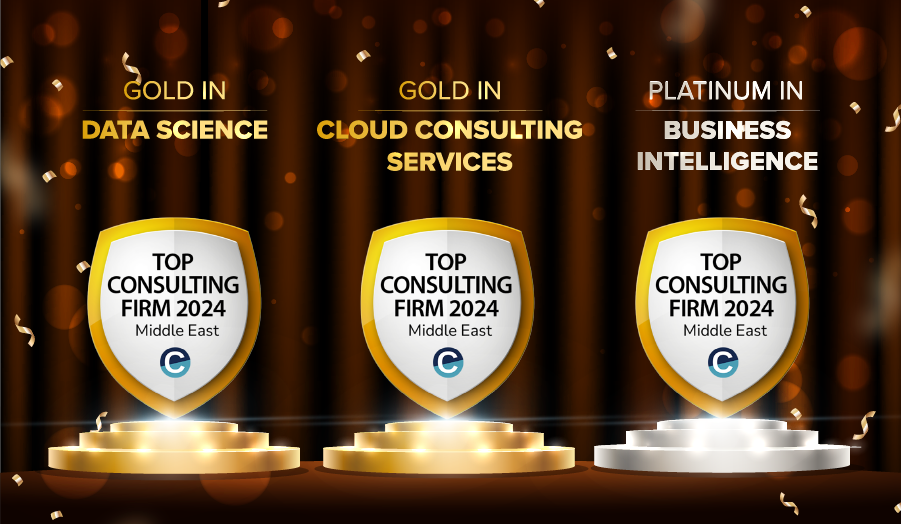
Beinex Recognized as a Leading Consulting Firm in the Middle East by Consultancy-me
Accolades We Are Proud Of
Beinex earned top rankings across multiple domains: • Platinum in Business Intelligence • Gold in Data Science • Gold in Cloud Services
Industry-Specific Excellence
Our industry-focused consulting capabilities have also been recognized, and our ranking level is as follows: • Government Industry: Gold • Oil & Gas Industry: Gold • Public Sector Industry: Gold • Technology Industry: Gold • Banking Industry: Silver
A Milestone of Achievement
These accolades reaffirm our position as a trusted consulting partner for businesses and government entities across the Middle East. Our success is driven by a team of passionate professionals, innovative technologies, and strategic partnerships. Looking Ahead As we celebrate this achievement, we remain committed to delivering transformative solutions that empower businesses worldwide. Thank you to our clients, partners, and team members for making this success possible. If you are interested in our services, feel free to connect: https://beinex.com/contact-us/