How AI Decision-Making is Improving Enterprise Outcomes
Blog
Share 
THE KEY FEATURES OF TABLEAU 2019.1
 8 February 2021
  Admin
Admin The Key Features of Tableau 2019.1
I’ve always been a huge Tableau fan and one of the biggest reasons why is that I can always count on Tableau for bringing out new exciting features in every release. With new quarter, Tableau has yet again released a new version after a thorough research based on people’s experience, thoughts and comments.
As a result, Tableau 2019.1 has plenty of new and insightful features amongst which is a feature called Ask Data which will make our life so much easier! There are so many other new features which everyone will appreciate, such as Prep Conductor, Automatic Dashboard Phone Layout, URL Action improvements, Nested Sorting improvements, connector for Microsoft Azure SQL data warehouse and many more!
Here are my top picks from the list.
Ask Data
Are you not a data analyst but still love to play with data? You have a question in mind but don’t know how to get to the answer from all the data? Just Ask Data! Ask or type the question in your natural language and Tableau will not only give you the answer but also visualize it in a stunning way! We thought this one deserves its own blog with detailed information and so we decided to share one with you, keep your eyes open as it is coming soon to our blog!
Prep Conductor
Keep your data fresh with Prep Conductor. Tableau Prep is helping organizations with preparing and sorting their data easily. This new addition allows you to automate this process on Tableau Server or Online. You can schedule and manage your data flows created on Prep. It can be seamlessly integrated to your existing schedules of Server or Online. You can manage the permissions to your flow regarding who should run, edit, download and so much more.
Nested Sorting
Thinking that sorting a hierarchical field would make your work easier? It is the most talked about and wanted feature and Tableau 2019.1 has got you covered! With this feature, you can visually define how you want to sort within multiple dimensions helping to capture the trends in categorical data bringing out wonderful insights.
Mobile View
Everybody is using smart phones. For everything. Everywhere. Period. Tableau knows it and continues to create more phone friendly features.
Now you can create customized mobile layouts for your dashboards even if it’s not listed in default options. This comes in handy when your phone is not listed in the model. Tableau 2019.1 brings to its users customized phone layout for specific uses including interactive offline previews and automatically adding phone layouts to new dash board. Now, others can view your visually stunning creative dashboards via their phone in a sophisticated way.
URL Improvements
Decide how you want the URL action to work with the new URL improvements in Tableau 2019.1. Target specific URL actions enable the user to control the view of any external information linking to your dataset. Develop intuitive, integrated and innovative dashboards by connecting to all the necessary information outside your data source.
Microsoft Azure SQL Data Warehouse Connector
Be it on cloud or on premises, Tableau keeps on adding more data connections to make it easy for users to leverage the native way of connecting. This came up with the connector to Microsoft Azure cloud service in the current release. This helps in avoiding ODBC in making connections to the data stored in Microsoft Azure Data warehouse.
I’m very excited about all these new features, what about you?
Are you interested in learning more about Tableau’s new features or the features that are yet to come in the next versions? Are you a Tableau user and would like to become a Tableau Champion? Or are you new to Tableau and it just seems like something you could use to work with your data?
Please contact us at training@beinex.com/ info@beinex.com and we would be happy to schedule a Tableau demo or training for you and your company.
-
Related Articles

Agentic AI: The Future of Autonomous Decision-Making
What is Agentic AI?
Unlike traditional AI models that rely on static predictions, Agentic AI operates dynamically, making independent decisions, adapting to new situations, and optimizing processes autonomously.
Key Capabilities of Agentic AI
Agentic AI is more versatile than GenAI, and it can:
• Sense & Interpret – Understand real-time data, identify anomalies, and detect trends.
• Act & Decide – Take actions based on goals, risk factors, and evolving scenarios.
• Learn & Adapt – Improve continuously through feedback loops and reinforcement learning.
Agentic AI vs. Generative AI: The Key Differences
While traditional AI analyzes data and identifies patterns, GenAI creates content and generates images and code through prompts or instructions. Agentic AI is autonomous and doesn’t rely entirely on prompts. It makes independent decisions, acts, and adapts to changing situations with minimal human input. The main differences between Agentic AI and GenAI are as follows:
| GenAI | Agentic AI |
|---|---|
| Creates new content like text, images, videos, audio, code, etc. | Makes autonomous decisions and performs tasks |
| Reactive response to user input, i.e., the output generated will be based on the prompt received. | Proactive approach: It acts independently with minimal or no human oversight. |
| Generates creative and original content | Does not create content but makes decisions. |
| Limited to generating responses based on trained data | Analyzes situations, reasons, and takes actions autonomously |
| Engages with users by generating text, images, or media based on input | Interacts with its environment, making real-time decisions |
| Use cases: SEO content, marketing copy, chatbot responses, code generation | Use cases: Self-driving cars, autonomous virtual assistants, workflow automation, financial risk analysis |
| Examples: ChatGPT, DALL·E, MidJourney, Copilot | Examples: Tesla Autopilot, virtual assistants (e.g., Google Assistant with enhanced autonomy), AI-driven workflow management systems |
Top Benefits of Agentic AI: Why Businesses Need It
In a world of complex risks, volatile markets, and increasing regulatory pressure, static AI models fall short. Organizations need AI that proactively thinks ahead, mitigates risks, and unlocks new efficiencies across industries.
The key benefits of Agentic AI are listed below:
• Execute autonomous, goal-directed actions and decision-making.
• Engage in proactive problem-solving instead of reactive responses.
• Carry out complex reasoning and long-term planning.
• Learn and adapt autonomously with minimal human oversight.
How Agentic AI Gives Businesses a Competitive Edge
The rise of AI-first companies means businesses that embrace Agentic AI will gain a competitive edge, leveraging:
• Self-learning AI agents that evolve with business needs.
• Automated decision systems that operate with minimal human intervention.
• AI-native enterprise ecosystems that seamlessly integrate with digital workflows.
Comprehensive List of Agentic AI Tools & Use Cases
Agentic AI refers to AI systems that act autonomously, making decisions and performing multi-step tasks with minimal human intervention. Below are some real-world tools and use cases of Agentic AI across various industries:
| Industry | Agentic AI Use Cases | Agentic AI Tools / Examples | Business Impact |
|---|---|---|---|
| Virtual Assistants | Autonomous AI task execution | AutoGPT, BabyAGI | Automates workflows, reduces manual effort |
| Self-Driving Vehicles | Autonomous navigation & decision-making | Tesla Autopilot, Waymo | Enhances safety, reduces human intervention |
| Robotics | AI-powered automation in warehouses | Boston Dynamics’ Spot, Amazon Robots | Reduces human risk, improves efficiency |
| Finance & Trading | AI-driven autonomous trading | Numerai AI Hedge Fund, Kavout Kai AI | Optimizes investments, minimizes risk |
| Healthcare | AI-powered diagnosis & treatment planning | IBM Watson Health, Qventus AI | Improves accuracy, streamlines patient care |
| Cybersecurity | Threat detection & autonomous response | Darktrace, CrowdStrike Falcon AI | Prevents cyberattacks, enhances security |
| Smart Cities | AI-driven traffic & energy optimization | Google DeepMind AI, AI Traffic Systems | Reduces congestion, lowers energy costs |
| Enterprise AI | AI-driven workflow automation | UiPath AI RPA, Adept ACT-1 | Increases productivity, minimizes errors |
| Retail & E-commerce | Autonomous inventory & order management | Amazon Warehouse AI, AI Chatbots | Optimizes supply chains, improves CX |
| Personal AI Assistants | AI-driven memory & task management | Rewind AI, Inflection AI Pi | Enhances productivity, personalized insights |
List of Key Applications of Agentic AI
The major applications of Agentic AI are diverse and can be employed across various domains such as:
• Banking & Financial Services – AI-driven fraud prevention, adaptive risk management, and autonomous trading.
• Healthcare & Life Sciences – Personalized AI-powered treatments, real-time diagnostics, and proactive patient monitoring.
• Risk & Compliance – AI-driven audits, self-regulating compliance frameworks, and dynamic risk assessment.
• Supply Chain & Logistics – Autonomous demand forecasting, intelligent inventory management, and AI-driven logistics.
• Cloud & Digital Transformation – Self-optimizing cloud infrastructures, real-time automation, and AI-powered cybersecurity.
How Beinex is Leading the Agentic AI Revolution
At Beinex, we are pioneering Agentic AI solutions that enable businesses to shift from reactive decision-making to intelligent automation. Our expertise spans:
• AI-powered GRC (Governance, Risk & Compliance) – Ensuring real-time regulatory adherence.
• AI-driven financial transformation – Fraud detection, customer intelligence, and risk modeling.
• Cloud-first AI ecosystems – Enabling adaptive, self-learning enterprise solutions
The Future of Agentic AI: Are You Ready?
As AI governance, ethical AI, and real-time automation evolve, businesses embracing Agentic AI will define the next digital transformation era. The question is no longer if AI can optimize business operations; it’s how fast your business can adapt to AI that thinks, learns, and acts. Interested? Let’s connect for a free assessment: https://beinex.com/contact-us/
AWS vs AZURE vs GCP: THE LEADING CSPs FROM A COMPARATIVE LENS
Benefits of Cloud Computing
Worldwide Vendor Market Share
 Sourced from: Cloud Market Share Q2 2023: AWS, Microsoft, Google Battle | CRN
AMAZON WEB SERVICES (AWS)
Amazon Web Services is the most extensive and widely adopted cloud platform worldwide, offering over 200 fully featured services across global data centres. AWS is used by millions of customers, including fast-growing startups, major enterprises, and prominent government agencies, to reduce costs, enhance agility, and accelerate innovation.
The USPs of AWS
Popular Customers of AWS
Netflix:Netflix relies on AWS for most of its computing and storage requirements, including analytics, databases, recommendation engines, video transcoding and numerous functions utilizing over 100,000 server instances on the AWS platform.BMW Group: BMW Group leverages AWS to acquire the agility and flexibility necessary for democratizing data usage and expediting innovation.
Philips: Philips is an early adopter of AWS that utilizes AWS services to manage the Philips HealthSuite Platform, ensuring scalability, cost-effectiveness, and regulatory-compliant solutions.
Salesforce: Salesforce shares a global strategic relationship with AWS, utilizing AWS compute, storage and AI solutions to create and deploy innovative business applications.
Pinterest: The exabyte data platform of Pinterest is hosted exclusively on AWS, managing log search and analytics that surpass 1.7TB. This implementation has led to a 30% reduction in operational costs.
Coca-Cola: After its migration to AWS, Coca-Cola has reduced operational costs by 40% and IT ticket volume by 80%.
Regions & Availability
AWS boasts the most expansive global cloud infrastructure. Gartner has acknowledged the AWS Region and Availability Zone framework as the endorsed strategy for operating enterprise applications demanding high availability.
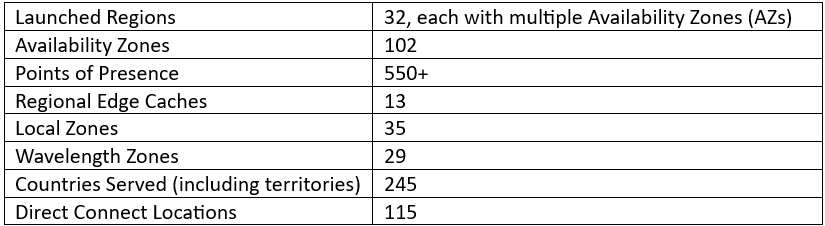
The AWS Cloud covers 102 Availability Zones across 32 geographic regions worldwide, with disclosed intentions to introduce an additional 15 Availability Zones and 5 AWS Regions in Germany, Canada, Thailand, Malaysia and New Zealand.
MICROSOFT AZURE
The Azure cloud platform encompasses over 200 products and services crafted to empower you to bring innovative solutions to fruition, addressing current challenges while shaping the future. It offers the flexibility to build, run, and manage applications across various clouds, on-premises, and at the edge, utilizing the tools and frameworks as per your preferences.
The USPs of Microsoft Azure
Popular Customers of Microsoft Azure
New York City Department of Environmental Protection (DEP): DEP uses a Microsoft infrastructure specifically designed with modern security considerations. With the solution in the cloud, Microsoft manages disaster recovery, reducing the necessity for maintaining certain skill sets in-house. CCC Group: CCC Group utilizes Azure Data Lake and Data Warehouse to collect, store, and segment data. Panasonic Connect Co: Panasonic Connect Co maximizes the benefits of PaaS services such as Azure IoT Hub, Synapse Analytics, and Azure Kubernetes Services. Hamburg Commercial Bank: Hamburg Commercial Bank opted for Microsoft Azure Virtual Desktop to achieve improved performance, reliability, and enhanced interoperability with other Microsoft technologies previously invested in. Barnsley Hospital NHS Foundation Trust: Barnsley Hospital NHS Foundation Trust adopted a new, integrated platform using Power Platform and Microsoft Teams for video consultations. During the COVID-19 pandemic lockdowns, the Trust rapidly deployed Microsoft Teams to facilitate remote work and staff collaboration.Regions & Availability:
Microsoft operates highly secure data centre facilities globally, forming a distributed infrastructure that sustains thousands of online services. This expansive, globally distributed infrastructure prioritizes sustainability, bringing applications closer to users, ensuring data residency, and providing customers with comprehensive compliance and resiliency options.
As of March 2023, Microsoft Azure boasts 160 active data centres spread across 60 regions worldwide. These Azure regions, defined by geographical areas, house one or more physical Azure data centres. Operating within a latency-defined perimeter, these data centres are strategically positioned to deliver optimal performance and security to users.
Azure leads with over 60 announced regions, surpassing all other cloud providers. It is accessible in 140 countries, showcasing a global presence that sets it apart in cloud computing.
GOOGLE CLOUD PLATFORM (GCP)
Google Cloud, also called Google Cloud Platform, offers computing resources dedicated to developing, deploying, and operating web applications. While its cloud infrastructure supports applications like Google Workplace, GCP primarily serves as a platform for constructing and managing custom applications. These applications can subsequently be published on the web, leveraging the extensive capabilities of its hyperscale data centre facilities.
The USPs of the Google Cloud Platform
Popular Customers of the Google Cloud Platform
Etsy: Utilizing the collaborative tools offered in Google Workspace, Etsy meets the evolving needs of sellers and buyers innovatively, fostering continued growth and enhancing the sustainability of its operations. X (formerly Twitter): Twitter's complete shifting of its ad analytics data platform to Google Cloud granted developers increased agility, allowing them to configure existing data pipelines more easily and build new features acceleratedly. Airbus Defence and Space: Airbus Defence and Space's Intelligence business line employs Google Cloud to construct a scalable online platform, enabling customers to access petabytes of satellite imagery in real-time.Regions & Availability
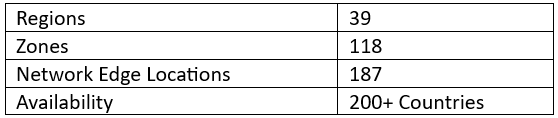
Google Cloud provides global coverage through regions distributed worldwide, ensuring low cost, minimal latency, and optimal application availability for customers.
Follow the link to have a look into a tabular comparison of the solutions provided by the CSPs: AWS, Azure and GCP. https://cloud.google.com/docs/get-started/aws-azure-gcp-service-comparison

Amazon CloudFront Case Study: How It Transformed the Customer Experience of Zalando, a Prominent E-commerce Platform
What is Amazon CloudFront?
Amazon CloudFront is a content delivery network offered by Amazon Web Services. It securely transfers content such as software, SDKs, and videos to clients with high transfer speeds. It helps to:
• Increase productivity while maintaining user-friendliness
• Cache your content in edge locations to reduce workload
• Provide high security through the "Content Privacy" feature.
• Utilize HTTPS protocols for fast content delivery.
• Support geo-targeting services for delivering content to specific end users.
The Amazon CloudFront solved the performance and scalability issues, providing Zalando's development teams more insight, flexibility, and control. Eventually, the shift set the stage for long-term innovation and large-scale customer happiness.
Amazon CloudFront Case Study: Challenges Faced by Zalando
In the face of rapid expansion, Zalando sought to maximize its offerings. With more than 49 million active users, Zalando links consumers with brands and goods in 25 European regions. Rich media content is integral to Zalando's website and app to enhance the online customer experience. However, the company's image management, transformation, and delivery system have limited visibility and control for developers. All these factors are crucial for sustaining growth and delivering a unique customer experience.
Zalando migrated its media management and delivery system to Amazon Web Services (AWS) by leveraging Amazon CloudFront, a content delivery network service designed for developer simplicity, security, and high performance. Using CloudFront, Zalando enhanced developer observability, scalability, and online purchasing experiences.
Strengthening Developer Ownership to Promote Development
Due to substantial expansion, Zalando outgrew its prior image management system, which provided its engineering and product teams with few configuration options. Furthermore, few operational insights were available, making it difficult to see how well the service was doing and what improvements could be made. It affected Zalando's capacity to modify and enhance its online stores. Delivering a consistent client experience during high-demand seasonal events was made difficult by the absence of comprehensive reporting regarding image transformation.
To overcome these obstacles and to develop their new media management system, the Zalando team used Amazon CloudFront. Because of its programmability and flexibility, Amazon CloudFront became crucial for scaling operations and keeping up with rising client demand.
Migrating to AWS Edge
Zalando executed its migration quickly and effectively. The company coordinated its migration schedule with AWS's Enterprise Support, Service Specialists, and Service Teams to avoid conflicts with customer campaigns and market events. Small client groups were used in the initial stages of the conversion so that the business could identify any areas for improvement without significantly impacting Zalando customers. During this procedure, Zalando moved more than 20 websites and apps, totaling 26.93 PB of data. CloudFront's peak load has consistently surpassed 100,000 requests per second.
The development team enhanced the image-delivery method using Zalando's prelaunch hands-on access to CloudFront Functions. The team was pleased to receive support on several levels throughout several stages. Regular contact began very early on, while they looked for proofs of concept and sent the code to verify its legitimacy and identify any obstacles.
Zalando started using CloudFront Functions in production in May 2021. Smooth configuration is a significant change with CloudFront Functions. On an operational level and for daily development, it makes it easier to deploy and reliably revert tasks and scale on demand. Zalando swiftly overcame challenges by implementing the new solution across its online domains. Zalando needed to be able to roll back quickly when necessary, making changes before actual downtime could happen. For various use cases, Zalando now employs both Lambda@Edge and CloudFront Functions. Multiple layers of edge computing give developers greater flexibility, visibility, and control while improving the client experience. It enabled Zalando to respond quickly and provide better consumer and business services.
Since the move, Zalando has been attaining cache hit percentages of 99.5 percent, and its new image-delivery system serves almost five billion images daily. They didn't face any challenges with Amazon CloudFront. With about 250 million online orders after the transformation, Zalando's CloudFront solution's size and effectiveness were crucial in providing a first-rate consumer experience.
Additional optimizations made by Zalando have resulted in a threefold decrease in requests for nonoptimized photos on the home screens of the company's online and mobile applications. Because of its improved efficiency and versatility, teams within Zalando have shifted to utilize the pipeline built on CloudFront for additional kinds of material.
Fostering Client Interaction
Using AWS, Zalando intends to keep innovating in managing and manipulating rich media assets. By developing an interactive e-commerce solution with AWS Elemental MediaConvert, a file-based video converting service with broadcast-grade features, it intends to promote consumer interaction. To better serve its clients, Zalando moved to CloudFront to enhance the media management and delivery systems that influence the shopping experience. Zalando could carry out a seamless move with the help of the AWS team, which had significant advantages. The business benefits of using Amazon CloudFront are the operational flexibility and the ability to monitor the health of the solution, experiment, and reverse changes quickly.
Summing Up
Zalando's decision to strategically switch to Amazon CloudFront was a watershed moment in its quest to provide a better, more scalable consumer experience. By tackling important issues with media delivery, performance, and developer control, Zalando increased operational efficiency and enhanced the user experience across all platforms. This success story illustrates how intelligent content delivery systems can enhance long-term value, performance, and customer satisfaction in digital commerce as the company grows and changes.

From Insights to Actions: Leveraging BI Applications for Your Competitive Advantage
Business intelligence (BI) software solutions are designed to analyse data that is input by users or fed from various data sources. The software then organises this data based on patterns or trends it identifies. Finally, the software presents these patterns and trends through visualisations, making the information easy to understand even for users without any statistical analysis experience.
Organisations can develop informed and current strategies by using the insights and trends revealed by these visualisations. With the advancements in technology and innovations, a wide range of BI applications are available for diverse types of data analysis.
Therefore, it is imperative for forward-thinking organisations to recognise the BI tools that market leaders offer and how these tools can impact their own operations positively. Here are four significant business intelligence applications that can enhance your organisation’s operations.
List of Four Business Intelligence Applications
- Sales Intelligence
- Visualisation
- Reporting
- Performance Management
Let’s take a deep dive into the four noteworthy Business Intelligence applications:
1. Sales Intelligence
One crucial application of BI is to improve customer engagement and sales performance. The sales department of any organisation should prioritise building solid relationships with customers. However, converting leads and convincing potential clients to purchase a product or service can be challenging. BI tools can make this process smoother and more predictable.
BI collects data on specific key performance indicators (KPIs) such as customer demographics, conversion rates, and sales metrics. It then presents this data in structured visualisations like graphs, pie charts, and scatterplots. This data lets users identify trends and insights into customer behaviour and business operations. Understanding the customer allows organisations to provide better service and improve sales performance.
Moreover, the reports and dashboards generated by BI are valuable in providing easy-to-interpret data to potential clients and supporting claims with solid evidence. Managers can use the insights from BI analysis to make data-driven decisions based on complex data and forecasting.
BI applications provide an excellent means of optimising an organisation’s sales operations. Sales and marketing teams can leverage BI to identify trends in client preferences, enabling the organisation to maximise sales within their ideal client base. This allows them to concentrate on targeting highly qualified leads, improving conversion rates and overall profit margins.
2. Visualisation
Furthermore, when used alongside customer relationship management (CRM) software, BI offers businesses a sophisticated method for understanding their customers and making informed sales decisions. By integrating CRM data with BI analysis, organisations can better understand their customers' needs and behaviours, enabling them to provide personalized products and services, strengthen relationships, and increase customer loyalty.
Another critical application of BI is data visualisation. Business intelligence software employs various data analytic tools designed to analyse and manage data related to an organisation’s operations. The resulting data is then presented in the form of visualizations, enabling the organization to monitor logistics, sales, productivity, and more. Some BI platforms offer custom reporting capabilities, allowing users to specify their own parameters, while others offer pre-designed reporting templates that include industry-standard metrics.
By presenting data in intuitive and easy-to-understand formats, BI systems enable inexperienced employees to draw insights from data. Rather than relying on trained data scientists to analyze data, employees can analyze and present their own data to shareholders, other departments, or teams.
3. Reporting
Reporting is a way of summarising data to keep track of business performance, while analysis is a way of exploring data to gain insights that can improve business practices. Business intelligence tools play a crucial role in reporting by collecting and analysing data and generating various types of reports related to staffing, expenses, sales, customer service, and other processes. While reporting and data analysis are related, they differ in purpose, delivery, tasks, and value.
Simply put, reporting takes raw data and transforms it into easily understandable information, while analysis takes data and extracts valuable insights to enhance business practices. Although both processes can incorporate visualisations, their approaches are distinct. Reporting reveals what's happening, whereas analysis explains why it's happening. Traditionally, data visualisations were static, requiring the creation of a new one for every variable change. However, contemporary BI software provides interactive dashboards that can update in real-time, resulting in enhanced usability and flexibility in data analysis.
4. Performance Management
BI tools can help with performance management by allowing organisations to set and track performance goals using data-driven insights. This can include goals related to project completion, delivery time, or sales targets, among others. For example, a BI system can analyze past sales data and recommend a realistic sales goal for the future based on previous performance. This helps organisations stay on track with their goals and make data-driven decisions to improve performance.
With BI applications, organisations can closely track their progress towards pre-defined or customisable goals within specific timeframes. The data-driven plans could include meeting project completion deadlines, target delivery times, or sales targets. For instance, if an organisation wants to achieve a specific sales target, the BI system can analyse previous data and suggest a reasonable goal based on past performance.
By monitoring goal progress in real-time, businesses can stay informed of any remaining gaps and take timely action to bridge them. Users can also set alerts to notify them when they are nearing their target or when the time limit is approaching, and they haven't achieved their goal. This helps managers and employees stay on track and focused on achieving their goals.
Moreover, users can also assess the overall productivity of an organisation by monitoring the fulfilment of goals and tracking progress data. Since the information is readily accessible, there is no time wasted in tracking down urgently needed data, thus saving businesses time and money.
Three Steps to Choose Right Business Intelligence Tools
To choose the right Business Intelligence software for your organisation, it's crucial to identify the features and capabilities that your organisation requires. Follow the three steps below to find out which Business Intelligence tool suits you the best:
- Selection
- Compare Applications
- Shortlist and Trials
Now, let's explore in detail the three steps to choose the right Business Intelligence tool:
1. Selection
It's recommended to select only the modules you will use rather than opting for a solution with a long list of features you don't need. Overbuying can increase the cost and lower the chances of a successful implementation, so it's better to start small and upgrade as your company expands.
2. Compare Applications
You should compare various options based on your specific requirements to choose the right BI software for your organisation. Each vendor may have different strengths and specialities within the BI field, so it's essential to prioritise your needs and preferences. Instead of a one-size-fits-all approach, it's better to focus on the most critical features and evaluate solutions based on how well they meet those requirements. It's also important to remember that the most expensive solution is not always the best one, and sometimes paying a higher price can result in better quality and long-term benefits.
3. Shortlist and Trials
Once you have a shortlist of vendors, it's time to narrow it down further by considering factors such as pricing, demos, and trials. Many vendors offer free trials or demos so that potential users can get a feel for the system's user interface. Make sure to choose a system that most users can use and keep your budget flexible. Consider the type of user support each vendor offers, determine whether you need any integrations with other business software, and confidently make your final decision.
Summing Up
Business Intelligence applications can benefit organisations, from improved decision-making to enhanced performance management. By gathering and analysing data, businesses can gain valuable insights into their operations and customers and use this information to drive growth and success. When selecting a BI tool, it's essential to identify your specific requirements and carefully compare different vendors based on their features, pricing, and support.
Business Intelligence services extended by Beinex deliver solutions to all your business questions. At-a-glance analysis facilitated by cutting-edge BI tools does wonders for every industry. With BI tools, analysing enormous and complex data couldn’t be mind-boggling for you anymore. With Beinex, you can interact with an agile and intuitive system to validate your data, navigate your vision, and execute it data-driven to tap into the potent entrepreneurial potential.

Beinex Achieves Platinum Status Among Top Business Intelligence Consulting Firms in the Middle East 2024
About Consultancy-me
Consultancy-me.com is a leading platform for staying updated on the advisory and consulting industry. Their website is dedicated to delivering the latest news and trends across 60+ industries and functional areas within the consultancy sector. As part of the Consultancy.org family, their international network of consulting platforms draws in 4 million visitors per year. Globally, they partner with over 150 leading consulting firms and select companies. The platform serves as a comprehensive resource for professionals interested in consultancy careers, offering insights into job opportunities, graduate schemes, apprenticeships, and internships within the consulting industry.