How AI Decision-Making is Improving Enterprise Outcomes
Blog
Share 
Tableau + AWS: Dashboards Development Using AWS Glue DataBrew
 13 April 2023
  Joseph John Thenamkodath
 With AWS Glue DataBrew, we can transform and prepare datasets from Amazon Aurora and other Amazon Relational Database Service (Amazon RDS) databases and upload them into Amazon S3 to visualise the transformed data on a dashboard using Tableau.
Here is how to do it:
With AWS Glue DataBrew, we can:
1. Transform and prepare datasets from:
a. Amazon Simple Storage Service (Amazon S3)
b. Amazon Aurora
c. Amazon Relational Database Service (Amazon RDS) databases
2. Upload them into Amazon S3
3. Visualize the transformed data on a dashboard using Tableau
Method:
1. You can create a JDBC connection for Amazon Redshift and a DataBrew project on the DataBrew console.
2. DataBrew queries data from Amazon Redshift by creating a recipe and performing transformations.
3. The DataBrew job writes the final output to an S3 bucket in Tableau Hyper format.
4. You can now upload the file into Tableau for further visualisation and analysis.
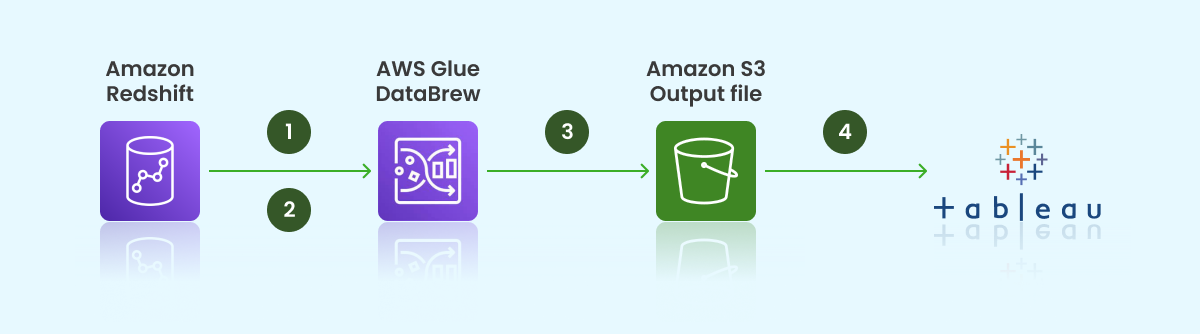
Result: Creation of predictive dashboards on top of the S3 bucket
AWS Glue DataBrew is a tool for data analysts and scientists that simplifies cleaning and standardising data to prepare it for machine learning and analytics.
Integration of Tableau and AWS services, specifically using AWS Glue DataBrew, can be utilised to develop dynamic dashboards. These tools offer efficient data preparation and visualisation capabilities, enabling users to gain insights quickly from their data. Follow along to learn how to combine the power of Tableau and AWS for your data analytics needs.
Related Articles

Preparing for AGI: What Leaders and Executives Need to Know
What is AGI (Artificial General Intelligence)?
Artificial General Intelligence (AGI) refers to an AI that, in theory, can think, learn, and understand more like a human. It is designed to perform any intellectual task a human can do. However, AGI remains a theoretical concept, and current AI systems have not yet achieved true cognitive abilities, reasoning skills, or emotional intelligence comparable to humans. Rapid advancements suggest that reaching a form of AGI is not beyond possibility. Given the unprecedented growth of AI in recent years, it's wise to stay informed and prepared.Generative AI vs. AGI vs. ASI: Understanding the Difference
Generative AI is a subset of deep learning that predicts responses based on extensive training data. These models, including ChatGPT and Midjourney, are powerful but still fundamentally narrow AI systems. They lack true understanding, common-sense reasoning, and emotional intelligence. Conversely, Artificial General Intelligence (AGI) is regarded as a strong form of AI. Like human intelligence, it would be self-aware, flexible, and capable of solving problems in various fields. AGI might learn, reason, and apply knowledge across domains without explicit training, in contrast to GenAI, which works within predetermined tasks. Even if AGI is yet theoretical, it has enormous potential to change society and industry. Beyond human intelligence, Artificial Super Intelligence (ASI) can tackle issues beyond human comprehension. For example, an ASI system might be able to create novel medicinal treatments or extremely efficient energy systems. Nonetheless, ASI is still primarily theoretical and a subject of discussion and assumption.GenAI vs. AGI vs. ASI: Key Differences
Here are the main differences between GenAI, AGI, and ASI:| Generative AI (GenAI) | Artificial General Intelligence (AGI) | Artificial Super Intelligence (ASI) |
|---|---|---|
| AI that generates text, images, audio, and code based on training data | AI with human-like reasoning, learning, and problem-solving across all domains. | AI that surpasses human intelligence and capabilities |
| Generates content, predicts patterns, and automates tasks | Understands, learns, and adapts like a human across multiple fields. | Thinks, learns, and innovates beyond human intelligence |
| Examples: ChatGPT, Midjourney, DALL-E, Bard | A self-learning AI that can pass human-level exams and perform diverse tasks. | An AI that can autonomously innovate, research, and make better decisions than humans. |
| Mimics creativity but lacks true understanding | Matches human cognitive abilities. | Beyond human intellectual capacity |
| Fully functional and widely adopted | Estimated timeframe is 2030–2050 (speculative). | Not yet possible with current technology |
AGI and Businesses: How Executives Can Prepare for AGI
The best way to keep up with new technology isn’t to wait until it arrives; it’s to prepare before it changes everything. Here are a few simple ways to get ready for Artificial General Intelligence (AGI):1. Stay Informed and Monitor AI Advancements
The first step in getting ready is to comprehend how quickly AI is advancing. Executives should keep an eye on new advancements in AGI, legal reforms, and AI research. Keeping tabs on start-ups, business leaders, and research organizations can yield insightful information.2. Invest in AI Skills
But there's no point in waiting for AGI to happen; smart leaders should be ready now. Leading businesses should invest in automation and artificial intelligence to gain a competitive edge. Developing AI expertise within your organization, whether through employing AI experts, educating employees, or implementing AI-powered technologies, will lay a strong foundation for future AGI integration.3. Develop a Robust Data Infrastructure
High-quality data is essential for AI to flourish. Businesses should ensure their data ecosystems are safe, organized, and ready for AI-driven insights. Adopting the retrieval-augmented generation (RAG) models and cloud-based AI solutions improves AI applications and prepares for more complex systems like artificial general intelligence.4. Adopt a Human-centric AI Approach
Even with AI's expanding capabilities, human monitoring is still crucial. "Human-in-the-loop" models, in which AI complements human decision-making rather than replaces it, should be given top priority by executives. Employee resistance to automation can be decreased, and productivity can be increased by teaching them how to work with AI tools.5. Address Ethical and Security Considerations
Ethical issues like bias, security, and data privacy are becoming increasingly urgent as AI develops. Executives must implement governance structures to ensure accountability and transparency in AI deployments. AGI readiness will also depend on how well cybersecurity threats and compliance laws are handled.6. Organize Teams for AI-driven Workflows
An AI-driven world may require adaptability that traditional organizational structures may not be able to provide. Employers should consider flexible workforce models in which staff members switch between projects regularly. AI literacy upskilling programs can facilitate employees' hassle-free transition into AI-augmented roles.7. Experiment with AI Investments
While AGI is still a way off, companies should start making calculated investments in AI research, automation driven by AI, and cognitive computing. When artificial intelligence (AGI) becomes economically viable, companies that invest in AI-driven innovation can become early adopters.The Business Impact of GenAI: Current Trends and ROI
While Generative AI (GenAI) is already revolutionizing industries with quantifiable return on investment, Artificial General Intelligence (AGI) is still a vision for the future. A 2024 Deloitte survey identified key sectors where organizations are experiencing notable advances: • Text Generation (83%) – Automating reports, document summarization, and marketing content. • Code Assistance (62%) – Helping developers write code efficiently with fewer errors. • AI-Powered Call Centers (56%) – Reducing customer service costs by up to 90%. • Image & Video Generation (55%) – Creating product simulations and marketing materials. Additionally, enterprises are increasingly adopting multi-model AI approaches, using a mix of open-source and proprietary models to tailor-made solutions and avoid vendor lock-in.The Future of Leadership in an AGI-Driven World
AGI might still be years away, possibly emerging between 2030 and 2050, but its impact will be massive. Proactive leaders can get ahead by using today’s AI, building flexible systems, and creating a culture of continuous learning. Companies that embrace AI now won’t just keep up; they’ll lead the way when machines start thinking more like humans. So, leaders, now’s the time to act.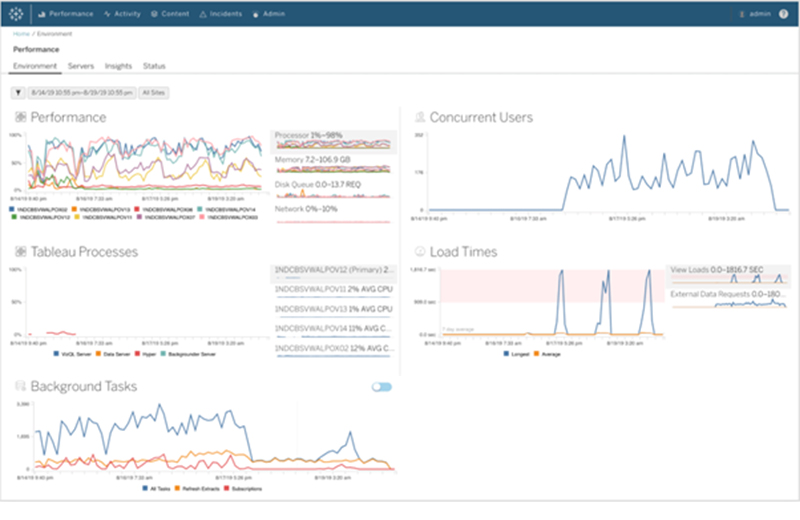
A DEEP DIVE INTO TABLEAU 2019.3
TABLEAU CATALOG
What could be better than a feature that could provide better visibility and better data management at the same time, and also ensure that the right data is always used for analysis. This is possible with the new feature -Tableau Catalog.
 This feature provides a complete picture of the data and how each data is connected.
Another use of Tableau Catalog is linear and impact analysis. This not only shows which assets will change but also who will be affected by it, which makes work easier for many and avoids wastage of time.
EXPLAIN DATA
Tableau 2019.3 is up with a new Al-driven feature called the “Explain Data”, which helps people go from the “what” of the data to the “how” of it. With explain data, we can get an explanation for each unexpected value in the data by just a single click. On selecting the desired data point, the ‘explain data’(lightbulb) icon appears.
For each value there might be a number of explanations. Each of these explanations are checked and only the most likely ones are provided as visualizations.
This feature provides a complete picture of the data and how each data is connected.
Another use of Tableau Catalog is linear and impact analysis. This not only shows which assets will change but also who will be affected by it, which makes work easier for many and avoids wastage of time.
EXPLAIN DATA
Tableau 2019.3 is up with a new Al-driven feature called the “Explain Data”, which helps people go from the “what” of the data to the “how” of it. With explain data, we can get an explanation for each unexpected value in the data by just a single click. On selecting the desired data point, the ‘explain data’(lightbulb) icon appears.
For each value there might be a number of explanations. Each of these explanations are checked and only the most likely ones are provided as visualizations.
 Now these visualizations can be used for further explorations.
TABLEAU SERVER MANAGEMENT ADD-ON
Organizations that run critical deployment of Tableau Server at a large scale, have mentioned concerns over manageability and scalability. They have been in search for tools that could organize the management process in an efficient way, which could save a lot of time. Tableau solved this problem by introducing the Tableau Server Management Add-on – a new feature designed to help organizations manage the deployment of Tableau Server. With this, they can quickly react to the changing needs of the business as well as save time by organizing the management process in the most efficient way. Tableau Server Management Add-on, which makes running the critical deployment of tableau at a large-scale server much simpler.
Now these visualizations can be used for further explorations.
TABLEAU SERVER MANAGEMENT ADD-ON
Organizations that run critical deployment of Tableau Server at a large scale, have mentioned concerns over manageability and scalability. They have been in search for tools that could organize the management process in an efficient way, which could save a lot of time. Tableau solved this problem by introducing the Tableau Server Management Add-on – a new feature designed to help organizations manage the deployment of Tableau Server. With this, they can quickly react to the changing needs of the business as well as save time by organizing the management process in the most efficient way. Tableau Server Management Add-on, which makes running the critical deployment of tableau at a large-scale server much simpler.
 The server management add-on feature can help in optimising the performance of deployment by customizing which nodes process background jobs such as extract refreshes and subscriptions and isolating these workloads, to specific nodes. This makes it easier to scale deployments to the needs of their organization.
This feature has a few tools, including two for better reliability and scalability and one for content migration, all of which helps the organizations to govern their data effectively.
If you are interested in learning more about the latest Tableau release and use cases, please contact us at training@beinex.com/ info@beinex.com and we would be happy to schedule a Tableau demo or training for you and your company.
The server management add-on feature can help in optimising the performance of deployment by customizing which nodes process background jobs such as extract refreshes and subscriptions and isolating these workloads, to specific nodes. This makes it easier to scale deployments to the needs of their organization.
This feature has a few tools, including two for better reliability and scalability and one for content migration, all of which helps the organizations to govern their data effectively.
If you are interested in learning more about the latest Tableau release and use cases, please contact us at training@beinex.com/ info@beinex.com and we would be happy to schedule a Tableau demo or training for you and your company.
This feature provides a complete picture of the data and how each data is connected.
Another use of Tableau Catalog is linear and impact analysis. This not only shows which assets will change but also who will be affected by it, which makes work easier for many and avoids wastage of time.
EXPLAIN DATA
Tableau 2019.3 is up with a new Al-driven feature called the “Explain Data”, which helps people go from the “what” of the data to the “how” of it. With explain data, we can get an explanation for each unexpected value in the data by just a single click. On selecting the desired data point, the ‘explain data’(lightbulb) icon appears.
For each value there might be a number of explanations. Each of these explanations are checked and only the most likely ones are provided as visualizations.
Now these visualizations can be used for further explorations.
TABLEAU SERVER MANAGEMENT ADD-ON
Organizations that run critical deployment of Tableau Server at a large scale, have mentioned concerns over manageability and scalability. They have been in search for tools that could organize the management process in an efficient way, which could save a lot of time. Tableau solved this problem by introducing the Tableau Server Management Add-on – a new feature designed to help organizations manage the deployment of Tableau Server. With this, they can quickly react to the changing needs of the business as well as save time by organizing the management process in the most efficient way. Tableau Server Management Add-on, which makes running the critical deployment of tableau at a large-scale server much simpler.
The server management add-on feature can help in optimising the performance of deployment by customizing which nodes process background jobs such as extract refreshes and subscriptions and isolating these workloads, to specific nodes. This makes it easier to scale deployments to the needs of their organization.
This feature has a few tools, including two for better reliability and scalability and one for content migration, all of which helps the organizations to govern their data effectively.
If you are interested in learning more about the latest Tableau release and use cases, please contact us at training@beinex.com/ info@beinex.com and we would be happy to schedule a Tableau demo or training for you and your company.
Note: The Server Management Add-on is not available for Tableau Online, as they manage everything from scaling, performance, and security on behalf of their Tableau Online customers. The Tableau Server Management Add-on can be separately purchased from the Tableau Server deployment.

Spatial Parameters: Enhancing Geospatial Analysis and Adding Interactivity to Your Maps
What Are Spatial Parameters?
Spatial parameters in Tableau allow you to dynamically interact with geospatial data within your visualizations. These parameters enable you to select spatial objects like points, polygons, multi-polygons, lines, or collections for calculations. Unlike traditional parameters, which work with values like text or numbers, spatial parameters offer the flexibility to work with geospatial data like coordinates and spatial shapes. You can create spatial parameters in two ways: 1. From a data source: If your data contains spatial fields (like latitude and longitude), you can load these as spatial parameters. 2. Using Well-Known Text (WKT) : This method allows you to manually input spatial data in text format to create custom spatial parameters. Spatial parameters can be used in the same way as other parameters in Tableau, including parameter controls, actions, and dynamic values. Note: Spatial parameters can only be created from spatial data fields (such as latitude and longitude). Creating spatial parameters from text string fields, like a "Country" field, is not feasible as it might be assigned as a geographic role but remains a text field.
Top Benefits of Using Spatial Parameters
Spatial parameters have offered immense possibilities for Tableau experts to analyze and visualize geospatial data. Key benefits are listed below: 1. Cross-Data Source Spatial Exploration With spatial parameters, you can explore spatial relationships between data sources that don't support joins. Unlike traditional data sources, which can be limited by join constraints, spatial parameters allow you to compare spatial regions from different datasets. This means you can dynamically analyze relationships across multiple data sources without the need for complex joins. 2. Skip Long Joins Previously, working with large spatial datasets required time-consuming spatial joins. Now, spatial parameters enable you to bypass these long joins and conduct spatial analysis much faster. You can use parameters to compare regions across multiple data sources instantly, even with vast datasets. 3. Interactive and Dynamic Analysis Spatial parameters allow users to visually interact with geospatial data in real time. Like other parameter types, you can use parameter controls to input points, lines, or polygons and adjust your analysis on the fly. This flexibility allows you to dynamically change spatial boundaries and relationships during your analysis. 4. Distance-Based Queries With spatial parameters, you can perform distance-based queries without complex calculations. For example, you can control the size of a buffer and see what lies within that buffer directly from the worksheet. This makes it easy to conduct proximity analysis without the need for complicated formulas. 5. Create Custom Regions Spatial parameters allow you to create custom regions by selecting points, lines, and polygons and combining them into a single parameter. For instance, you can create a sales region by combining multiple states into one spatial parameter. This enables you to tailor regions for specific analysis scenarios.
Spatial Calculations in Tableau 2024.3: What’s New
Tableau 2024.3 also introduces three new spatial calculations to help you evaluate spatial relationships: • SYMDIFFERENCE: Identifies areas that are unique between two regions. • INTERSECTION: Shows the overlap or intersection between two regions. • DIFFERENCE: Displays areas present in one region but not in the other. These new spatial calculations provide powerful tools to analyze and compare geospatial data.
Union Aggregation for Spatial Data
In previous versions of Tableau, the only aggregation available for spatial data was Collect, which groups spatial elements together. Union Aggregation has been introduced in Tableau 2024.3, allowing you to dissolve the boundaries between regions and providing even greater flexibility in working with spatial data.
Validating Spatial Calculations
Tableau 2024.2 introduced the Validate Calculation feature, which can help you detect and correct errors in your spatial data. This tool is handy when working with complex spatial datasets. Tableau's new Spatial Parameters and related features, such as spatial calculations and union aggregation, provide powerful capabilities for geospatial analysis. Whether comparing spatial regions, performing proximity-based queries, or creating custom areas, these features enable dynamic and flexible analysis beyond traditional methods.
How Beinex Can Assist You
Beinex, a premier Tableau partner, provides sustainable analytics solutions to organizations and helps to build superior data visual analytics capabilities internally through our bespoke training programs. Our team of Tableau-certified consultants are real-life Tableau business users passionate about Tableau and delivering a world-class experience. Connect with us for a free demo: https://www.beinex.com/free-tableau-software/

How to Automate and Improve Your Data Governance Processes for Better Results
What is Data Governance?
Data governance is the process of managing the availability, usability, integrity, and security of data in an enterprise system. It establishes policies, procedures, and standards for how data is collected, stored, used, and shared. It's about ensuring the right data is available to the right people at the right time, in a secure and compliant manner.Why Automate Data Governance?
Automating data governance processes brings several benefits, including: • Improved Data Quality: Automation can identify and correct data errors, inconsistencies, and duplicates, leading to improved data quality and more reliable insights. • Increased Efficiency: Automation streamlines data governance processes, reducing manual effort, freeing up valuable time, and accelerating decision-making. • Reduced Costs: Automation helps reduce the costs associated with manual data governance processes, minimizing errors and the need for rework. • Enhanced Compliance: Automation helps ensure compliance with data privacy regulations, such as GDPR, CCPA, and HIPAA, minimizing risk and potential penalties. • Better Decision-Making: By improving data quality and accessibility, automation enables better, more data-driven decision-making. • Scalability: Manual processes struggle to keep up with growing data volumes. Automation allows your governance framework to scale effectively.How to Automate Data Governance Processes?
Several approaches exist for automating data governance, and often a combination is most effective: • Data Discovery and Classification: Automated tools, like data catalogs, can help discover and classify data based on its content, sensitivity, and other criteria. This is the foundation for understanding your data landscape. • Data Quality Monitoring: Automated tools can continuously monitor data quality, identify potential issues, and trigger alerts for remediation. • Data Lineage Tracking: Automated tools can track the origin and movement of data, providing a clear audit trail and helping to ensure data quality and compliance. This is crucial for understanding how data is transformed and used. • Data Access Control: Automated tools can enforce data access policies, ensuring that only authorized users can access sensitive data, protecting privacy and security. • Data Masking and Anonymization: Automated tools can mask or anonymize sensitive data to protect privacy while still allowing for data analysis and testing. • Metadata Management: Automated tools can capture and manage metadata, providing context and meaning to data assets, making them easier to find and understand.The Role of Data Catalogs like Alation
Data catalogs play a critical role in automating data governance. They act as a central inventory of all data assets, providing a single source of truth about your data. Modern data catalogs like Alation offer: • Automated Data Discovery and Profiling: Automatically scan and profile data sources to identify and catalog data assets. • Data Lineage: Visually map the journey of data from its origin to its consumption, showing transformations and dependencies. • Data Quality Rules and Monitoring: Define and enforce data quality rules and automatically monitor data for compliance. • Collaboration and Knowledge Sharing: Enable data users to collaborate, share knowledge about data assets, and contribute to data governance efforts. • Search and Discovery: Empower users to easily find the data they need, along with relevant metadata and context.Best Practices for Automating Data Governance
• Develop a Data Governance Strategy: Before automating, define clear goals, objectives, and metrics for your data governance program. • Identify Key Stakeholders: Engage business users, IT, compliance, and other stakeholders to ensure alignment and buy-in. • Choose the Right Tools: Select tools that meet your specific needs and integrate with your existing data infrastructure. Consider a platform approach that can address multiple aspects of governance. • Implement a Phased Approach: Start with a pilot project to demonstrate value and refine your approach before scaling to the entire organization. • Focus on Data Literacy: Train your employees on data governance policies, procedures, and the use of automated tools. • Monitor and Evaluate: Continuously monitor the effectiveness of your automated data governance processes and make adjustments as needed.How to Embrace Better Data Governance?
Data governance doesn’t have to be a bottleneck. Organizations can reduce manual workloads, improve compliance, and drive innovation by adopting automation and leveraging tools like data catalogs. Ready to transform your data governance strategy? Get a Free Assessment Now!
Alation Data Catalog: The Key to Unlocking Effective Modern Data Governance
Challenges in Data Governance
Organizations often face challenges aligning with business goals to ensure data quality, security, and visibility. Alation's Data Catalog centralized data management and enhances accessibility, helping businesses address the data governance challenges by managing data in line with the policies and standards. Some of the challenges in data governance are as follows: • Issues in Data Quality: This happens due to incorrect or insufficient data in the system, which can result in expensive errors and affect decision-making. Enterprises must follow continuous monitoring to ensure high data quality and maintain trust in data assets. • Struggling with Data Silos: For effective data governance, organizations must break down data silos as the separate storing of data across departments could hinder data accessibility and sharing, resulting in inefficiencies. • Concerns about Compliance and Security: To avoid sensitive data breaches, organizations must comply with the regulations and standards and enforce strong security measures. Ignoring the compliance requirements can result in reputational damage, legal consequences, and hefty penalties.
More About Data Catalog
A Data Catalog is a warehouse of data assets that improves comprehension, governance, discovery, use, and management of data. It helps unify extensive and intricate data ecosystems into a single hub and breaks down silos, leveraging data the right way. The centralized view of enterprise data assets provided by the data catalog allows leaders to effectively drive cross-collaboration and scale data usage. Despite being a data repository, a modern data catalog assists in making business processes more data-driven. From enhancing operational efficiency to boosting customer experience to making strategic decisions, a data catalog is equipped to make the most of the data. A data catalog facilitates business decisions by letting people locate, understand, and trust the required data. Some of the fundamental functionalities and features of a data catalog are as follows: • Managing metadata: Brings together metadata from diverse sources into a centralized platform and offers a comprehensive picture of data across your enterprise. • Automating data discovery and search: Employs advanced search capabilities (search by tags, keywords domains, natural language, etc.), AI, and ML to locate and access relevant data assets. • Ensuring data quality: Allows data customers to understand data quality and build trust in the data through documentation of quality regulations, displaying data quality metrics, and quality profiling. • Tracking data lineage: Tracks the data flow from its source to destination, mapping the critical data aspects throughout the organization during the transformation. It also includes metadata about the transformation and data assets, enabling impact analysis. • Fortifying data governance: Enables data classification to assign suitable policies for ensuring compliance with regulations.
How Alation's Data Catalog Strengthens Modern Data Governance
Companies with data catalogs are more likely to acquire and retain customers and achieve profitability than those that do not have one. The following aspects elaborate on how Alation unlocks smarter data governance with its data catalog. • Breaking down data silos and centralizing data access: The Alation Data Catalog helps businesses struggling with data silos by centralizing data access and enabling easy data discovery and retrieval from a unified platform. Centralizing facilitates collaboration between departments by eliminating barriers between them. The enhanced collaboration enables effortless sharing of data assets and insights, fostering better decision-making and collaboration. • Managing metadata: Metadata management is paramount to data governance. With Alation Data Catalog, users can access powerful metadata management capabilities to handle data regulations, relationships, and definitions effectively. It allows users to understand and gain trust and confidence in their data assets. With features like end-to-end data lineage, automated metadata harvesting, and policy enforcement, Alation ensures data accuracy, accessibility, and compliance. • Enhancing data quality through Data Profiling and Cleansing: Data quality stays crucial for any organization to ensure trustworthy analytics and reporting. The Alation Data Catalog's data profiling and cleansing tools help detect inconsistencies and inaccuracies in data, helping enterprises maintain high data quality standards. • Guaranteeing compliance and security: With the Alation Data Catalog, compliance, and security can be ensured by implementing access controls and permissions. It entails protecting sensitive and confidential information by enabling the restriction of data access based on roles. • Fortifying data security: The comprehensive audit trails and monitoring offered by the Alation data catalog are important for data security as they facilitate tracking data usage and changes over time. It also helps identify possible breaches and unauthorized access, enhancing accountability and transparency across the enterprise. • Making progress through continuous monitoring: Conducting routine audits to evaluate compliance and data quality is vital for ensuring data governance remains effective and adaptive to the dynamic requirements. Alation Data Catalog's monitoring tools offer insights into the use of data and the likelihood of serious security breaches, enabling informed decisions about policy modifications. It is important for businesses to invest in training programs for data users as they help them understand the functions of data catalog and apply the best practices. With the Alation Data Catalog, businesses can promote collaboration and maintain data integrity and safety. Alation's holistic approach to data governance builds a trustworthy and accountable culture. The Alation Data Catalog functions as a powerful enabler, equipping enterprises to thrive in a data-driven world by streamlining complex governance tasks and promoting a culture of data literacy. In partnership with Alation, Beinex equips businesses with the support to fulfill data governance requirements while streamlining implementation and saving time. Connect with us for a demo: Beinex - Beinex: Your Trusted Alation Partner in Dubai, UAE, MEA, KSA & UK for Data Intelligence