How AI Decision-Making is Improving Enterprise Outcomes
Blog
Share 
Syntax Migrator: The Magic Carpet to Ease Snowflake Migration
 25 July 2022
  Sumi S
 Let’s introduce one such tool.
Beinex has a set of tools to automate the migration testing process, and the devices can also process syntax changes between the legacy database and Snowflake. Well, Syntax Migrator is one tool developed by our experts that follows a structured methodology that helps minimise migration risks. It is an error-free, timesaving, automated migratory tool that converts SQL syntax into Snowflake queries.
How does it work?

With the help of a user-friendly tool like Syntax Migrator, we can quickly convert SQL syntax into Snowflake queries by entering the SQL syntax in the console and then pressing the convert button. It is handy, and even persons with no technical expertise can easily use it.
Syntax Migration Platform can aid in:
- Automatically translating DDL and DML
- Selection of best possible data type
- Intelligent usage of Temp and Transient Tables
Automatically translate DDL and DML.
- Creation of different tables views, and procedures can be quickly changed into Snowflake-compatible queries without any help from Snowflake syntax.
- No matter how the complex procedure is, it converts the syntax to Snowflake and maintains the logic and structure of the procedure.
Selection of the best possible data type
- Syntax migrator selects the best data type available in Snowflake concerning the source data source even if the datatype is disparate.
- No need to worry about any mismatch in the data while converting to the compatible datatype. All the data properties will be preserved during conversion.
Intelligent usage of Temp and Transient Tables:
Query logic and syntax will be preserved in the migration, which results in the expected results same as of the source systemAbout Snowflake
The cloud data platform from Snowflake enables a variety of data workloads, including data warehousing and data lakes, as well as data engineering, data science, and data application development across numerous cloud providers and geographies from any location inside the company.
Due to Snowflake's distinctive architecture, almost any concurrent user in the Data Cloud can benefit from near-infinite storage and real-time processing.
The Many Benefits of Migrating to Snowflake Data Cloud
Even though migrating from an on-premises solution to a cloud can be a tedious process, with Snowflake Data Cloud, it is not laborious, and it can reap benefits like the following:
- Infinite elasticity
- Highly concurrent
- Exponential cost saving
- Superior data security
- Modern data cloud platform with your data
- Reduced maintenance overhead
- Continue to use on-premises transactional platforms
- Move to pay for what you use instead of heavy AMCs
- Conversion of queries into a best Snowflake-compatible format
Query migration is an error-prone, time-consuming, and manual process. Although the query migration procedure may initially seem simple, it is rather tricky, especially when migrating a sizable amount of company data. But by leveraging a sophisticated and advanced query migrator tool, it can be completed faster.
Related Articles
Beinex Bags the Title: Best in Data & Analytics at the 12th Edition of Digital Transformation Summit, UAE
Under the thematic area of “Decoding Barriers to Pave the Way for UAE’s Digital Future”, Digital Transformation Summit brings together UAE’s 200+ CTOs, CIOs, CISOs, heads of digital transformation, IT infrastructure, cyber security, information and communication technologies and other experts in the domain.
Beinex is a multinational firm exploring the endless possibilities of data for Cloud, Analytics, Artificial Intelligence, Machine Learning, and Automation.
Partnerships are what make Beinex stronger. The company has solid partnerships with some of the leading technology firms, research labs, and universities around the globe. Beinex has robust, substantive business alliances at multiple levels with Microsoft, Salesforce, AWS, Tableau, Alteryx, Snowflake and other leading techno-ecosystems.
By virtue of these partnerships and its constant urge to drive past excellence benchmarks, Beinex became a deserving candidate to win this prestigious award.
And the Award Goes to Beinex
In effect, Beinex architects, guides, leads, and implements solutions in Analytics, AI, and ML for the spheres of Digital Transformation, GRC, and Risk & Audit Transformation. Present in three continents, Beinex enables its clients to analyze data, mitigate risks, identify opportunities and automate processes.
The award recognizes the relentless pursuit of excellence by Team Beinex in the domains it is into.
“It is a moment of pride and happiness for Beinex. The award secured in the Best in Data & Analytics category at the Digital Transformation Summit, UAE, 2022, is a testimony to the fact that Beinex has continuously and without fail pursued business excellence powered by innovation and experience. We acknowledge and understand that with great recognition comes responsibilities of a greater degree, a calling of a higher order. And we will continue to honor and live up to them. On this joyous occasion, I would love to thank Team Beinex for what they have achieved! This award belongs to them”, noted Indumon Das, the Founder & Managing Director, Beinex.
Beinex Holdings is a group of six companies. As an organization, Beinex believes in the power of ideas, innovation, and unparalleled customer service to change the world for good. Beinex Digital, a part of Beinex Holdings, is a digital transformation entity with a comprehensive suite of independent products focused on addressing specific business gaps, use cases, and needs.
It incorporates a spectrum of solutions related to employee health and safety, enterprise product management, performance management, and audit & risk management.
TABLEAU IS UPGRADED TO 2021.3: LET CELEBRATIONS CONTINUE FROM THE LAST QUARTER
When the sliver of thought -- that we have seen all that Tableau can do -- crosses our mind, just pay witness to a meteor shower of new features lighting the horizon up! Tableau is officially upgraded to 2021.3.
Tableau 2021.2 was a remarkable update in itself: it included ‘ask and explain data’ for viewers, allowing connected desktops, Collections, and many more valuable options and features.
So, what does the latest upgrade feature? In one go, the following list encapsulates the whole gamut of supplements:


- Improvements to Data Prep Experience
- Linked tasks
- Generate rows
- Improvements to Tableau Catalog
- Data quality warnings in subscription emails
- Inherited descriptions in web authoring
- Slack Integration
- Additional Features
- Customise the set of workbooks on the homepage
- Rename published data sources directly in Tableau Online or Server
- Authors of a flow can get alerted automatically provided any of the jobs fail and can set up an appropriate warning on the data for consumers well in advance.
- Any flow can be scheduled by customers, or they can extract refresh to run when new data arrives, saving them time and resources.
(Image 1: Linked Tasks on Tableau Prep)
Besides, Tableau Prep Conductor can generate a set of rows that are otherwise missing based on dates, date times, or integers. This is of huge importance as it allows users to fill gaps in data quite easily to ultimately ensure that processes downstream have all the requisite datasets to work on and create highly accurate and precise visualisations. Please see Image 2 for a quick understanding of the feature:
(Image 2: Generate rows on Tableau Prep)
Improvements to Tableau Catalog Next in the line comes improvements to Tableau Catalog. Two features need special mentioning:- Data quality warnings in subscription emails, and
- Inherited descriptions in web authoring
- Shared content
- Data-driven alerts
- @mention
(Image no.3)
Add to this the ability to rename published data sources directly in Tableau Online or Server on the data source page; the upgrade is a real treat to data rockstars. (See image no. 4) Practitioners point out that The REST API can also be used when changing a large number of workbooks to minimise efforts.
(Image no.4)
No need to generate a newly published data source to change the name. No need to manually change all workbooks on the Desktop to use that newly published data source, which was highly frustrating! So, welcome to Tableau 2021.3. Let us uncomplicate and perpetually so! Co-Author : Rakesh Neelakandan
Data Sharing Best Practices in Snowflake
Snowflake Data Sharing
Data sharing in Snowflake equips you to share specific objects with another Snowflake account or a designated reader account. The beauty of this process lies in the fact that the data isn't duplicated or moved between accounts.
Now, why is this a game-changer for organisations? When constructing data pipelines and developing data products, it's a common practice to shuttle data between databases and diverse systems to blend different datasets.
Consider this scenario: You have transactional data within your online transactional processing (OLTP) database, and you wish to integrate it with external data for a machine learning model. Traditionally, organizations would export data into a data lake, import external data, and then employ tools like Apache Spark for analysis.
But what if, instead, you could simply deposit your data into Snowflake, and the external data source could seamlessly share its data with your organisation, eliminating the need to load it separately? This eradicates the challenge of keeping data copies synchronised, resulting in savings on storage, computing costs, and maintenance efforts.
Imagine your company possesses valuable information that can guide other companies in making informed decisions. For instance, let's say your company can provide precise estimates for product delivery times based on proprietary data, and you want to offer this information for sale to your customers.
Enter Snowflake data sharing—it empowers you to precisely do that.
Case Studies: Snowflake Data Sharing
Citing two instances where leading organisations use Snowflake to improve actionable data sharing, collaboration and reporting capabilities.
1. A Pioneering Technology Leader
A well-known Swedish-Swiss multinational corporation successfully implemented a streamlined data strategy using the Snowflake Data Cloud, adopting an "extract once, use everywhere" approach that simplified data consolidation and enablement. By transitioning from nightly extracts, which caused significant system overhead, to a single, near real-time Change Data Capture (CDC) process, the company achieved efficient replication of information to Snowflake with minimal impact. The utilisation of Snowflake Secure Data Sharing facilitated secure and governed data collaboration across the four business areas.
2. A Leading fast-food Restaurant Chain
Snowflake's data-sharing capabilities have revolutionised decision-making for a fast-food restaurant chain. They can effortlessly share crucial sales, inventory, and operational data with external entities, expanding from three to over 30 parties.
With a high-performance database platform hosting over 2 million transaction records, the restaurant chain has established a robust data management and analysis infrastructure through Snowflake, empowering its operational and marketing endeavours.
Moreover, by consolidating all data onto Snowflake, the organisation has achieved a remarkable 70% reduction in operational IT costs, demonstrating the platform's efficiency and cost-effectiveness.
Centralising and sharing data with Snowflake significantly eased the development of data products for various purposes, including marketing campaign analytics, quotation success metrics, production line tools, and supply chain dashboards. These data products are utilised by thousands of users globally, including internal stakeholders and external vendors, enhancing collaboration and efficiency across the organisation.
What are the best practices for Snowflake data sharing?
Optimize your Snowflake data sharing experience with these essential practices. Ensure data security by utilizing secure views to filter and mask sensitive information. Enhance clarity and understanding by employing descriptive names and comments for your shares. Monitor and fine-tune your sharing activities using Snowflake Information Schema or Account Usage views. Foster communication and collaboration with your consumers to create a seamless workflow.
Take command of your data sharing environment by setting quotas and limits with the ALTER SHARE command. Keep your consumers informed about any changes or updates to your shares, and actively seek feedback to refine your data-sharing strategy. Explore additional data sources through Snowflake Data Exchange or Data Marketplace to enrich your analytics.
These best practices safeguard sensitive data, ensure compliance with data privacy regulations, clarify the purpose of each share, and provide insights into usage and performance, ultimately enhancing your data analysis capabilities. Below are some best practices for data sharing with Snowflake:
- Understand Snowflake Data Sharing Familiarize yourself with Snowflake's data sharing features, such as Secure Data Sharing (SDS) and Sharehouse, to leverage the platform effectively.
- Role-Based Access Control (RBAC) Implement strong RBAC policies to control who can share data and who can access shared data. Define roles and permissions to ensure data security and compliance.
- Secure Data Sharing Use Secure Data Sharing (SDS) to securely share data with external parties without copying or moving the data. Implement encryption and access controls to protect sensitive information.
- Sharehouse Best Practices If using Sharehouse, follow best practices for creating and managing share objects. This includes defining share schemas, tables, and using the appropriate share options for your use case.
- Data Masking and Redaction Apply data masking or redaction policies to shared data to protect sensitive information. Ensure that shared data complies with privacy regulations and internal data governance policies.
- Query Performance Optimization Optimize query performance for shared data by using clustering keys, partitioning, and indexing. This helps enhance the efficiency of queries on large datasets.
- Versioning and Change Tracking Implement versioning and change tracking mechanisms to keep track of updates and changes in shared data. This ensures data lineage and helps with auditing and troubleshooting.
- Documentation and Metadata Maintain comprehensive documentation and metadata for shared datasets. Include information about the source, purpose, and any transformations applied. This helps users understand the shared data context.
- Governance and Monitoring Establish governance practices for data sharing, including regular reviews of shared data objects and access logs. Monitor data-sharing activities to identify any anomalies or potential security issues.
- Educate Users Provide training and documentation for users involved in data-sharing activities. Ensure they understand the best practices, security protocols, and the impact of data sharing on performance.
- Regular Audits and Reviews Conduct regular audits and reviews of shared data objects, permissions, and access controls. This helps maintain data integrity, security, and compliance with organizational policies.
- Cost Monitoring
By adhering to these best practices, you can:
1. Shield Sensitive Data: Employ secure views to fortify sensitive information.
2. Navigate Data Privacy Regulations: Ensure compliance with data privacy regulations by controlling access and usage.
3. Illuminate the Purpose of Each Share: Maintain transparency regarding the intended purpose and content of each shared dataset.
4. Efficiently Monitor Usage and Performance: Keep a finger on the pulse of usage patterns and optimize performance for streamlined data sharing.
5. Elevate Your Data Analysis Journey: Enrich your analytics by exploring diverse data sources and unlocking fresh perspectives.
What’s Next
1. Enhanced Data Collaboration Tools:
Best Way to Share Data for Your Business
For secure collaboration, old ways of copying data are no longer the best. If you're working with trusted partners and it's privacy-compliant, Snowflake Secure Data Sharing is a quick and secure option. But, if you're dealing with sensitive or regulated data, especially when the risk is high, consider using a data clean room for an extra layer of security and compliance.
Beinex + Snowflake Offerings
Beinex’s partnership with Snowflake enables us to offer you advanced features like automated tuning and elastic compute, along with analytics modernisation services, to help your organisation realise exponential Return on Investment.
Data Calculations in Tableau: Sum and Running Sum
[sc name="quote" quote="“The functions, even as they may look simple, are pretty useful for any Tableau Consultant especially if they are working on finance-related projects,”" author="Joseph John, Senior Consultant, Analytics, Beinex"][/sc]

What is Tableau Sum and Running Sum?
Sum
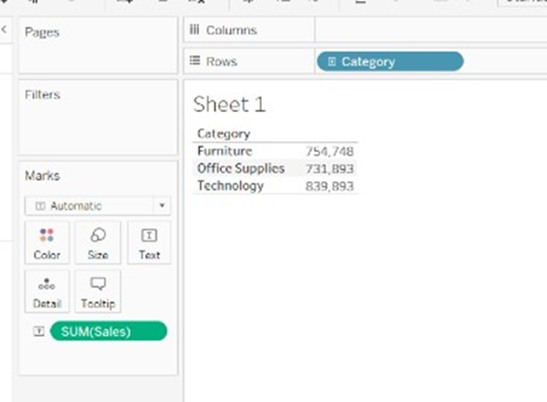
SUM is one of the commonly performed functions in Tableau. The Tableau Sum function seeks out the Sum of records under consideration. It is the total of the values present in a field. The screenshot provided below exhibits the total sum of sales for each of the three categories as given in Sheet 1.
In the sample dataset shown below, the sum of sales is shown corresponding to each of the corresponding values in the dimension "Category". For example, "Furniture" has a total sale of 754,748, which could be comprising of furniture related products such as Tables, Chairs etc.
Running Sum
A RUNNING SUM is a cumulative total in a row or column from the first value to the final value in the respective row or column. For instance, in the example given below, the cumulative values of Furniture and Office Supplies stand at 1,486,641 and that value when added to Technology’s value of 839,893 gives 2,326,534.
You can summarise or modify the granularity of your data using aggregate functions. An aggregate part combines the values of multiple lines to provide a single value. Examples of aggregate functions apart from sum are measurements based on Count, Count Distinct, Fixed Calculations, and other standard integration functions.
Every time you include a measure in your view, an aggregate is automatically applied to that measure. Depending on the context of the view, different aggregation techniques are used. Analysts can well utilise these features to simplify the whole complex process of data analysis, and organisations can harness them for insightful decisions.

Amazon CloudFront Case Study: How It Transformed the Customer Experience of Zalando, a Prominent E-commerce Platform
What is Amazon CloudFront?
Amazon CloudFront is a content delivery network offered by Amazon Web Services. It securely transfers content such as software, SDKs, and videos to clients with high transfer speeds. It helps to:
• Increase productivity while maintaining user-friendliness
• Cache your content in edge locations to reduce workload
• Provide high security through the "Content Privacy" feature.
• Utilize HTTPS protocols for fast content delivery.
• Support geo-targeting services for delivering content to specific end users.
The Amazon CloudFront solved the performance and scalability issues, providing Zalando's development teams more insight, flexibility, and control. Eventually, the shift set the stage for long-term innovation and large-scale customer happiness.
Amazon CloudFront Case Study: Challenges Faced by Zalando
In the face of rapid expansion, Zalando sought to maximize its offerings. With more than 49 million active users, Zalando links consumers with brands and goods in 25 European regions. Rich media content is integral to Zalando's website and app to enhance the online customer experience. However, the company's image management, transformation, and delivery system have limited visibility and control for developers. All these factors are crucial for sustaining growth and delivering a unique customer experience.
Zalando migrated its media management and delivery system to Amazon Web Services (AWS) by leveraging Amazon CloudFront, a content delivery network service designed for developer simplicity, security, and high performance. Using CloudFront, Zalando enhanced developer observability, scalability, and online purchasing experiences.
Strengthening Developer Ownership to Promote Development
Due to substantial expansion, Zalando outgrew its prior image management system, which provided its engineering and product teams with few configuration options. Furthermore, few operational insights were available, making it difficult to see how well the service was doing and what improvements could be made. It affected Zalando's capacity to modify and enhance its online stores. Delivering a consistent client experience during high-demand seasonal events was made difficult by the absence of comprehensive reporting regarding image transformation.
To overcome these obstacles and to develop their new media management system, the Zalando team used Amazon CloudFront. Because of its programmability and flexibility, Amazon CloudFront became crucial for scaling operations and keeping up with rising client demand.
Migrating to AWS Edge
Zalando executed its migration quickly and effectively. The company coordinated its migration schedule with AWS's Enterprise Support, Service Specialists, and Service Teams to avoid conflicts with customer campaigns and market events. Small client groups were used in the initial stages of the conversion so that the business could identify any areas for improvement without significantly impacting Zalando customers. During this procedure, Zalando moved more than 20 websites and apps, totaling 26.93 PB of data. CloudFront's peak load has consistently surpassed 100,000 requests per second.
The development team enhanced the image-delivery method using Zalando's prelaunch hands-on access to CloudFront Functions. The team was pleased to receive support on several levels throughout several stages. Regular contact began very early on, while they looked for proofs of concept and sent the code to verify its legitimacy and identify any obstacles.
Zalando started using CloudFront Functions in production in May 2021. Smooth configuration is a significant change with CloudFront Functions. On an operational level and for daily development, it makes it easier to deploy and reliably revert tasks and scale on demand. Zalando swiftly overcame challenges by implementing the new solution across its online domains. Zalando needed to be able to roll back quickly when necessary, making changes before actual downtime could happen. For various use cases, Zalando now employs both Lambda@Edge and CloudFront Functions. Multiple layers of edge computing give developers greater flexibility, visibility, and control while improving the client experience. It enabled Zalando to respond quickly and provide better consumer and business services.
Since the move, Zalando has been attaining cache hit percentages of 99.5 percent, and its new image-delivery system serves almost five billion images daily. They didn't face any challenges with Amazon CloudFront. With about 250 million online orders after the transformation, Zalando's CloudFront solution's size and effectiveness were crucial in providing a first-rate consumer experience.
Additional optimizations made by Zalando have resulted in a threefold decrease in requests for nonoptimized photos on the home screens of the company's online and mobile applications. Because of its improved efficiency and versatility, teams within Zalando have shifted to utilize the pipeline built on CloudFront for additional kinds of material.
Fostering Client Interaction
Using AWS, Zalando intends to keep innovating in managing and manipulating rich media assets. By developing an interactive e-commerce solution with AWS Elemental MediaConvert, a file-based video converting service with broadcast-grade features, it intends to promote consumer interaction. To better serve its clients, Zalando moved to CloudFront to enhance the media management and delivery systems that influence the shopping experience. Zalando could carry out a seamless move with the help of the AWS team, which had significant advantages. The business benefits of using Amazon CloudFront are the operational flexibility and the ability to monitor the health of the solution, experiment, and reverse changes quickly.
Summing Up
Zalando's decision to strategically switch to Amazon CloudFront was a watershed moment in its quest to provide a better, more scalable consumer experience. By tackling important issues with media delivery, performance, and developer control, Zalando increased operational efficiency and enhanced the user experience across all platforms. This success story illustrates how intelligent content delivery systems can enhance long-term value, performance, and customer satisfaction in digital commerce as the company grows and changes.