How AI Decision-Making is Improving Enterprise Outcomes
Blog
Share 
AWS vs AZURE vs GCP: THE LEADING CSPs FROM A COMPARATIVE LENS
 29 November 2023
  Team Beinex
 Benefits of Cloud Computing
Worldwide Vendor Market Share
 Sourced from: Cloud Market Share Q2 2023: AWS, Microsoft, Google Battle | CRN
AMAZON WEB SERVICES (AWS)
Amazon Web Services is the most extensive and widely adopted cloud platform worldwide, offering over 200 fully featured services across global data centres. AWS is used by millions of customers, including fast-growing startups, major enterprises, and prominent government agencies, to reduce costs, enhance agility, and accelerate innovation.
The USPs of AWS
Popular Customers of AWS
Netflix:Netflix relies on AWS for most of its computing and storage requirements, including analytics, databases, recommendation engines, video transcoding and numerous functions utilizing over 100,000 server instances on the AWS platform.BMW Group: BMW Group leverages AWS to acquire the agility and flexibility necessary for democratizing data usage and expediting innovation.
Philips: Philips is an early adopter of AWS that utilizes AWS services to manage the Philips HealthSuite Platform, ensuring scalability, cost-effectiveness, and regulatory-compliant solutions.
Salesforce: Salesforce shares a global strategic relationship with AWS, utilizing AWS compute, storage and AI solutions to create and deploy innovative business applications.
Pinterest: The exabyte data platform of Pinterest is hosted exclusively on AWS, managing log search and analytics that surpass 1.7TB. This implementation has led to a 30% reduction in operational costs.
Coca-Cola: After its migration to AWS, Coca-Cola has reduced operational costs by 40% and IT ticket volume by 80%.
Regions & Availability
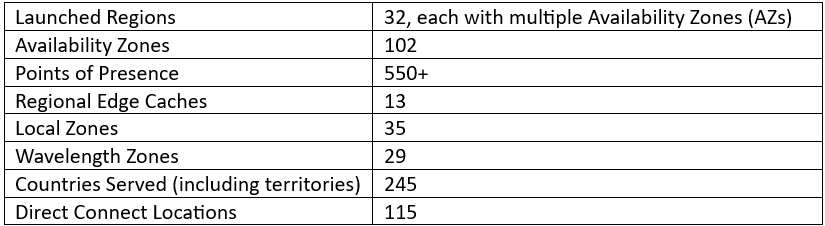
AWS boasts the most expansive global cloud infrastructure. Gartner has acknowledged the AWS Region and Availability Zone framework as the endorsed strategy for operating enterprise applications demanding high availability.
The AWS Cloud covers 102 Availability Zones across 32 geographic regions worldwide, with disclosed intentions to introduce an additional 15 Availability Zones and 5 AWS Regions in Germany, Canada, Thailand, Malaysia and New Zealand.
MICROSOFT AZURE
The Azure cloud platform encompasses over 200 products and services crafted to empower you to bring innovative solutions to fruition, addressing current challenges while shaping the future. It offers the flexibility to build, run, and manage applications across various clouds, on-premises, and at the edge, utilizing the tools and frameworks as per your preferences.
The USPs of Microsoft Azure
Popular Customers of Microsoft Azure
New York City Department of Environmental Protection (DEP): DEP uses a Microsoft infrastructure specifically designed with modern security considerations. With the solution in the cloud, Microsoft manages disaster recovery, reducing the necessity for maintaining certain skill sets in-house. CCC Group: CCC Group utilizes Azure Data Lake and Data Warehouse to collect, store, and segment data. Panasonic Connect Co: Panasonic Connect Co maximizes the benefits of PaaS services such as Azure IoT Hub, Synapse Analytics, and Azure Kubernetes Services. Hamburg Commercial Bank: Hamburg Commercial Bank opted for Microsoft Azure Virtual Desktop to achieve improved performance, reliability, and enhanced interoperability with other Microsoft technologies previously invested in. Barnsley Hospital NHS Foundation Trust: Barnsley Hospital NHS Foundation Trust adopted a new, integrated platform using Power Platform and Microsoft Teams for video consultations. During the COVID-19 pandemic lockdowns, the Trust rapidly deployed Microsoft Teams to facilitate remote work and staff collaboration.Regions & Availability:
Microsoft operates highly secure data centre facilities globally, forming a distributed infrastructure that sustains thousands of online services. This expansive, globally distributed infrastructure prioritizes sustainability, bringing applications closer to users, ensuring data residency, and providing customers with comprehensive compliance and resiliency options.
As of March 2023, Microsoft Azure boasts 160 active data centres spread across 60 regions worldwide. These Azure regions, defined by geographical areas, house one or more physical Azure data centres. Operating within a latency-defined perimeter, these data centres are strategically positioned to deliver optimal performance and security to users.
Azure leads with over 60 announced regions, surpassing all other cloud providers. It is accessible in 140 countries, showcasing a global presence that sets it apart in cloud computing.
GOOGLE CLOUD PLATFORM (GCP)
Google Cloud, also called Google Cloud Platform, offers computing resources dedicated to developing, deploying, and operating web applications. While its cloud infrastructure supports applications like Google Workplace, GCP primarily serves as a platform for constructing and managing custom applications. These applications can subsequently be published on the web, leveraging the extensive capabilities of its hyperscale data centre facilities.
The USPs of the Google Cloud Platform
Popular Customers of the Google Cloud Platform
Etsy: Utilizing the collaborative tools offered in Google Workspace, Etsy meets the evolving needs of sellers and buyers innovatively, fostering continued growth and enhancing the sustainability of its operations. X (formerly Twitter): Twitter's complete shifting of its ad analytics data platform to Google Cloud granted developers increased agility, allowing them to configure existing data pipelines more easily and build new features acceleratedly. Airbus Defence and Space: Airbus Defence and Space's Intelligence business line employs Google Cloud to construct a scalable online platform, enabling customers to access petabytes of satellite imagery in real-time.Regions & Availability
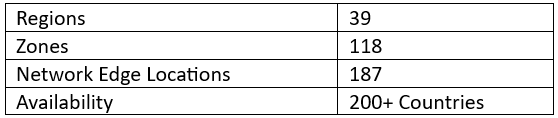
Google Cloud provides global coverage through regions distributed worldwide, ensuring low cost, minimal latency, and optimal application availability for customers.
Follow the link to have a look into a tabular comparison of the solutions provided by the CSPs: AWS, Azure and GCP. https://cloud.google.com/docs/get-started/aws-azure-gcp-service-comparison
Cloud computing entails delivering IT resources, such as computing power, storage, and databases, over the Internet with a pay-as-you-go pricing model. Rather than investing in, managing, and maintaining physical data centres and servers, users can access technology services as needed from a cloud provider like Google Cloud Platform (GCP), Microsoft Azure, and Amazon Web Services (AWS).
Related Articles

Seamless Integration: Maximise the Benefits of Blockchain in Cloud Computing
5 Top Ways Blockchain Improves Cloud Computing
Blockchain technology can enhance cloud computing in several ways:
- Improved Security: Security and privacy are major concerns in cloud computing. Blockchain technology offers enhanced security by enabling data encryption and advanced database protection. The decentralised nature of blockchain ensures that data is not stored in a single location, reducing the risk of unauthorised access or data breaches.
- Increased Visibility: Transparency and visibility are crucial in cloud computing. Blockchain enables the creation of a decentralised and shared trust model, allowing for increased transparency. Public blockchains provide visibility into every action taken, reducing opacity and enhancing trust in the cloud environment.
- Data Integrity and Immutability: Once information is recorded on a blockchain, it becomes immutable and cannot be altered by any individual or entity without consensus from the network. This feature ensures the integrity of data stored in the cloud, reducing the risk of unauthorised modifications or tampering.
- Traceability: Blockchain ensures that data stored on its network remains intact and authentic. The information stored on one device within the blockchain network does not affect the data on other devices, guaranteeing data integrity. Additionally, blockchain enables easy data traceability, allowing users to track where, when, and how it is used.
- Exclusion of Third Parties: In cloud computing, relying on third-party providers can result in significant data loss if these providers experience failures. In contrast, blockchain is managed by code and does not involve third parties. This makes blockchain integration with cloud computing an attractive option, as it reduces the risk of data loss and dependency on external service providers.
4 Top Benefits of Blockchain in Cloud Computing
Integrating blockchain technology into cloud computing offers many benefits, including enhanced data security, seamless traceability, improved system interoperability, and more. Let's explore how organisations can leverage the power of blockchain in their cloud computing strategies.
Enhanced Data Security
By implementing point-to-point encryption, blockchain ensures data security during transfer and storage. Using blockchain for transaction recording establishes a reliable method for maintaining the integrity and sequence of transactions. Furthermore, the decentralised nature of blockchain, combined with peer-to-peer distribution across cloud computing systems, adds an extra layer of security beyond traditional centralised storage approaches.
Permanent Audit Trail
An additional benefit of integrating blockchain technology into cloud computing is creating a permanent audit trail. Blockchains ensure the establishment of a lasting record of transactions. Notably, blockchain technology incorporates a feature known as proof of history (POH), which supports a verifiable delay function. This function timestamps the transactions within the cloud computing network without requiring user validation. By implementing blockchain, organisations can maintain a proper order of transactions and establish a permanent timeframe for transactional data by including the POH function.
Decentralisation
An emerging trend in the technology landscape involves the shift towards edge computing, where data processing occurs at the network's periphery, near the data source. This decentralisation approach offers various advantages. For instance, Internet of Things (IoT) devices no longer need to rely on a centralised server for data processing. Instead, they can handle data independently. Similarly, facial recognition nodes may store encrypted data of authorised users and only require server interaction if a facial match is not detected. These nodes can operate autonomously until an upgrade check is necessary.
Efficient Disaster Recovery
By leveraging blockchain technology, the record of transactions is distributed widely, offering valuable benefits in terms of disaster recovery. The public or shared blockchain among authorised users ensures that a failure within one network node does not impact the remaining blockchain copies. Other nodes within the network continue to operate and update the blockchain even if one node experiences a crash.
With the transactional records embedded within the blockchain, especially those with specific timeframes, any failed network node can easily synchronise with the current state of the blockchain database once it is back online. This capability allows for a swift recovery and ensures that the node can quickly regain access to the most up-to-date version of the blockchain. Consequently, faster disaster recovery is facilitated through the inherent resilience and redundancy of blockchain technology.
Blockchain Technology: An Ultimate Solution to Business Problems
Blockchain technology offers solutions to various business problems across different industries. Let's explore how blockchain can address challenges in specific sectors, starting with healthcare:
Healthcare
In the healthcare industry, sensitive information such as credit card data, patient records, and test results are often stored in centralised systems, which can be prone to data breaches and security risks. By adopting blockchain technology, healthcare establishments can mitigate the risk of data loss. Blockchain enables the creation of a decentralised and tamper-proof log for storing private data. This decentralised approach and unique secure codes enhance data security and privacy, reducing the likelihood of unauthorised access or data leakage.
Supply Chain
Supply chains rely on vast data to ensure smooth operations at each transportation stage. By implementing blockchain technology in logistics management, you can enhance revenue and mitigate security concerns through real-time visibility and control. Furthermore, blockchain solutions improve interoperability, transparent data sharing, and more accurate product tracking within the supply chain ecosystem.
Banking
The current process of international payments often involves numerous verification steps, resulting in a cumbersome procedure. However, blockchain can potentially expedite money transfers while ensuring robust transaction security. This is achieved using distributed ledgers, where payments are processed once the transaction is registered. By leveraging the blockchain in banking, transactions can be streamlined, reducing delays and providing higher security.
Real Estate
Buying and selling real estate properties can be cumbersome and time-consuming, involving extensive paperwork, multiple intermediaries, susceptibility to fraud, and challenges in property search. However, intelligent solutions leveraging blockchain technology can effectively address these significant problems in the real estate industry.
Blockchain in real estate can enhance the due diligence process for property purchases and sales, reducing the reliance on intermediaries and streamlining the transaction process. Using blockchain can reduce the need for traditional agents, offering more direct interactions between buyers and sellers. Additionally, blockchain-powered smart contracts enable secure and seamless transactions, eliminating the need for manual contract handling and reducing the potential for errors or disputes.
How can Beinex Assist You
By leveraging blockchain technology, cloud computing solutions can benefit from enhanced security measures, increased transparency, and the assurance of data integrity. These advantages contribute to a more trustworthy and reliable cloud environment, addressing decentralisation, data privacy, and network security challenges.
Beinex, a pioneer in the Middle East in modern cloud functions and analytics, can change how you see, perceive and analyse cloud data, and take it to a superior, advantageous position.

Best AWS Services & Practices Every Data Engineer Should Master in 2025: Everything You Need in Your AWS Toolkit
1. Start with Storage Using Amazon S3
Amazon S3 is a secure and reliable storage solution when you are dealing with massive datasets. It's highly scalable, extremely durable, and serves as a foundation for most data workflows. You can depend on it from initial data landing zones to backup archives.
2. Spin Up Power with Amazon EC2
When you need raw computing power for heavy-duty tasks, such as batch processing or running data pipelines, EC2 gives you the flexibility to choose instance types suitable for your workloads. You're in control of the compute environment, which is key for tuning performance.
3. Simplify ETL with AWS Glue
Managing extract-transform-load operations can be messy. AWS Glue resolves this with automated data discovery, code generation, and job orchestration. AWS Glue can support you if you're managing multi-source ingestion and need to clean and prepare your data for use.
4. Query at Speed with Amazon Redshift
Redshift offers the easiest and quickest way to run complex queries against large volumes of structured data. It's perfect for powering dashboards, reports, and business intelligence tools without the drag of traditional databases.
5. Tackle Big Data with Amazon EMR
If your workloads involve distributed computing using Apache Spark or Hadoop, EMR helps you deploy and manage those clusters in a fraction of the time. It is ideal for advanced data transformations and machine learning (ML) workloads, as it integrates easily with other AWS services.
6. Event-Driven Logic with AWS Lambda
Forget provisioning servers to process a few files. Lambda allows you to write lightweight, trigger-based code that responds to data events. It is an efficient serverless solution for processing files as they arrive or triggering downstream processes.
7. Streamline Real-Time Data with Amazon Kinesis
Modern data doesn't always arrive in neat batches; it streams in constantly. Kinesis helps you manage this chaos by capturing, processing, and analyzing real-time data. You can utilize it for use cases such as log monitoring, clickstream analysis, and sensor data processing.
8. Store Fast & Flexible Data with DynamoDB
DynamoDB is a fully managed, serverless database ideal for workloads where speed and uptime are paramount. It provides a NoSQL solution that works best in situations where low latency is essential, such as recommendation engines or personalized content delivery.
9. Keep Your Metadata in Check: Glue Data Catalog
The Glue Data Catalog can be considered as a metadata hub that consolidates information regarding datasets, schemas, and transformations for you. It improves discoverability and governance—two things no engineer should overlook.
10. Coordinate Workflows with AWS Step Functions
As you know, data workflows can span multiple tools, services, and dependencies. AWS Step Functions help you string those steps together into one cohesive flow, complete with retries and error handling. It's a visual way to orchestrate and manage complex processes with clarity and ease.
Best Practices for Using AWS Tools as a Data Engineer
AWS tools are powerful, but knowing what to use isn’t enough; how you use them is what drives real impact. That’s where the best practices for using AWS services come in:
• Scalability: Use services that grow with your data. Enable auto-scaling in EC2, EMR, and Lambda to handle variable workloads.
• Automation: Set up Glue jobs, Lambda triggers, and Step Functions to run tasks without manual effort.
• Security: Encrypt your data (both at rest and in transit) and adhere to least-privilege access with IAM roles.
• Cost Monitoring: Use spot instances, archive old data in S3 Glacier, and monitor costs with AWS Budgets.
• Smart Workflows: Break pipelines into smaller, reusable steps. Use Step Functions for clear orchestration.
• Track & Monitor Everything: Use CloudWatch and CloudTrail to keep an eye on performance, errors, and user actions.
• Organize Metadata: Keep your Glue Data Catalog updated and use clear naming so your data is easy to find and understand.
• Test Before You Trust: Validate your data and test your pipelines with sample loads before pushing to production.
• Document as You Go: You can easily maintain notes on your workflows, data sources, and transformations for smoother teamwork.
Wrapping Up: Why These Services Matter
Tools that enable speed, flexibility, and automation are not just desirable; they're essential. AWS offers a comprehensive toolkit that covers all stages of the data lifecycle. By staying up to date with these services, you not only improve your performance at work but also position yourself to take the lead in a data-driven, cloud-first future.
For data engineers seeking to excel in their roles, it is beneficial to become proficient in at least 10 AWS services. By serving as the foundation for scalable and effective data pipelines, these services help businesses transform unstructured data into actionable insights. Data engineers can significantly contribute to fostering innovation and informed decision-making within their companies by leveraging the potential of Amazon Web Services.

The Transformative Power of AWS Cloud Infrastructure Services
AWS and Pay-as-you-go Model
AWS adopts a pay-as-you-go model for the majority of its cloud services. This means you pay only for the specific services you use, for the duration of your usage, and without the need for lengthy contracts or intricate licensing agreements. The pricing structure is akin to paying for utilities such as water and electricity – you are charged solely for the services consumed, and once you cease using them, no additional costs or termination fees apply.
The pay-as-you-go system with AWS ensures that you pay only for the resources your organisation utilises, promoting agility, responsiveness, and scalability. This approach allows you to effortlessly adjust to evolving business requirements without committing to fixed budgets, ultimately enhancing your ability to respond to changes promptly.
In essence, paying for services on a needed basis empowers your organisation to focus on growth and efficiency rather than getting bogged down by unnecessary expenses.
Let’s understand the key benefits AWS customers can reap from embracing AWS Cloud Infrastructure services, unlocking a world of possibilities for organisations seeking to transform their operations and drive unparalleled value.
AWS Economic Overview: Realizing Significant Savings
An economic analysis by the Enterprise Strategy Group highlights that migrating on-premises workloads to AWS results in substantial savings and benefits across various categories:
- Cost Optimization and Improved Operational Efficiency
- Faster Time to Value and Improved Business Agility
- Reduced Risk to the Organization
1. Cost Optimization and Improved Operational Efficiency
By transitioning to AWS Cloud Infrastructure, organisations shed the complexity and burden associated with on-premises operations. This shift allows IT infrastructure teams to focus on business innovation rather than managing hardware, creating a ripple effect that enhances the efficiency of application, development, and data service teams. The move to AWS results in simplified administration, automated tasks, and substantial time savings, with reported efficiencies ranging from 60% to 70%.
a. Designed for Best Price-Performance: Employing Customized SolutionsAWS's commitment to delivering the best price-performance for many applications and workloads is evident in its continuous innovation. From the Nitro System and AWS Graviton processors to AWS Trainium and Inferentia accelerators, AWS has engineered custom silicon that optimises performance and efficiency, allowing organisations to achieve cost savings while enjoying top-notch performance.
b. Financial Flexibility, Predictability, and Visibility: Enabling Decision-MakingAWS offers a transparent monthly billing model, shifting organisations from up-front capital investments to a more flexible and predictable cost structure. With tools like AWS Cost Explorer, customers gain visibility into resource utilisation and identify cost-saving opportunities. Flexible purchase models, including On-Demand Instances, Spot Instances, and Savings Plans, provide financial flexibility, enabling organisations to meet infrastructure needs while staying within budget constraints.
c. Managed Services: Enabling Business TransformationAWS-managed services not only free up internal teams from infrastructure maintenance but also allow them to scale operations using fully managed services. By reducing administrative burdens through offerings for monitoring, incident detection, security functions, and more, organisations can focus on delivering superior data services and business logic. The AWS Partner Network (APN) further enhances this capability, offering a global community of partners to collaborate with and derive greater business value.
d. Improved Environmental Sustainability: A Commitment to a Greener FutureAs environmental, social, and governance goals take centre stage, organisations benefit from AWS's global infrastructure to lower their carbon footprint. Moving from on-premises to AWS Cloud Infrastructure can lead to a significant reduction in electricity consumption and associated costs. AWS's commitment to powering operations with renewable energy aligns with the sustainability goals of organisations, contributing to a greener and more responsible future.
2. Faster Time to Value and Enhanced Business Agility
Embracing change can be challenging for any IT organisation, particularly for large enterprises deeply invested in on-premises technology. Overcoming hurdles such as standardising organisational structures and adopting best practices adds complexity to the transition. However, AWS offers a compelling solution, guiding organisations seamlessly through the shift from on-premises environments to the cloud. This transition not only occurs swiftly and securely but also brings about a significant improvement in business agility, unlocking outcomes that were previously unattainable.
a. Faster time to migrationTransitioning on-premises workloads to AWS Cloud Infrastructure enables organisations to swiftly leverage modern end-to-end data architectures. This facilitates immediate benefits in storing, protecting, analysing, visualising, and extracting valuable insights from data. Remarkably, a customer successfully migrated their business applications to AWS in a single weekend, involving over 200,000 business customers and 400 internal users across three global locations.
AWS, as a cloud provider, offers a comprehensive range of services and features within those services, making the process faster, easier, safer, and more cost-effective. Whether rehosting workloads or relocating entire data centres, AWS empowers organisations to build virtually anything, providing confidence through proven phased methods, assessment tools, and mobilisation support.
AWS stands out by delivering unique capabilities and technologies that enable customers to experiment and innovate rapidly. The cloud infrastructure allows customers to benefit from continuous innovation in modern computing, networking, and storage technologies without needing on-premises forklift refreshes.
Technologies like the AWS Nitro System, Amazon FSx for Lustre, and various deployment options empower organisations to modernise applications, accelerate development, and explore edge computing solutions seamlessly. AWS connects containers and microservices with application-level networking, secure API gateways, and advanced tools for modernising or re-platforming applications.
The AWS Global Infrastructure facilitates secure, extensive, and reliable global cloud operations. Customers can seamlessly deliver data, applications, and services to regions worldwide while meeting SLAs. Leveraging AWS Direct Connect, customers can run applications using on-premises and cloud resources without compromising performance, ensuring private, secure connections bypassing the internet.
AWS tools and services enable the transformation, enrichment, and accessibility of data for diverse workloads such as AI, ML, HPC, and BI. Customers experience improved data-driven services, efficient access for remote workers through AWS Client VPN, and high-performance applications at the edge using CDN services like Amazon CloudFront.
AWS empowers organisations to scale computing, networking, and storage resources swiftly in response to changing business demands. With minimal planning, customers can provide additional resources in minutes, starkly contrasting the weeks or months required on-premises. Leveraging AWS Auto Scaling and intelligent optimisation tools, customers ensure predictable, steady performance while optimising costs.
Enhanced scalability allows for dynamic adjustments to resource capacity, saving developers significant time in manual infrastructure maintenance and scaling. Customers can precisely provision resources, proactively reducing infrastructure costs, and flexibly choose from 600 compute instances to meet workload requirements. This flexibility extends to running applications on VMs, containers, or serverless services, enabling deployment options across geographic regions, data centres, or at the edge.
Reduced Risk to the Organization
In prioritising security, AWS is a trusted partner for organisations, addressing concerns related to data protection, service interruptions, data corruption, compliance, and malicious intent. Security holds paramount importance in the design of the AWS Global Infrastructure, custom-built for the cloud and continuously monitored to ensure the confidentiality, integrity, and availability of customer data.
a. Comprehensive Security Measures:Protection at all levels, including physical security, infrastructure security, network backbone security, and data security. Rigorous access controls, encryption, retention, and auditing to meet compliance requirements. AWS’s commitment to ongoing investments in security technologies and operational best practices.
b. Shared Responsibility Model:Security and compliance shared responsibility between AWS and the customer. AWS manages components from the host operating system to physical security, while customers handle the guest operating system, application software, and AWS security group firewall configuration.
c. Data Protection and Security:AWS offers built-in security features at the chip level through the Nitro System, ensuring continuous monitoring and verification. Virtualisation resources are offloaded to dedicated hardware and software, minimising the attack surface. The security model of the Nitro System is locked down to prevent administrative access, reducing the risk of human error and tampering. AWS provides tools for data resiliency, including snapshots, versioning, and full backup and recovery solutions.
d. Secure Access Control and Operations:AWS customers have tools for securing access, including a centralised firewall, AWS Identity and Access Management, encryption features, and more. Features like Amazon S3 Object Lock, checksums, replication, and versioning ensure data integrity. Protection against exploits and DDoS events with AWS Web Application Firewall (WAF) and AWS Shield.
e. Improved Compliance:AWS customers receive tools and visibility to demonstrate compliance locally and regionally. AWS CloudTrail helps organisations avoid penalties for regulatory non-compliance.
f. Data Sovereignty and Privacy:Organisations retain control over data storage, security, and access. AWS ensures data remains within chosen AWS Regions and is committed to confidential computing. Specialised hardware and firmware protect customer code and data from external access.
Summing Up
Embracing AWS Cloud Infrastructure services is not just a technological upgrade; it's a strategic move that unleashes innovation, enhances efficiency, and aligns businesses with the future of digital transformation. The transformative journey with AWS goes beyond cost savings; it's about realizing the full potential of technology to drive growth, agility, and sustainability in an ever-changing landscape. As organisations navigate the complexities of the digital age, AWS stands as a trusted partner, offering a robust foundation for a future-ready enterprise.

The Future of Business Intelligence: AI-Augmented Analytics
The Struggles of Traditional Business Intelligence
Traditional BI platforms, while valuable, suffer from several limitations:
These limitations force businesses to make a tough choice: sacrifice the quality of insights by limiting analysis or invest significant time and resources into data preparation and model building.
The Rise of Augmented Analytics
Augmented analytics emerges as a powerful solution, addressing the shortcomings of traditional BI. It leverages the power of Artificial Intelligence (AI), Machine Learning (ML), and Natural Language Processing (NLP) to revolutionize data analysis:
How Does Augmented Analytics Work?
Augmented analytics enhances the four core stages of data analysis:
- Data Preparation: Traditionally, data preparation involves manual tasks like data cleaning and integration. Augmented analytics automates these processes, allowing data scientists to focus on more strategic tasks.
- Insight Discovery: Traditional BI requires pre-defined models to uncover insights. Augmented analytics utilizes ML algorithms to analyze all available data, regardless of size or complexity, to deliver targeted and nuanced insights in response to user queries.
- Insights Sharing: Sharing insights often involves generating reports and charts, a time-consuming task. Augmented analytics utilizes Natural Language Generation (NLG) to present insights in real time through online dashboards. These dashboards explain the "why" behind the data, giving decision-makers the context they need.
The Benefits of Augmented Analytics
By implementing augmented analytics, businesses can unlock a multitude of benefits:
Augmented Analytics Use Cases
Let's explore how augmented analytics is transforming various industries:
- Pharmaceutical Companies: Analyze vast datasets to optimize go-to-market strategies and uncover hidden patterns in market share data.
- Financial Lenders: Assess credit risk with greater accuracy by analyzing all relevant data points in real-time, leading to faster loan approvals and better risk management.
- Consumer Goods Companies: Gain real-time insights into product sales, customer churn, and satisfaction, allowing for proactive customer engagement strategies.

Tableau Accelerators: Expert-Built Dashboards at Your Fingertips
Tableau Exchange: A One-stop Destination
You can access Tableau Accelerators through Tableau Exchange. Tableau Exchange is a platform where the Developer Community can showcase and offer a wide range of dashboard extensions, connectors, and accelerators. It is your all-in-one destination for offerings that accelerate your data analysis, providing prompt insights and actionable data. This platform offers a wide range of trusted solutions created by Tableau and our partner network, enabling faster time to value, catering to various use cases, and maximising your Tableau investment returns.
What exactly are Tableau Accelerators?
Tableau Accelerators are pre-built dashboards and workbooks created by industry and functional experts, allowing you to leverage analytics tailored to your specific line of business, vertical, or sector. Instead of starting from scratch, you can begin with these expert-built dashboards for various industry and departmental use cases, accelerating your data-driven insights. These pre-built assets are designed to monitor and enhance key performance indicators (KPIs) across your entire organisation.
For instance, Tableau’s healthcare offerings have introduced Accelerators that delve into metrics such as patient wait times, admission rate seasonality, readmission rates, and more. In addition to industry-specific dashboards, Tableau offers a multitude of Accelerators for various lines of business functions like marketing, sales, and corporate finance. Tableau also provides Accelerators that seamlessly integrate with critical enterprise applications and cloud services such as Salesforce, Marketo, LinkedIn, and Service Now.
How to use Tableau Accelerators? Steps
To begin utilising Tableau Accelerators, follow these steps:
- Visit exchange.tableau.com/accelerators.
- Once on the website, you can easily browse and filter the available Accelerators based on your specific requirements. You have the option to filter by Tableau version, connection type, language, industry, or job function.
- Each Accelerator listing provides detailed information about how to use the dashboard effectively. It includes insights on the business questions the dashboard can address, the necessary attributes for optimal performance, demo scenarios, and even potential partners who can assist in customising the Accelerator to suit your specific requirements.
Types of Tableau Accelerators
Tableau accelerators offer valuable solutions in various fields, addressing specific industry needs and challenges. With their versatility and industry-specific capabilities, Tableau accelerators provide valuable insights and empower data-driven decision-making in various fields like corporate finance, healthcare, ESG, insurance, marketing, public sector, retail, telecommunications, supply chain and manufacturing etc.
1. Corporate Finance
The Corporate Finance Accelerator by Tableau offers finance professionals a range of powerful tools. It enables in-depth financial analysis, facilitates budgeting and forecasting, and streamlines the generation of financial reports. With this accelerator, finance teams can gain valuable insights, make informed decisions, and effectively manage the financial aspects of their organisation.
Examples of corporate finance accelerators:
a. Budget Controlling Accelerator
Budget Controlling Tableau Accelerator provides the capability to:
- • Evaluate and manage your budget expenditure effectively.
- • Analyse budget consumption from various viewpoints, including Month-to-Date, Year-to-Date, and Actual figures, and compare against the budget and the previous year, all presented in a tabular format.
b. Budget Allocation Accelerator
Using Budget Allocation Accelerator by Beinex, you can:
- • Offers a clear comparison of revenue and expenses against the budget.
- • Enables you to track the trends of revenue and expenses over time.
- • Analyses revenue and expenses by vendor, economic sector, account group, and geography.
- • Allows you to drill down into individual customer details for a more detailed understanding.
- • Makes actionable decisions based on the insights gained from the accelerator.
2. ESG (Environmental, Social, and Governance)
In the realm of ESG, Tableau accelerators enable organisations to visualise and analyse environmental, social, and governance metrics, track performance, and benchmark against industry standards.
An example of an ESG accelerator is given below:
a. ESG by TableauWith this Tableau Accelerator, you can:
- • Evaluate global efforts in Environment, Social, and Governance (ESG) areas.
- • Analyze detailed environmental indicators.
- • Assess leading industries in terms of ESG performance.
- • Deep-dive into specific companies and benchmark their performance against competitors.
3. Healthcare
Tableau accelerators in healthcare help analyse patient data, optimise resource allocation, and enhance decision-making for improved healthcare delivery in healthcare.
An example of a healthcare accelerator is provided:
a. Budget ControllingWith this Tableau Accelerator, you can:
- • Evaluate and manage your budget consumption effectively.
- • Analyze budget consumption from various perspectives, including Month-to-Date, Year-to-Date, Actual figures, and comparisons to the Budget and Last Year.
- • View budget consumption in a tabular format for detailed analysis and insights.
4. Insurance
Insurance companies can leverage Tableau accelerators to analyse claims data, detect fraud, and monitor policy performance.
An example of an insurance accelerator is provided below:
a. Insurance ClaimsWith this Tableau Accelerator, you can:
- • Assess your performance in handling claims.
- • Identify the most impactful open claims for targeted action.
- • Identify the most effective agents in claims management.
- • Improve the effectiveness of your claims process.
- • Drill down to the specific claim level within your Claim Application and take immediate actions for enhanced efficiency and resolution.
5. Marketing
In the marketing sector, these accelerators assist in analysing trends, identifying growth opportunities, and optimising pricing and product strategies.
An example of an Marketing Accelerator:
a. Email Marketing CampaignsWith this Tableau Accelerator, you can:
- • Assess and enhance the efficiency of your email marketing campaigns.
- • Identify the most impactful campaigns based on key metrics and performance indicators.
- • Conduct an audit of campaign optimisation results over time, enabling data-driven improvements and informed decision-making.
6. Public Sector
Public sector organisations can use Tableau accelerators to monitor government initiatives, improve public service delivery, and track budget allocation. Retail businesses can benefit from analysing sales data, optimising inventory management, and enhancing customer experience.
An example of an Public Sector Accelerator:
a. Emergency CellsWith this Tableau Accelerator, you can:
- • Assess and improve the efficiency of handling emergency calls.
- • Enhance citizen service across different areas.
- • Optimise resource allocation to areas with the greatest need.
- • Adapt staffing levels to accommodate activity peaks and ensure an effective emergency response.
7. Retail
Retail businesses can benefit from Tableau accelerators to analyse sales data, optimise inventory management, and enhance customer experience.
An example of a retail accelerator:
a. Salesforce Data Cloud - Retail Sales by TableauThis Tableau Accelerator enables you to:
- • Assess network performance and drive sales growth.
- • Predict sales evolution and optimise product mix.
- • Identify emerging/declining products and pinpoint stores in need of assistance.
- • Learn from top-performing stores and identify sales drivers.
- • Dive into detailed insights at the store, product line, and product levels. Watch the demo video to see it in action.
8. Telecommunications
Telecommunications companies can leverage accelerators to analyse network performance and improve customer satisfaction. Supply chain and manufacturing organisations can optimize operations, track production data, and streamline inventory management.
Game Analytics is an example of a telecommunications accelerator:
a. Gaming Analytics by LovelyticsThe Gaming Analytics Accelerator offers performance metrics for your game, integrating game telemetry, usage stats, marketplace data, platform data, and external sources like social media. It provides insights into game-playing patterns, consumption, and revenue. This Accelerator aims to help gaming by:
- • Facilitating the quick and easy acquisition of new customers.
- • Enhancing the gamer experience.
- • Tracking revenue and spending patterns within the game.
9. Supply Chain and Manufacturing
Supply chain and manufacturing organisations can optimise operations, track production data, and streamline inventory management.
a. Occupational Health and Safety by Tableau
With this Tableau Accelerator, you can:
- • Assess and improve employee health in the workplace.
- • Identify safety hazards, risks, and areas of concern.
- • Reduce and prevent injuries, sickness, and accidents.
- • Strive towards the goal of achieving Zero Harm and compliance with industry standards.
10. Energy
Accelerators help monitor energy consumption, optimise resource usage, and track environmental impact in the energy sector.
Two examples of accelerators of the energy sector are given below:
a. Power Grid Connections by TableauWith this Tableau Accelerator, you can:
- • Assess and enhance your ability to handle Power Grid connection requests.
- • Evaluate the level of service you deliver to customers.
- • Identify priority requests to handle first for efficient resource allocation.
- • Focus your efforts on areas that require immediate attention and improvement.
b. Risk Register Accelerator
The Risk Register Accelerator by Tableau enables you to:
- • Assess your current exposure to risks.
- • Monitor and prioritise risks, focusing on key areas.
- • Evaluate the effectiveness of your risk mitigation and elimination efforts.
Beinex+ Tableau Partnership
Beinex, a premier Tableau partner, provide sustainable analytics solutions to organisations and help to build superior data visual analytics capabilities internally through our bespoke training programs. Our team of Tableau-certified consultants are real-life Tableau business users passionate about Tableau and delivering a world-class experience. Connect with us for a Tableau free trial.