How AI Decision-Making is Improving Enterprise Outcomes
Blog
Share 
Artificial Intelligence, Machine Learning and RPA tools
 10 May 2022
  Sumi S
 Enterprises worldwide have perceived the potential benefits of AI for their operations. AI gives humans the freedom to make insightful decisions while allowing a computer to perform other preset tasks that necessitates the development of such technologies in the first place. These tools assist you in developing, but they also aid in optimising networks and workflows.
A list of Artificial Intelligence tools is given below:- Scikit Learn
- Tensorflow
- Theano
- Caffe
- MxNet
- Keras
- PyTorch
- CNTK
SCIKIT Learn
Known to be the most wanted tool in the library of Machine Learning for the python programming language, Scikit learn offers a wide range of tools for statistical modelling, Predictive analytics and very many other machine learning tasks. It underpins many administered and unsupervised learning calculations. It is a perfect tool for fledgling, and it incorporates direct and calculated relapses, choice trees, bunching, k-implies, etc.
Tensorflow
TensorFlow is an end-to-end open-source platform with a flexible ecosystem of tools for creating Machine Learning applications. It allows Google's voice-recognition tool to spot queries in photos and understand audibly stated phrases.
Theano
Theano was created to simplify and speed up the creation of sophisticated learning models so that they might be used in creative projects. It's written in Python and can run on both GPUs and CPUs. It generates elevated information counts that are often higher than when it runs solely on the CPU. Theano's speed makes it highly cost-effective to perform any complex calculations.
Caffe
The Berkeley Vision and Learning Center (BVLC) and network donors collaborated to construct Caffe, a deep learning structure that prioritises articulation, speed, and assessed quality. Google's Deep Dream uses Caffe Framework. CAFFE is a Python-interfaced BSD-authorized C++ library.
MxNET
MxNET uses a 'forgetful back prop' to barter computation time for memory, which is highly useful for recurrent nets on very long sequences. As it is an easy-to-use support for multi-GPU and multi-machine training, scalability is a priority during the design process. There are a lot of intriguing features, such as the ability to write custom layers in high-level languages. Unlike almost all other significant frameworks, it is not explicitly regulated by a vast corporation, which is suitable for an open-source, community-developed framework.
Keras
Keras is what you need if you like Python and how it works. It is a high-end library that tackles neural networks highly effectively for recurrent nets on very long sequences, which it achieves by utilising Theano and TensorFlow in the backend. It recognises the architecture that relates to specific issues. It aids in the detection of problems by using photos with weights. It optimises the results of a network by configuring it. Keras provides an abstract structure that can be transformed into any other framework for compatibility or performance.
Pytorch
The code for Pytorch, a Facebook-created artificial system, is easily accessible on Github. There are over 22000 stars on it. The framework has been in high demand in recent years, and it is still being developed. PyTorch uses reverse-mode auto-differentiation to modify network behaviour arbitrarily with zero lag or overhead, speeding up research iterations. Its deep learning framework is optimised for achieving state-of-the-art results in research.
CNTK
The Microsoft Cognitive Toolkit (CNTK) is an open-source, unified toolkit that describes neural networks as computational steps via a directed graph. Users utilise CNTK to release and merge popular types of models, such as DNNs, CNNs, RNNs, and LSTMs. It employs stochastic gradient descent (SGD), which learns through parallelisation and automatic differentiation across multiple servers and GPUs. Because of its open-source licenses, anyone can try out CNTK
Machine Learning Tools
Machine learning tools are algorithmic applications of artificial intelligence that allow systems to learn and develop without human input; data mining and predictive modelling are similar concepts. They will enable the software to improve its accuracy in anticipating outcomes without programming it directly. Some top Machine Learning Tools are enlisted below:
- Microsoft Azure Machine Learning
- IBM Watson
- Google TensorFlow
- Amazon Machine Learning
- OpenNMS
- Google Colab
- Apache Mahout
- Shogun
Microsoft Azure Machine Learning
Microsoft Azure Machine Learning is a cloud platform for building, training, and deploying AI models. Microsoft is constantly updating and improving its machine learning tools, and it just announced changes to Azure Machine Learning, including the retirement of the Azure Machine Learning Workbench.
IBM Watson
Watson Machine Learning is a cloud service from IBM that leverages data to deploy machine learning and deep learning models. Users can use this machine learning application to execute two basic machine learning operations: training and scoring. Remember that IBM Watson is best suited for developing machine learning applications via API connections.
Google TensorFlow
TensorFlow is an open-source software library for dataflow programming that Google uses for research and production. TensorFlow is, at its core, a machine learning framework. This machine learning tool is new to the market and is rapidly evolving. The ease with which TensorFlow allows developers to visualise neural networks is perhaps the most appealing feature.
Amazon Machine Learning
Amazon Machine Learning is used for creating and predicting Machine Learning models. Amazon Machine Learning comes with an automatic data transformation tool, which makes the machine learning tool even more user-friendly. Amazon also offers other machine learning tools, such as Amazon SageMaker, a fully-managed platform that makes using machine learning models simple for developers and data scientists.
OpenNMS
Open Neural Networks Package is a neural network implementation software library. OpenNMS, written in the C++ programming language, allows you to download its whole library from GitHub or SourceForge.
Google Colab
Google Colab is a cloud service supported by Python. It will assist in developing machine learning applications using PyTorch, Keras, TensorFlow, and OpenCV libraries. It facilitates machine learning and is accessible through Google Drive.
Apache Mahout
Apache Mahout is an Apache Software Foundation project that employs the MapReduce paradigm and is built on top of Apache Hadoop. It's also utilised to construct scalable, distributed machine learning algorithms for clustering, collaborative filtering, and classification. Mahout includes Java libraries for popular math algorithms and operations and foundational Java collections, concentrating on statistics and linear algebra.
Shogun
Shogun is an open-source ML platform, an open-source machine learning software library built in C++. It employs a diverse set of unified and efficient machine learning techniques. Shogun provides a well-organised implementation of all standard machine learning methods and is a critical player in ML education and development.
Robotic Process Automation Tools
Robotic Process Automation (RPA) tools are commonly used for task automation configuration. These tools are essential for automating repetitive back-office activities. With RPA Tools, we acquire a virtual employee who can execute repetitive tasks efficiently and, at less cost, than humans.
The following is a curated list of the top RPA tools:- Keysight's Eggplant
- Inflectra Rapise
- Blue Prism
- UiPath
- Automation Anywhere
- Pega
- Contextor
- Nice Systems
Keysight's Eggplant
Eggplant RPA is a solution designed for process experts to automate the execution of repetitive tasks. It is compatible with apps such as SAP, Oracle, etc. and provides increased productivity and reduces errors.
Inflectra Rapise
Rapise by Inflectraina, a test automation solution, is in its seventh iteration and specialises in complicated applications like MS Dynamics, Salesforce, and SAP. Rapise now can automate Web, Desktop, and Mobile apps and supports hybrid business settings.
Blue Prism
Blue Prism RPA supports all core capabilities and is used with any application on any platform. You will need programming abilities to utilise this application, but it is user-friendly for developers. Blue Prism is ideal for medium and large businesses.
UiPath
UiPath is a user-friendly system that delivers security by handling credentials, encrypting data, and controlling access based on role. It is an open platform, adaptable for any business size and capable of handling complex procedures.
Automation Anywhere
Automation Anywhere provides core functions and security through authentication, encryption, and credentials. It is an easy-to-use solution ideal for medium and big businesses that offers both on-premise and cloud-based services.
Pega
Pega is a business process management platform that is hosted in the cloud. This is ideal for medium and large organisations and solely delivers cloud-based solutions or services. Pega is compatible with Windows, Linux, and Mac and can be installed on desktop servers.
Contextor
Contextor is an excellent fit for any size front office and works with all workstation applications. It supports Citrix and RDP hybrid virtualisation environments and provides on-premise and cloud services. Contextor can interface with both active and minimised programmes.
Nice Systems
The friendly RPA tool named NEVA-Nice Employee Virtual Attendant is an intelligent tool that assists in automating mundane tasks, compliance adherence, and Upsell. It provides cloud-based and on-premise solutions and attended and unattended server automation.
The trio, AI, ML and RPA, are separate entities, closely interconnected. As it can solve most real-world issues in a blink, they have become an inseparable helping hand in all the major businesses.
AI (Artificial Intelligence), ML (Machine Learning) & RPA (Robotic Process Automation) are three independent but intertwined areas of technology. Many of us get confused about the differences between the trio. So, let's clear the confusion. RPA is not AI, but it assists AI with simple tasks, and ML is a subset of AI and teaches computer systems to make decisions.
Related Articles
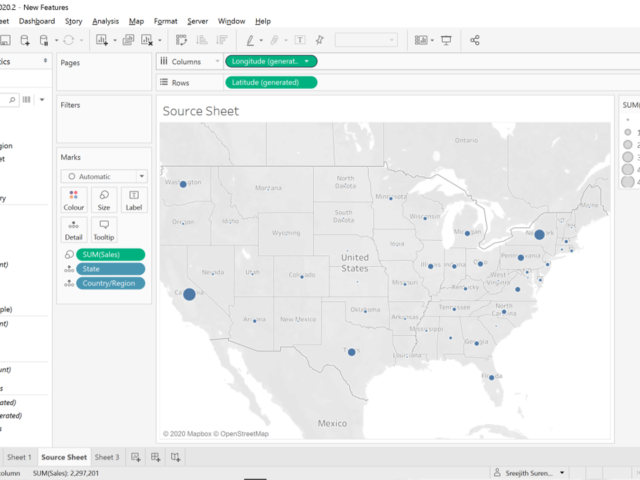
TABLEAU 2020.2 – A NEW LOOK AT VISUAL ANALYTICS
Tableau has been one of the most popular data visualization and analytics tools among the business users in the last decade. With the new features it is even simpler to see and understand data. It is evident that Tableau is made with the intention of appealing to everyone, even those with very limited technical know-how.
As always, the new version of Tableau is also packed with a punch. There are over 25 new features over the Desktop, Online, Prep and Mobile versions of the tool. Here are a few of them, that would significantly change the way you use this incredible platform.
I have been using this tool since the release on 6th May 2020. After a week of using it, I am convinced that the changes are significant and extremely useful. This new version seems a lot smoother (yes, that is the feeling you get when you use it), even compared to 2020.1, which was released last quarter. I will be focussing on some of the changes in the first blog, that would give you an overview and help you get started with this.
1. Relationships
As a trainer on Data Analytics for the last three years, I have experienced one struggle. It is about explaining the concepts of ‘Joins’ to business users. They find it confusing to know when to use ‘left join’ and when to use ‘full join’. (IT users and students had very limited issues since they have learned these concepts). Challenges like duplicate / repeating records in one of the tables (one to many mapping) is definitely hard to tackle unless you master the concepts and other techniques. However, in Tableau 2020.2, it uses ‘Relationships’ which is a much simpler and easier concept to understand, and Tableau does the heavy lifting if you are unsure
In this version, you can create logical relationship with data, visually. Relationship creates aggregations when you build the visualizations, rather than joining them in the database. This means that you can forget worrying about having to keep the data in the same level of details and the complications that would arise if it is not. For those who are familiar with the tool, the visual difference itself is quite significant. As soon as you drag and drop the second and subsequent tables, a relationship line (‘Noodle’ is what Tableau named these lines) appears and makes it easy to define the connection.
Once you add the table, a pop-up box suggests the best connection, where you can define further details (Cardinality and Referential Integrity) if needed. You can also view each of the tables independently even after defining the relationship. All you need to do, is just click on the table. You can also use the existing concepts of Union and Joins as well. Below is a simple example using Sample Superstore data.
2. Metrics
Metrics is a concept that would appeal to the higher management and executives. This is an option where you can track all metrices of your interest in one place, despite of it being included in multiple Tableau workbooks. Instead of creating a ‘Master Workbook’ with all the metrics, which involved development and maintenance effort, we can now do it with a simple click. It will add the Metrics or KPIs to the main Project folder itself. In addition, you can also see the trend of that particular metric over the period when the data refreshes.
In the example below, I have one Project in Tableau Online, which has got multiple dashboards catering to different business areas. I am adding two metrics: the number of male employees in the organization, and the YTD Sales. Since the data is not refreshed, the timeline will be empty. Just check out how easy it is to add the Metrics to monitor it continuously and effectively.
3. Set Controls and Set Action Updates
While this might be described as a new feature, it, in fact, opens a whole new set of opportunities to interact with your visualizations. If I try to describe set Controls in Tableau 2020.2, it can be simplified as an option in which we can include or exclude elements in a set in a simple drop-down (similar to ‘Filters’). The addition or deletion or new values in a set can significantly change the way we see the data.
This means that the end user can perform a variety of analysis in the front end. Check out the video below.
Set actions also has got two new selection modes as well in the new version. Tableau 2020.2. Instead of only assigning the set values, Set Action can now add or remove values incrementally, by interacting with the marks.
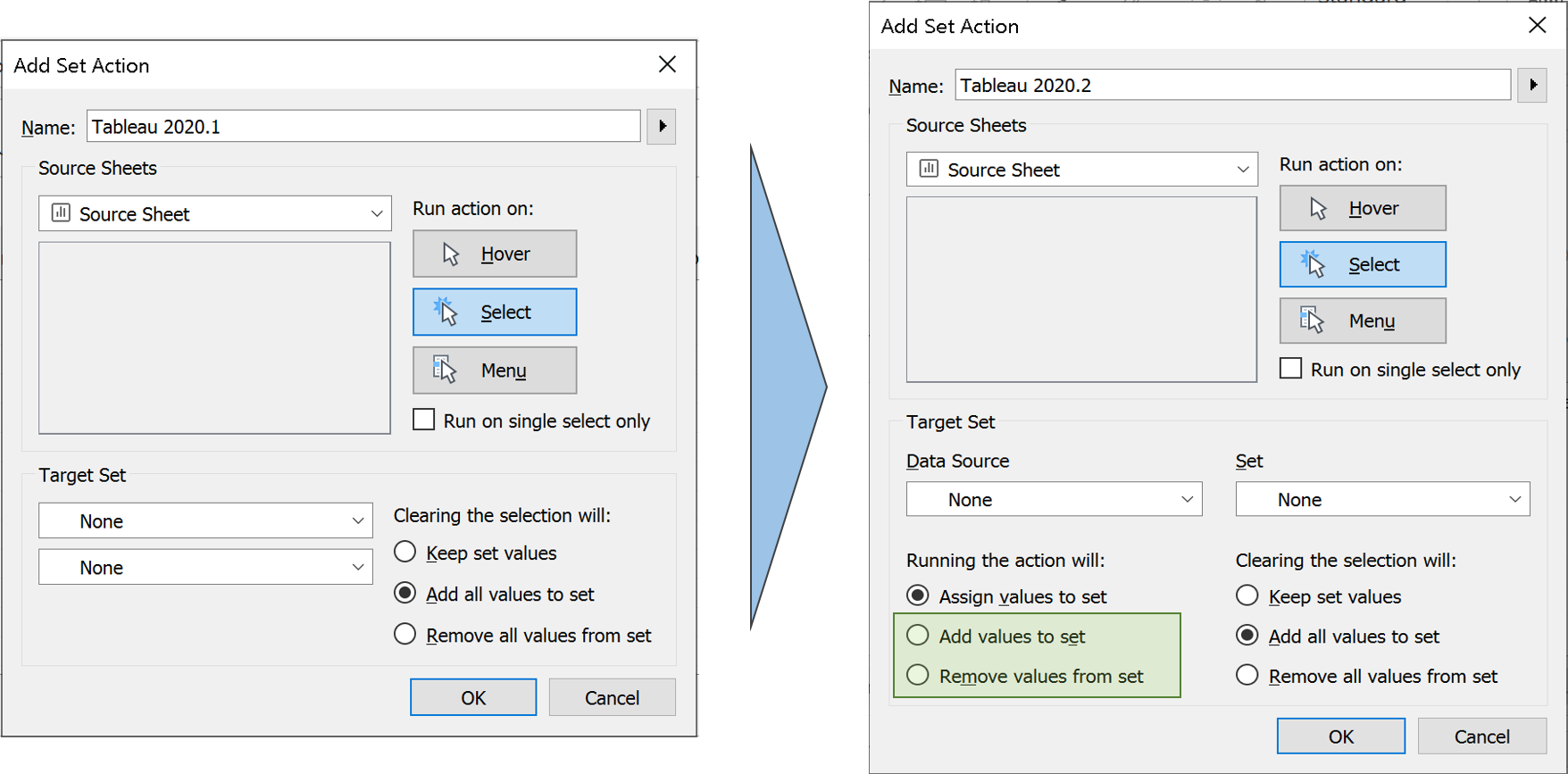 Zen Masters ‘The Flerlage Twins’ have a blog that explains all the features in details about this new set action option. You can check it out.:
4. Other Changes
No Dimensions or Measures:
One of the noticeable differences compared to the previous version, is the absence of sections for Dimensions and Measures. While there is separation line, it is less distracting than the previous versions. It is not only the Dimensions and Measure that got combined, but also the section for Sets. In this version, when you add a Set it will be added as another field in the table, just like a calculated field. This also makes complete sense, since the Sets already have a separate icon to denote them, and it can be clearly understood before using it for any analysis. However, there is a separate section for Parameters.
Always on Search Bar:
Also, the Search bar is now always visible and cannot be hidden, unlike the previous version. I prefer this option since I almost always enable the search and never hides it afterwards. The Search bar sits comfortably in the space that is created when the titles for Dimensions and Measures are removed. In addition, when you type a field name after selecting any field, it automatically goes to that field despite of whether it is Measure or a Dimension. This is similar to us typing a folder or filename to find it in a Windows Folder Explorer.
No more ‘Number of Records’:
Another difference is the absence of ‘Number of Records’ field. This is now replaced with a non-editable and non-removable field: ‘Tablename (Count)’. Since the data is defined by relationship and not joined, there will be multiple such fields if you use multiple data sources. Similarly, when we choose ‘View Data’, there will be multiple tabs based on the number of data sources we use.
I have tried to show these in the image below.
Zen Masters ‘The Flerlage Twins’ have a blog that explains all the features in details about this new set action option. You can check it out.:
4. Other Changes
No Dimensions or Measures:
One of the noticeable differences compared to the previous version, is the absence of sections for Dimensions and Measures. While there is separation line, it is less distracting than the previous versions. It is not only the Dimensions and Measure that got combined, but also the section for Sets. In this version, when you add a Set it will be added as another field in the table, just like a calculated field. This also makes complete sense, since the Sets already have a separate icon to denote them, and it can be clearly understood before using it for any analysis. However, there is a separate section for Parameters.
Always on Search Bar:
Also, the Search bar is now always visible and cannot be hidden, unlike the previous version. I prefer this option since I almost always enable the search and never hides it afterwards. The Search bar sits comfortably in the space that is created when the titles for Dimensions and Measures are removed. In addition, when you type a field name after selecting any field, it automatically goes to that field despite of whether it is Measure or a Dimension. This is similar to us typing a folder or filename to find it in a Windows Folder Explorer.
No more ‘Number of Records’:
Another difference is the absence of ‘Number of Records’ field. This is now replaced with a non-editable and non-removable field: ‘Tablename (Count)’. Since the data is defined by relationship and not joined, there will be multiple such fields if you use multiple data sources. Similarly, when we choose ‘View Data’, there will be multiple tabs based on the number of data sources we use.
I have tried to show these in the image below.
 5. Explain Data and Ask Data Improvements
There are significant improvements in these features in every version and this time is no different. Even with all the AI capabilities, there would be times when we want to take control. Explain Data in the new version gives you that extra control that was missing in the earlier version. Authors can now choose which fields to be included in modelling Explain data, giving you the option to input your business logic to it. Explain data also allows you analyse more than just one outlier in the latest version. However, this option seems to be missing for relational databases.
5. Explain Data and Ask Data Improvements
There are significant improvements in these features in every version and this time is no different. Even with all the AI capabilities, there would be times when we want to take control. Explain Data in the new version gives you that extra control that was missing in the earlier version. Authors can now choose which fields to be included in modelling Explain data, giving you the option to input your business logic to it. Explain data also allows you analyse more than just one outlier in the latest version. However, this option seems to be missing for relational databases.
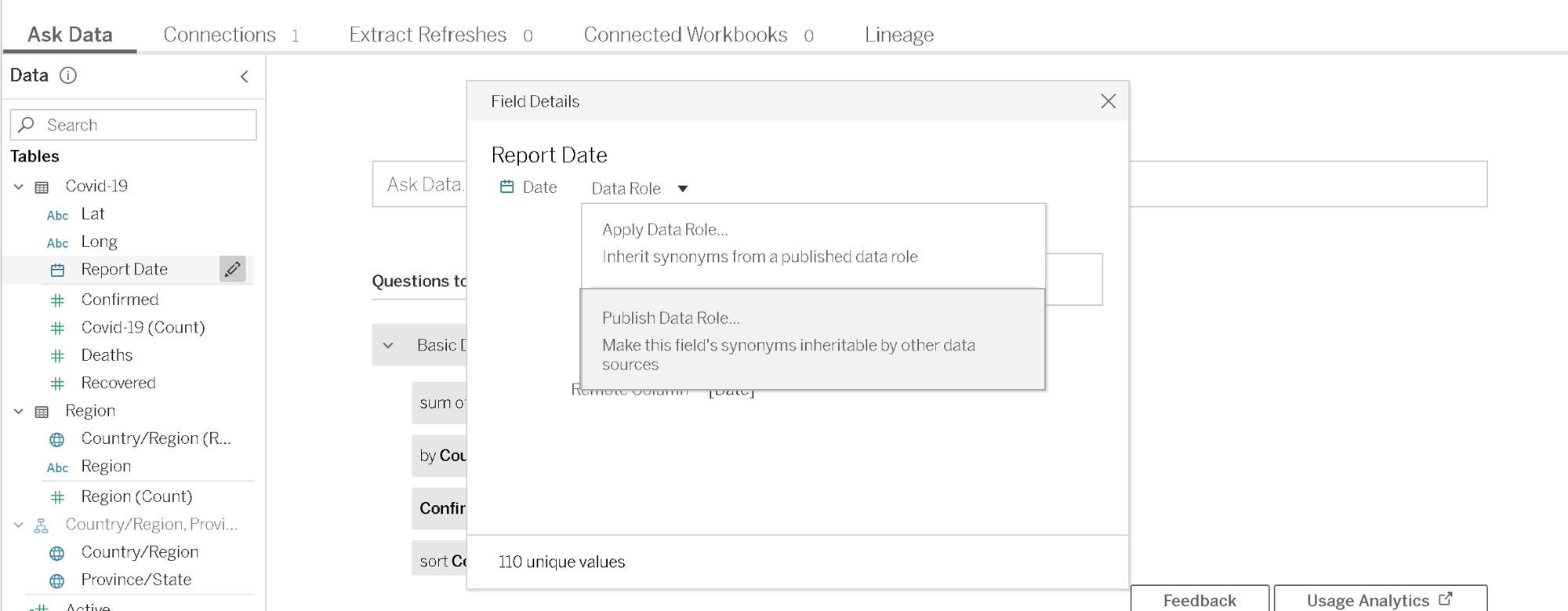
 When it comes to Ask Data, you can now provide custom suggestions based on data roles. In addition, the synonyms applied for one field can be published to use across data sources. It also supports scripted data sources in the new version and has some improvements on enterprise controls.
As mentioned at the beginning, there are several other features in Tableau 2020.2. It would be extremely difficult to include all those in just one post. There are other changes like Recommendations on Mobile, Manual sorting of Favourites, publishing directly from the browser without having to open the dashboard on Tableau Desktop etc. and so on.
I hope you got an overview to some of the new features and want to explore more. Let us know your thoughts and how these features were beneficial to you.
When it comes to Ask Data, you can now provide custom suggestions based on data roles. In addition, the synonyms applied for one field can be published to use across data sources. It also supports scripted data sources in the new version and has some improvements on enterprise controls.
As mentioned at the beginning, there are several other features in Tableau 2020.2. It would be extremely difficult to include all those in just one post. There are other changes like Recommendations on Mobile, Manual sorting of Favourites, publishing directly from the browser without having to open the dashboard on Tableau Desktop etc. and so on.
I hope you got an overview to some of the new features and want to explore more. Let us know your thoughts and how these features were beneficial to you.
 As mentioned at the beginning, there are several other features in Tableau 2020.2. It would be extremely difficult to include all those in just one post. There are other changes like Recommendations on Mobile, Manual sorting of Favourites, publishing directly from the browser without having to open the dashboard on Tableau Desktop etc. and so on.
I hope you got an overview to some of the new features and want to explore more. Let us know your thoughts and how these features were beneficial to you.
As mentioned at the beginning, there are several other features in Tableau 2020.2. It would be extremely difficult to include all those in just one post. There are other changes like Recommendations on Mobile, Manual sorting of Favourites, publishing directly from the browser without having to open the dashboard on Tableau Desktop etc. and so on.
I hope you got an overview to some of the new features and want to explore more. Let us know your thoughts and how these features were beneficial to you.
Zen Masters ‘The Flerlage Twins’ have a blog that explains all the features in details about this new set action option. You can check it out.:
4. Other Changes
No Dimensions or Measures:
One of the noticeable differences compared to the previous version, is the absence of sections for Dimensions and Measures. While there is separation line, it is less distracting than the previous versions. It is not only the Dimensions and Measure that got combined, but also the section for Sets. In this version, when you add a Set it will be added as another field in the table, just like a calculated field. This also makes complete sense, since the Sets already have a separate icon to denote them, and it can be clearly understood before using it for any analysis. However, there is a separate section for Parameters.
Always on Search Bar:
Also, the Search bar is now always visible and cannot be hidden, unlike the previous version. I prefer this option since I almost always enable the search and never hides it afterwards. The Search bar sits comfortably in the space that is created when the titles for Dimensions and Measures are removed. In addition, when you type a field name after selecting any field, it automatically goes to that field despite of whether it is Measure or a Dimension. This is similar to us typing a folder or filename to find it in a Windows Folder Explorer.
No more ‘Number of Records’:
Another difference is the absence of ‘Number of Records’ field. This is now replaced with a non-editable and non-removable field: ‘Tablename (Count)’. Since the data is defined by relationship and not joined, there will be multiple such fields if you use multiple data sources. Similarly, when we choose ‘View Data’, there will be multiple tabs based on the number of data sources we use.
I have tried to show these in the image below.
5. Explain Data and Ask Data Improvements
There are significant improvements in these features in every version and this time is no different. Even with all the AI capabilities, there would be times when we want to take control. Explain Data in the new version gives you that extra control that was missing in the earlier version. Authors can now choose which fields to be included in modelling Explain data, giving you the option to input your business logic to it. Explain data also allows you analyse more than just one outlier in the latest version. However, this option seems to be missing for relational databases.
When it comes to Ask Data, you can now provide custom suggestions based on data roles. In addition, the synonyms applied for one field can be published to use across data sources. It also supports scripted data sources in the new version and has some improvements on enterprise controls.
As mentioned at the beginning, there are several other features in Tableau 2020.2. It would be extremely difficult to include all those in just one post. There are other changes like Recommendations on Mobile, Manual sorting of Favourites, publishing directly from the browser without having to open the dashboard on Tableau Desktop etc. and so on.
I hope you got an overview to some of the new features and want to explore more. Let us know your thoughts and how these features were beneficial to you.
As mentioned at the beginning, there are several other features in Tableau 2020.2. It would be extremely difficult to include all those in just one post. There are other changes like Recommendations on Mobile, Manual sorting of Favourites, publishing directly from the browser without having to open the dashboard on Tableau Desktop etc. and so on.
I hope you got an overview to some of the new features and want to explore more. Let us know your thoughts and how these features were beneficial to you.
Five Ways to Overcome Data Trust Challenges (Infographics)

Data Calculations in Tableau: Sum and Running Sum
[sc name="quote" quote="“The functions, even as they may look simple, are pretty useful for any Tableau Consultant especially if they are working on finance-related projects,”" author="Joseph John, Senior Consultant, Analytics, Beinex"][/sc]

What is Tableau Sum and Running Sum?
Sum
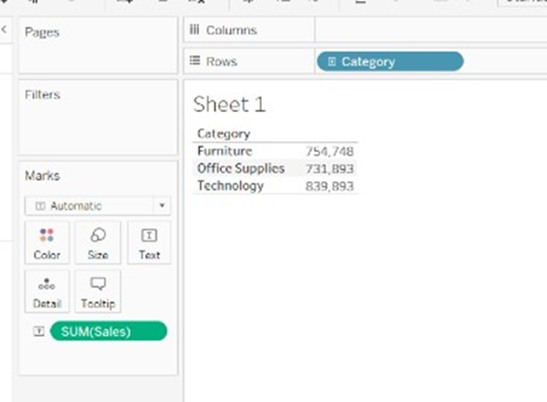
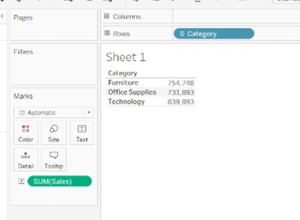
SUM is one of the commonly performed functions in Tableau. The Tableau Sum function seeks out the Sum of records under consideration. It is the total of the values present in a field. The screenshot provided below exhibits the total sum of sales for each of the three categories as given in Sheet 1.
In the sample dataset shown below, the sum of sales is shown corresponding to each of the corresponding values in the dimension "Category". For example, "Furniture" has a total sale of 754,748, which could be comprising of furniture related products such as Tables, Chairs etc.
Running Sum
A RUNNING SUM is a cumulative total in a row or column from the first value to the final value in the respective row or column. For instance, in the example given below, the cumulative values of Furniture and Office Supplies stand at 1,486,641 and that value when added to Technology’s value of 839,893 gives 2,326,534.
You can summarise or modify the granularity of your data using aggregate functions. An aggregate part combines the values of multiple lines to provide a single value. Examples of aggregate functions apart from sum are measurements based on Count, Count Distinct, Fixed Calculations, and other standard integration functions.
Every time you include a measure in your view, an aggregate is automatically applied to that measure. Depending on the context of the view, different aggregation techniques are used. Analysts can well utilise these features to simplify the whole complex process of data analysis, and organisations can harness them for insightful decisions.

Spatial Parameters: Enhancing Geospatial Analysis and Adding Interactivity to Your Maps
What Are Spatial Parameters?
Spatial parameters in Tableau allow you to dynamically interact with geospatial data within your visualizations. These parameters enable you to select spatial objects like points, polygons, multi-polygons, lines, or collections for calculations. Unlike traditional parameters, which work with values like text or numbers, spatial parameters offer the flexibility to work with geospatial data like coordinates and spatial shapes. You can create spatial parameters in two ways: 1. From a data source: If your data contains spatial fields (like latitude and longitude), you can load these as spatial parameters. 2. Using Well-Known Text (WKT) : This method allows you to manually input spatial data in text format to create custom spatial parameters. Spatial parameters can be used in the same way as other parameters in Tableau, including parameter controls, actions, and dynamic values. Note: Spatial parameters can only be created from spatial data fields (such as latitude and longitude). Creating spatial parameters from text string fields, like a "Country" field, is not feasible as it might be assigned as a geographic role but remains a text field.
Top Benefits of Using Spatial Parameters
Spatial parameters have offered immense possibilities for Tableau experts to analyze and visualize geospatial data. Key benefits are listed below: 1. Cross-Data Source Spatial Exploration With spatial parameters, you can explore spatial relationships between data sources that don't support joins. Unlike traditional data sources, which can be limited by join constraints, spatial parameters allow you to compare spatial regions from different datasets. This means you can dynamically analyze relationships across multiple data sources without the need for complex joins. 2. Skip Long Joins Previously, working with large spatial datasets required time-consuming spatial joins. Now, spatial parameters enable you to bypass these long joins and conduct spatial analysis much faster. You can use parameters to compare regions across multiple data sources instantly, even with vast datasets. 3. Interactive and Dynamic Analysis Spatial parameters allow users to visually interact with geospatial data in real time. Like other parameter types, you can use parameter controls to input points, lines, or polygons and adjust your analysis on the fly. This flexibility allows you to dynamically change spatial boundaries and relationships during your analysis. 4. Distance-Based Queries With spatial parameters, you can perform distance-based queries without complex calculations. For example, you can control the size of a buffer and see what lies within that buffer directly from the worksheet. This makes it easy to conduct proximity analysis without the need for complicated formulas. 5. Create Custom Regions Spatial parameters allow you to create custom regions by selecting points, lines, and polygons and combining them into a single parameter. For instance, you can create a sales region by combining multiple states into one spatial parameter. This enables you to tailor regions for specific analysis scenarios.
Spatial Calculations in Tableau 2024.3: What’s New
Tableau 2024.3 also introduces three new spatial calculations to help you evaluate spatial relationships: • SYMDIFFERENCE: Identifies areas that are unique between two regions. • INTERSECTION: Shows the overlap or intersection between two regions. • DIFFERENCE: Displays areas present in one region but not in the other. These new spatial calculations provide powerful tools to analyze and compare geospatial data.
Union Aggregation for Spatial Data
In previous versions of Tableau, the only aggregation available for spatial data was Collect, which groups spatial elements together. Union Aggregation has been introduced in Tableau 2024.3, allowing you to dissolve the boundaries between regions and providing even greater flexibility in working with spatial data.
Validating Spatial Calculations
Tableau 2024.2 introduced the Validate Calculation feature, which can help you detect and correct errors in your spatial data. This tool is handy when working with complex spatial datasets. Tableau's new Spatial Parameters and related features, such as spatial calculations and union aggregation, provide powerful capabilities for geospatial analysis. Whether comparing spatial regions, performing proximity-based queries, or creating custom areas, these features enable dynamic and flexible analysis beyond traditional methods.
How Beinex Can Assist You
Beinex, a premier Tableau partner, provides sustainable analytics solutions to organizations and helps to build superior data visual analytics capabilities internally through our bespoke training programs. Our team of Tableau-certified consultants are real-life Tableau business users passionate about Tableau and delivering a world-class experience. Connect with us for a free demo: https://www.beinex.com/free-tableau-software/

BEINEX CONSULTING WINS ALTERYX 2020 PARTNER OF YEAR AWARDS, MIDDLE EAST
Beinex Consulting has been awarded as the Alteryx 2020 Partner of the Year, Middle East at the Alteryx Partner Summit and Awards virtual event along with 15 other winners from North America, LATAM, and EMEA.
 During the Alteryx Summit, ‘Your Road to Revenue’, Alteryx celebrated the achievements and commitment of their partners to the Alteryx business and its customers. Beinex Consulting was awarded on the level of engagement in the Alteryx partner program and its efforts around driving innovation, growing revenue, and empowering Alteryx customers to solve our world’s most pressing business and societal issues in the Middle East Region.
Selected among top Middle East Alteryx partners, Beinex demonstrated excellence in delivering end-to-end analytics transformation services that revolutionised multiple industries in the Middle East.
Beinex Consulting Founder and Managing Director, Indumon Das indicates further growth for the digital transformation organisation soon: “Beinex continues to make strategic investments to enhance our association with Alteryx and clients in major Middle East markets. This award is a recognition to our continuous growth strategy and focus to be the best Middle East partner”
“Through their ongoing pledge to the Alteryx Partner Program, our partners have demonstrated their commitment to helping Alteryx customers break down barriers and deliver game-changing insights.” – Josh Lewis, VP, Global Channels, Alteryx
About Beinex Consulting
Beinex is a digital transformation organization with a broad range of analytics modernization and training services. As a pioneer in analytics and cloud transformation, Beinex’s mission is to transform the way individuals and the organizations work with the data through innovation and experience. Beinex offers a broad range of robust and scalable business intelligence and analytics services to drive effective decision-making and create business value.
During the Alteryx Summit, ‘Your Road to Revenue’, Alteryx celebrated the achievements and commitment of their partners to the Alteryx business and its customers. Beinex Consulting was awarded on the level of engagement in the Alteryx partner program and its efforts around driving innovation, growing revenue, and empowering Alteryx customers to solve our world’s most pressing business and societal issues in the Middle East Region.
Selected among top Middle East Alteryx partners, Beinex demonstrated excellence in delivering end-to-end analytics transformation services that revolutionised multiple industries in the Middle East.
Beinex Consulting Founder and Managing Director, Indumon Das indicates further growth for the digital transformation organisation soon: “Beinex continues to make strategic investments to enhance our association with Alteryx and clients in major Middle East markets. This award is a recognition to our continuous growth strategy and focus to be the best Middle East partner”
“Through their ongoing pledge to the Alteryx Partner Program, our partners have demonstrated their commitment to helping Alteryx customers break down barriers and deliver game-changing insights.” – Josh Lewis, VP, Global Channels, Alteryx
About Beinex Consulting
Beinex is a digital transformation organization with a broad range of analytics modernization and training services. As a pioneer in analytics and cloud transformation, Beinex’s mission is to transform the way individuals and the organizations work with the data through innovation and experience. Beinex offers a broad range of robust and scalable business intelligence and analytics services to drive effective decision-making and create business value.

During the Alteryx Summit, ‘Your Road to Revenue’, Alteryx celebrated the achievements and commitment of their partners to the Alteryx business and its customers. Beinex Consulting was awarded on the level of engagement in the Alteryx partner program and its efforts around driving innovation, growing revenue, and empowering Alteryx customers to solve our world’s most pressing business and societal issues in the Middle East Region.
Selected among top Middle East Alteryx partners, Beinex demonstrated excellence in delivering end-to-end analytics transformation services that revolutionised multiple industries in the Middle East.
Beinex Consulting Founder and Managing Director, Indumon Das indicates further growth for the digital transformation organisation soon: “Beinex continues to make strategic investments to enhance our association with Alteryx and clients in major Middle East markets. This award is a recognition to our continuous growth strategy and focus to be the best Middle East partner”
“Through their ongoing pledge to the Alteryx Partner Program, our partners have demonstrated their commitment to helping Alteryx customers break down barriers and deliver game-changing insights.” – Josh Lewis, VP, Global Channels, Alteryx
About Beinex Consulting
Beinex is a digital transformation organization with a broad range of analytics modernization and training services. As a pioneer in analytics and cloud transformation, Beinex’s mission is to transform the way individuals and the organizations work with the data through innovation and experience. Beinex offers a broad range of robust and scalable business intelligence and analytics services to drive effective decision-making and create business value.
We are thrilled to recognize Beinex Consulting for being named Alteryx Middle East Partner of the Year!https://t.co/xwmp7HbsMp#TogetherWeSolve pic.twitter.com/4zic9mdlgD
— Alteryx (@alteryx) October 1, 2020