How AI Decision-Making is Improving Enterprise Outcomes
Blog
Share 
Artificial Intelligence (AI) Model Accuracy Explained: Why It Doesn’t Guarantee Business Success
 26 May 2026
  Sumi S
 Artificial intelligence has moved from experimentation to enterprise-wide adoption. Today, organizations across industries are investing heavily in AI. Yet many still misunderstand one critical reality: high AI model accuracy does not automatically translate into measurable results.
AI models can achieve impressive technical scores during model accuracy testing and still fail to generate measurable outcomes after deployment. This paradox is becoming increasingly common. Enterprises should evaluate AI success beyond traditional model accuracy metrics. Understanding why this happens and how to address it is now a foundational competency for any entrepreneur serious about AI adoption.
Explore further: https://www.beinex.ai/generative-ai
The Growing Gap Between AI Adoption and Business Impact
According to McKinsey's 2025 global AI survey, 88% of organizations now regularly use AI in at least one business function, yet only 6% qualify as "high performers". The sobering abandonment rates are very concerning. As per the S&P Global Market Intelligence's 2025 survey, about 42% of companies abandoned most of their AI initiatives in 2025. According to the MIT GenAI Divide Report,95% of generative AI pilots delivered zero measurable financial return.
In many cases, the AI/ML models were technically sound. But the failures were organizational, strategic, and structural.
What is AI Model Accuracy?
AI model accuracy refers to how often a machine learning model makes correct predictions compared to actual outcomes. It is one of the most commonly used model accuracy metrics in artificial intelligence and machine learning projects. In simple terms, if an AI model correctly predicts outcomes 90 times out of 100, the model's accuracy is 90%.
However, while accuracy is important, it is only one component of evaluating AI effectiveness. Companies that rely solely on accuracy scores often overlook whether the model solves real operational problems or creates measurable ROI.
Why High AI Accuracy Does Not Guarantee Business Success
Many enterprises assume that better AI performance automatically delivers organizational value. In reality, organizations frequently encounter a gap between model accuracy testing and operating it in real-life scenarios.
Why Accurate AI Models Still Fail
One major reason AI initiatives fail is the operationalization gap, often referred to as the “last-mile” problem. Many AI models perform well during development but struggle in real-world enterprise environments because of:
1. Workflow and integration gaps
2. Governance and data quality failures
3. Scalability and infrastructure constraints
4. Misalignment between model objectives and business KPIs
70–90% of machine learning models never move beyond pilot stages into full-scale production deployment. This demonstrates why technical excellence alone is insufficient.
1. Workflow and Integration Gaps
AI implementation often fails because organizations mistake deployment for adoption. Deployment is not adoption. That distinction is where most AI implementations fail.
Even highly accurate AI systems fail if employees or customers do not trust or use them. Many entrepreneurs deploy AI tools without proper change management, training, or explainability. As a result, teams continue relying on manual workflows.
Research supports this challenge. According to IBM, lack of skills, limited trust, and organizational resistance remain among the top barriers to successful AI adoption. Similarly, studies show that a significant percentage of AI projects fail not because of technical limitations, but because users never fully adopt the systems in practice.
2. Governance and Data Quality Failures
74% of enterprises have rolled back or shut down at least one AI customer communications agent after deployment due to governance failures. Governance-related rollbacks are increasingly common, particularly in regulated industries such as banking, insurance, and healthcare, where explainability and auditability are regulatory requirements, not optional features.
3. Scalability and Infrastructure Constraints
AI pilots mostly achieve strong testing performance but fail during enterprise-scale deployment due to infrastructure limitations, inconsistent datasets, or operational complexity. It happens when companies prioritize experimentation over long-term implementation planning.
4. Misalignment Between Model Objectives and Business KPIs
A model can be technically accurate while solving the wrong organizational issues.
For example, an AI recommendation engine may improve prediction accuracy by 5%, but if it does not improve customer retention or revenue, the enterprise gains little value. This is why enterprises must align AI initiatives with measurable organizational KPIs instead of purely technical goals.
Techniques to Improve Artificial Intelligence Accuracy
Improving AI performance still matters because stronger models form the foundation of enterprise AI systems. However, organizations should combine technical optimization with operational readiness.
1: Improve Data Quality
AI models are only as effective as the data used to train them. Poor-quality or biased datasets reduce model reliability and trust.
Enterprises should focus on:
- Data cleansing
- Standardization
- Real-time data pipelines
- Strong governance frameworks
2: Use Continuous Model Monitoring
AI performance can degrade over time due to changing user behavior, market shifts, or changing datasets. Continuous monitoring helps organizations identify model drift, bias issues, prediction inconsistencies, and performance degradation.
3: Implement Human-in-the-Loop Systems
In agentic AI systems, human-in-the-loop extends beyond review; it includes designing explicit escalation thresholds and override controls so autonomous agents can hand decisions back to humans when needed.
Human oversight improves decision quality and helps build trust in AI systems. You should combine automation with expert review, especially for high-risk decisions involving finance, healthcare, or compliance.
4: Focus on Explainable AI
Explainability increases transparency and user confidence. Enterprises should prioritize AI systems that allow teams to understand:
- Why predictions were made
- Which factors influenced outcomes
- How decisions align with business policies
5: Align AI Metrics with KPIs
Instead of focusing only on technical accuracy metrics in machine learning, priority should be given to measuring revenue growth, operational efficiency, customer satisfaction, employee productivity, cost reduction, and risk mitigation. This creates stronger alignment between AI investments and enterprise outcomes.
Looking Beyond AI Model Accuracy
The future of enterprise AI will not be defined by who builds the most accurate model. It will be shaped by organizations that successfully integrate AI into workflows, culture, governance, and decision-making processes.
Organizations that close this gap don't do it through better models alone; they do it through governance, integration strategy, and the operational discipline to treat AI as a business transformation, not a technology deployment.
Move beyond viewing AI as a standalone technology initiative and instead treat it as a long-term transformation strategy.
Quick Checklist for Successful AI Adoption
You can:
- Start with clearly defined business problems
- Align AI initiatives with measurable outcomes
- Invest in governance and explainability
- Prioritize user adoption
- Build scalable AI infrastructure
- Continuously monitor model performance
Related Articles

Tableau 2024.3: Advanced Features Redefining Data Analytics and Collaboration
Tableau Cloud Manager
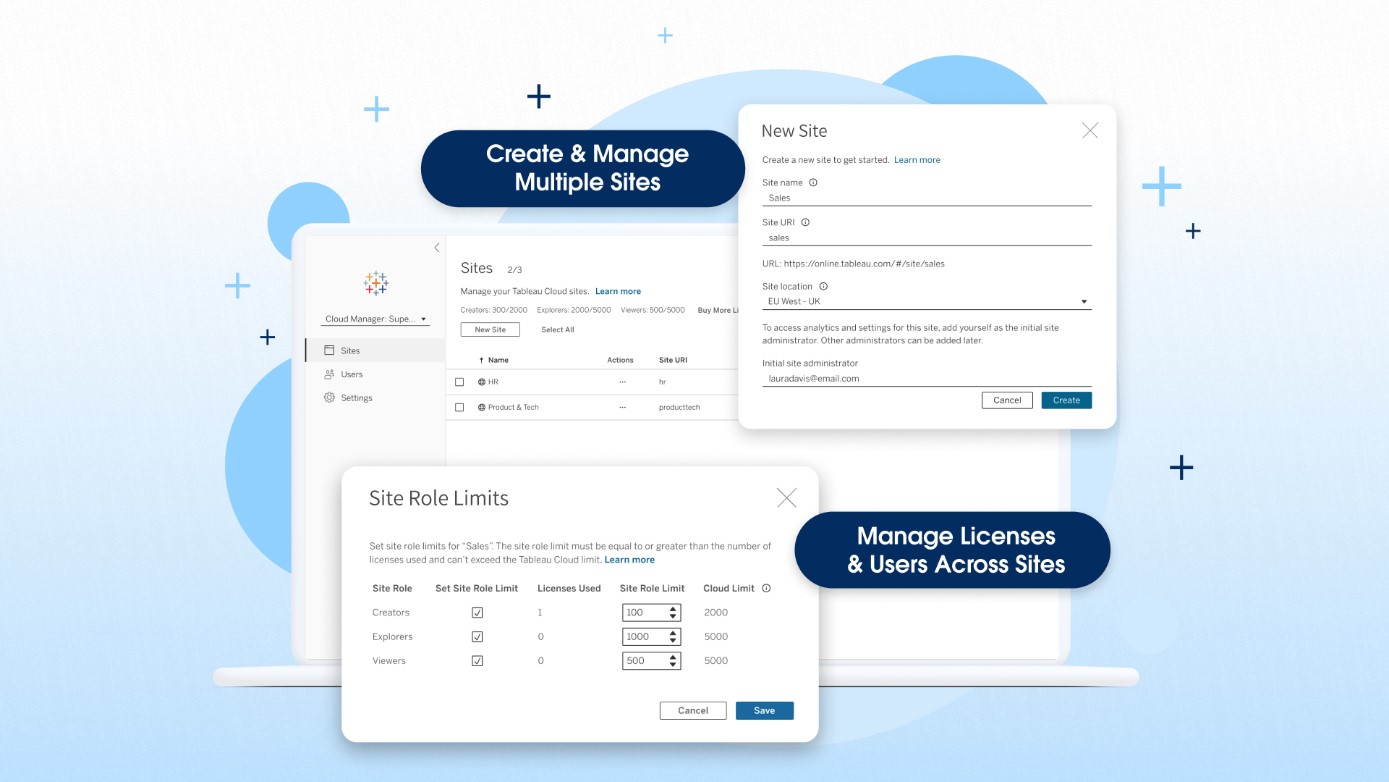
Tableau Cloud Manager is an enhancement to Tableau Cloud that allows customers to create and manage multiple Tableau sites with centralized management of licenses and users. Tableau Cloud Manager simplifies the expansion and administration of your cloud analytics environment, helps ensure you meet governance and data residency requirements and introduces new administrative efficiencies. The highlights of Tableau Cloud Manager are: 1. Expand analytics across your organization with multiple Tableau Cloud sites Tableau Cloud Manager enables Tableau Cloud customers to create and manage multiple sites in a single deployment. Additionally, Tableau Cloud Admins can deploy these sites in the regions of their choice. This functionality is particularly beneficial for global organizations with geographically dispersed teams. By allowing for the establishment of region-specific sites, Tableau Cloud Manager enables tailored analytics experiences that cater to the unique needs and compliance requirements of every team in your organization. Your Tableau Cloud edition determines site limits: • Tableau Cloud (standard): up to 3 sites • Tableau Cloud Enterprise: up to 10 sites • Tableau+: up to 50 sites 2. Effectively manage multi-site deployments Tableau Cloud Manager acts as a layer atop your Tableau Cloud sites, offering centralized management features that help you scale your analytics operations. Customers who deploy multiple sites can manage sites and license users in one place, including granting users access to multiple sites without requiring distinct licenses for each site. 3. Enhance governance with a new Cloud Admin role Tableau Cloud Manager also introduces a new Cloud Admin role, a level above the traditional Site Admin. This allows for more flexibility in how your organization manages and governs your analytics environment based on your unique needs. A smaller organization may employ the same person as a Cloud Admin and a Site Admin. For larger organizations, your Cloud Admin could be someone in IT using higher-level administrative capabilities to implement more control and coordination across your Tableau Cloud sites.
Multiple External Identity Providers on a Site
You can now enable up to 20 identity providers on a single Tableau Cloud site. This feature allows administrators to offer secure access to external users, internal users, and partners. By using multiple identity providers, you can achieve site consolidation and simplify access for both internal and external users throughout the organization.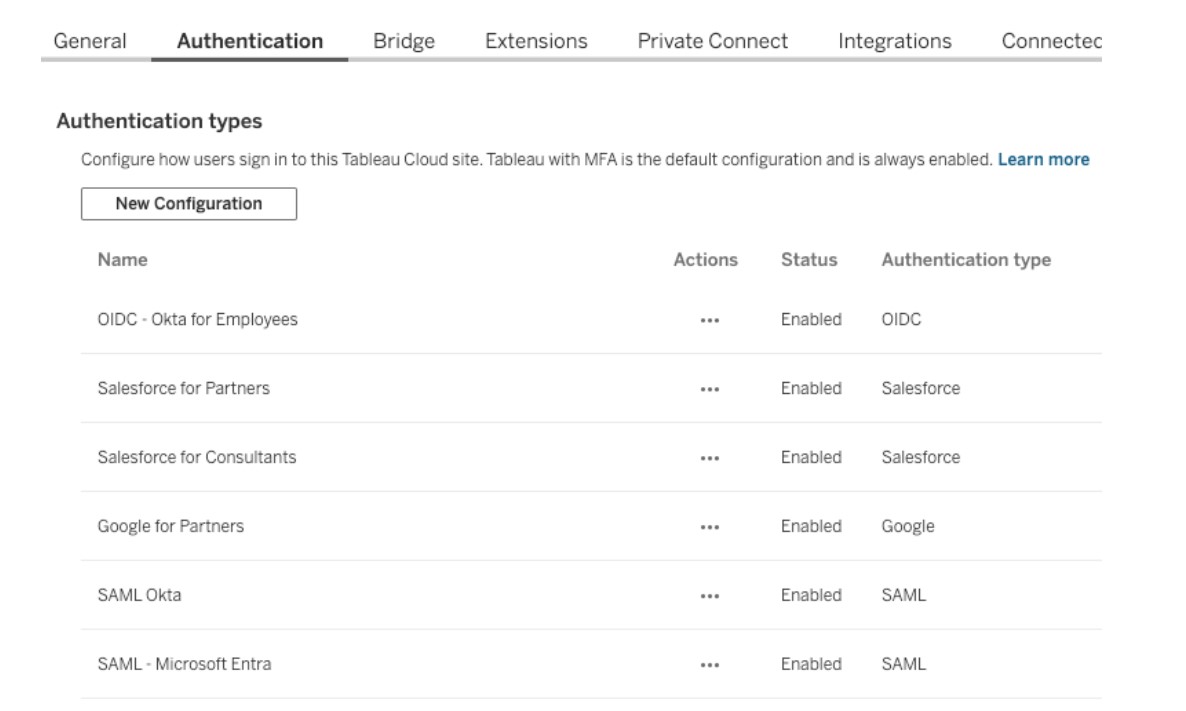
Table Viz Extension
Transform traditional reporting into visual analytics while addressing your users' needs. Tables are essential visualizations for analysts, allowing them to examine data as text and convey detailed information at a granular level. The Table Viz Extension, developed and maintained by Tableau, enables you to incorporate detailed tables and grid views into your dashboards for users who favor traditional reporting formats. You can load this new visualization type into your marks card, configure new columns by dragging fields onto the card, and interact with the table directly for customization.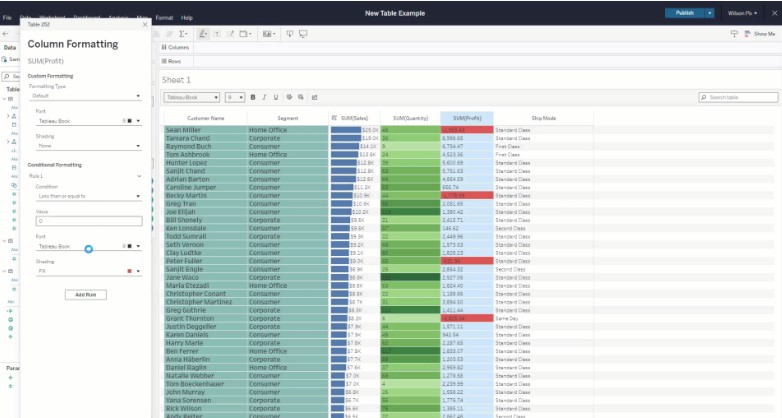
Spatial Parameters
Tableau 2024.3 introduces the full Tableau experience for geospatial data with the support of Spatial Parameters. In addition to the standard parameter types (such as string and integer), authors can now choose a “Spatial” type. These parameters create rich, interactive dashboards that allow you to ask and answer questions about geospatial information. The Spatial type enables the parameter to capture spatial geometries—points, lines, and polygons representing locations, paths, and regions. With Spatial Parameters, end users can select individual points, which are then passed as input into calculations, facilitating dynamic behavior based on their selections. This functionality is similar to existing parameter behavior but is now extended to include spatial objects. Read more about spatial parameters: https://beinex.com/topics/spatial-parameters-enhancing-geospatial-analysis-and-adding-interactivity-to-your-maps/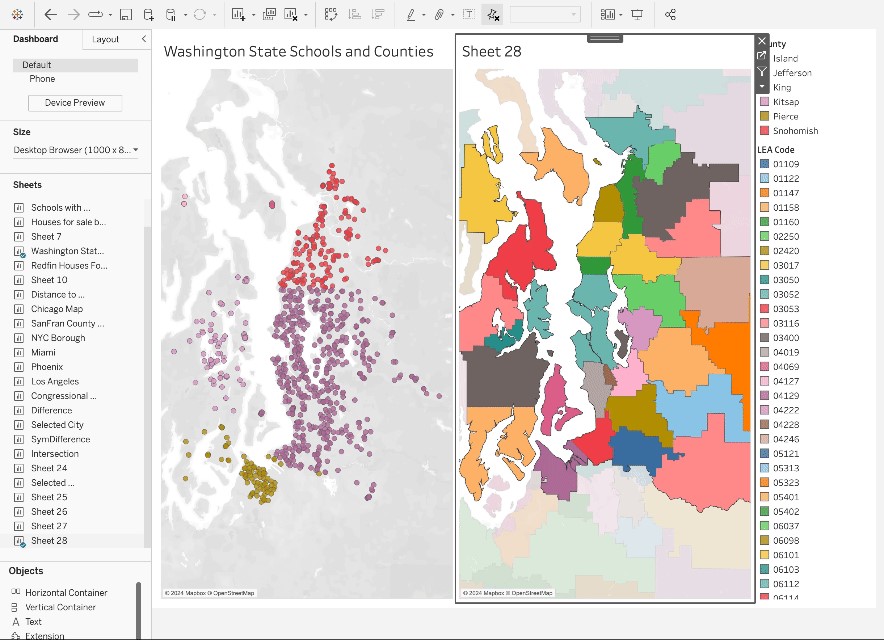
Display Data Model for Published Data Sources
Gain a visual understanding of how tables within your data model are related to Published Data Sources. You can view the relationships between tables and fields in Tableau by simply clicking on the Data Source pane in a Tableau workbook. By enabling analysts to see and comprehend how tables in the data model are interconnected in Published Data Sources, they can confidently create accurate visualizations with a clear understanding of the data model's semantics.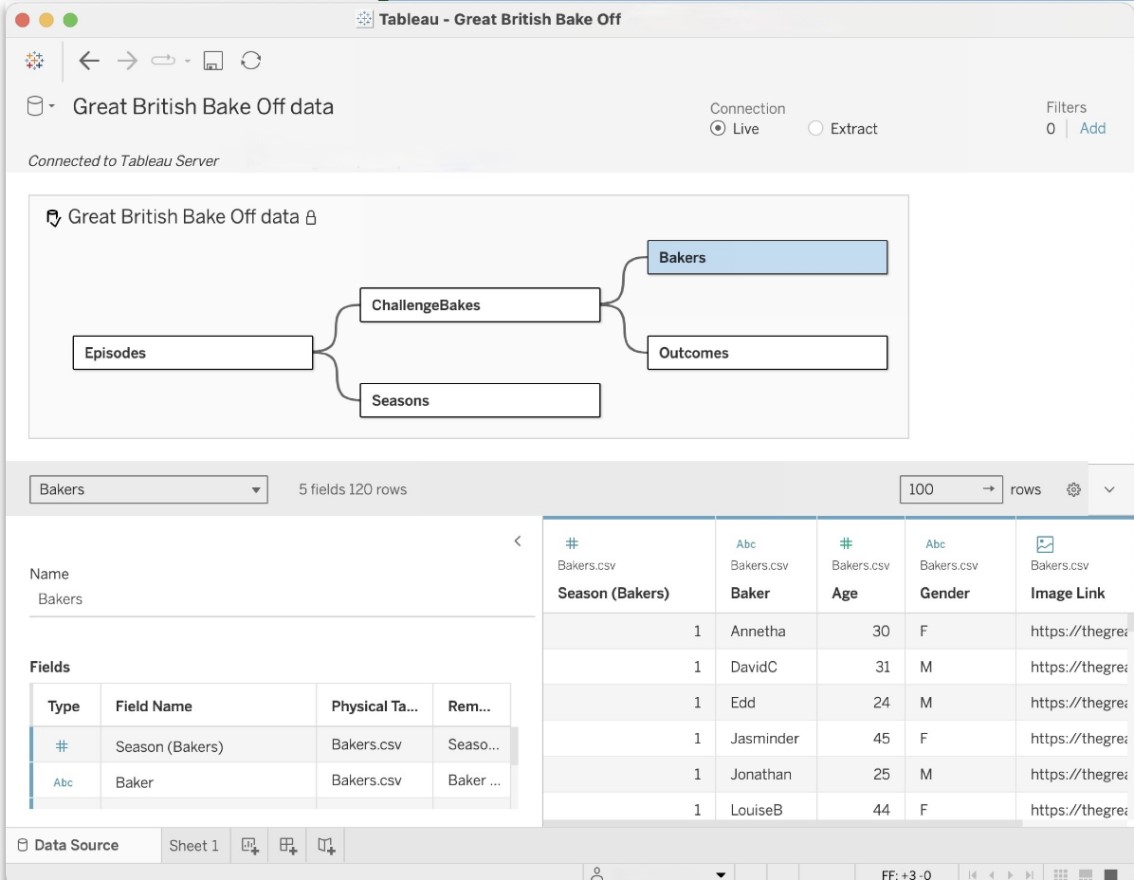
Tableau Cloud App for Microsoft Teams
The new Tableau Cloud App for Microsoft Teams allows users to seamlessly integrate data-driven insights into their daily workflows, resulting in faster and more efficient decision-making. This integration enables real-time data sharing, making it easy for users to share their favorite Tableau dashboards and Pulse metrics without leaving Teams—in personal apps, messages, channels, and meetings. From there, they can analyze and share their insights in a message or channel. Pinned channel content is also available to explore in Teams meetings, providing a fully interactive experience. This promotes a more data-driven culture by ensuring everyone can collaborate effectively with access to the same data and analytics.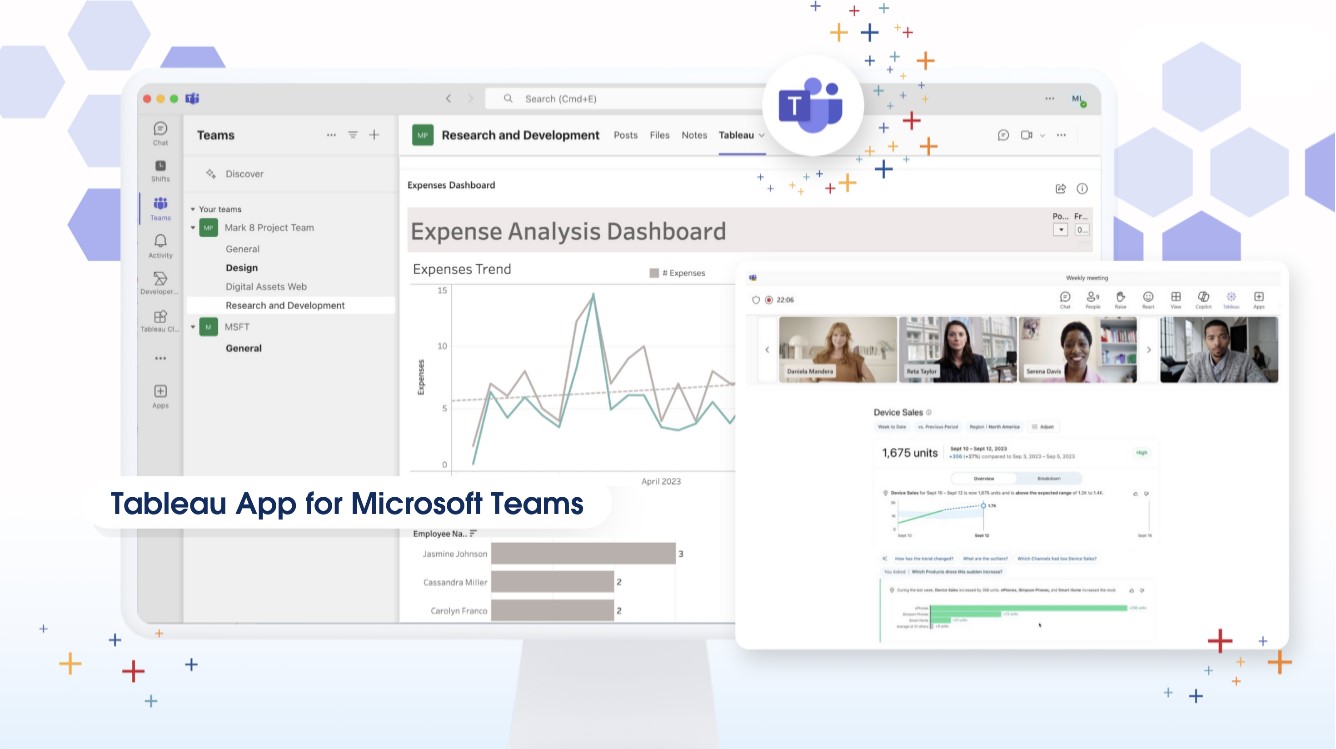 Image source: https://www.tableau.com/products/new-features
How Beinex Can Assist You
Beinex, a premier Tableau partner, offers sustainable analytics solutions to organizations and enhances their internal data visualization capabilities through customized training programs. Our team of Tableau-certified consultants consists of experienced Tableau business users who are passionate about the platform and committed to delivering an exceptional experience. Connect with us to embrace transformation: https://www.beinex.com/free-tableau-software/

AWS vs AZURE vs GCP: THE LEADING CSPs FROM A COMPARATIVE LENS
Benefits of Cloud Computing
Worldwide Vendor Market Share
 Sourced from: Cloud Market Share Q2 2023: AWS, Microsoft, Google Battle | CRN
AMAZON WEB SERVICES (AWS)
Amazon Web Services is the most extensive and widely adopted cloud platform worldwide, offering over 200 fully featured services across global data centres. AWS is used by millions of customers, including fast-growing startups, major enterprises, and prominent government agencies, to reduce costs, enhance agility, and accelerate innovation.
The USPs of AWS
Popular Customers of AWS
Netflix:Netflix relies on AWS for most of its computing and storage requirements, including analytics, databases, recommendation engines, video transcoding and numerous functions utilizing over 100,000 server instances on the AWS platform.BMW Group: BMW Group leverages AWS to acquire the agility and flexibility necessary for democratizing data usage and expediting innovation.
Philips: Philips is an early adopter of AWS that utilizes AWS services to manage the Philips HealthSuite Platform, ensuring scalability, cost-effectiveness, and regulatory-compliant solutions.
Salesforce: Salesforce shares a global strategic relationship with AWS, utilizing AWS compute, storage and AI solutions to create and deploy innovative business applications.
Pinterest: The exabyte data platform of Pinterest is hosted exclusively on AWS, managing log search and analytics that surpass 1.7TB. This implementation has led to a 30% reduction in operational costs.
Coca-Cola: After its migration to AWS, Coca-Cola has reduced operational costs by 40% and IT ticket volume by 80%.
Regions & Availability
AWS boasts the most expansive global cloud infrastructure. Gartner has acknowledged the AWS Region and Availability Zone framework as the endorsed strategy for operating enterprise applications demanding high availability.
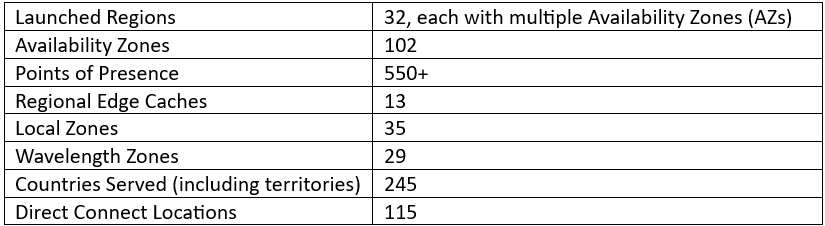
The AWS Cloud covers 102 Availability Zones across 32 geographic regions worldwide, with disclosed intentions to introduce an additional 15 Availability Zones and 5 AWS Regions in Germany, Canada, Thailand, Malaysia and New Zealand.
MICROSOFT AZURE
The Azure cloud platform encompasses over 200 products and services crafted to empower you to bring innovative solutions to fruition, addressing current challenges while shaping the future. It offers the flexibility to build, run, and manage applications across various clouds, on-premises, and at the edge, utilizing the tools and frameworks as per your preferences.
The USPs of Microsoft Azure
Popular Customers of Microsoft Azure
New York City Department of Environmental Protection (DEP): DEP uses a Microsoft infrastructure specifically designed with modern security considerations. With the solution in the cloud, Microsoft manages disaster recovery, reducing the necessity for maintaining certain skill sets in-house. CCC Group: CCC Group utilizes Azure Data Lake and Data Warehouse to collect, store, and segment data. Panasonic Connect Co: Panasonic Connect Co maximizes the benefits of PaaS services such as Azure IoT Hub, Synapse Analytics, and Azure Kubernetes Services. Hamburg Commercial Bank: Hamburg Commercial Bank opted for Microsoft Azure Virtual Desktop to achieve improved performance, reliability, and enhanced interoperability with other Microsoft technologies previously invested in. Barnsley Hospital NHS Foundation Trust: Barnsley Hospital NHS Foundation Trust adopted a new, integrated platform using Power Platform and Microsoft Teams for video consultations. During the COVID-19 pandemic lockdowns, the Trust rapidly deployed Microsoft Teams to facilitate remote work and staff collaboration.Regions & Availability:
Microsoft operates highly secure data centre facilities globally, forming a distributed infrastructure that sustains thousands of online services. This expansive, globally distributed infrastructure prioritizes sustainability, bringing applications closer to users, ensuring data residency, and providing customers with comprehensive compliance and resiliency options.
As of March 2023, Microsoft Azure boasts 160 active data centres spread across 60 regions worldwide. These Azure regions, defined by geographical areas, house one or more physical Azure data centres. Operating within a latency-defined perimeter, these data centres are strategically positioned to deliver optimal performance and security to users.
Azure leads with over 60 announced regions, surpassing all other cloud providers. It is accessible in 140 countries, showcasing a global presence that sets it apart in cloud computing.
GOOGLE CLOUD PLATFORM (GCP)
Google Cloud, also called Google Cloud Platform, offers computing resources dedicated to developing, deploying, and operating web applications. While its cloud infrastructure supports applications like Google Workplace, GCP primarily serves as a platform for constructing and managing custom applications. These applications can subsequently be published on the web, leveraging the extensive capabilities of its hyperscale data centre facilities.
The USPs of the Google Cloud Platform
Popular Customers of the Google Cloud Platform
Etsy: Utilizing the collaborative tools offered in Google Workspace, Etsy meets the evolving needs of sellers and buyers innovatively, fostering continued growth and enhancing the sustainability of its operations. X (formerly Twitter): Twitter's complete shifting of its ad analytics data platform to Google Cloud granted developers increased agility, allowing them to configure existing data pipelines more easily and build new features acceleratedly. Airbus Defence and Space: Airbus Defence and Space's Intelligence business line employs Google Cloud to construct a scalable online platform, enabling customers to access petabytes of satellite imagery in real-time.Regions & Availability
Google Cloud provides global coverage through regions distributed worldwide, ensuring low cost, minimal latency, and optimal application availability for customers.
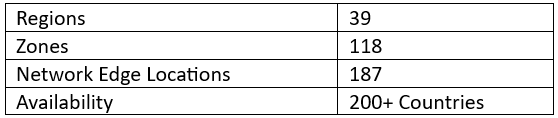
Follow the link to have a look into a tabular comparison of the solutions provided by the CSPs: AWS, Azure and GCP. https://cloud.google.com/docs/get-started/aws-azure-gcp-service-comparison

Bias Mitigation, Transparency, and Trust: The Three Foundations of Responsible Enterprise AI
AI is rapidly progressing from experimentation to core enterprise operations. From customer service automation to predictive analytics, organizations are embedding AI into decision-making processes that directly impact customers, employees, and business outcomes.

AI Adoption in HR: Top Five Benefits Powering the Future Workforce


Tableau with AWS: Business Intelligence and Data Analysis of a Higher Order
The cloud-based approach delivers:
1. Better performance2. More flexibility
3. Enhanced cost savings
4. Improved security
5. Facilitates excellent teamwork opportunities
Specifically, Tableau on AWS lets you process data more quickly and scale up or down resources as needed. Plus, you can access a range of AWS services to optimise your Tableau setup. AWS also provides tools to help you save money and a secure environment to protect against cyber threats and data breaches. Ultimately, Tableau on AWS enables teams to collaborate more efficiently, taking their data analysis and business intelligence to the next level.
There are several other benefits to using Tableau on AWS beyond scalability, cost, and security. Here are some additional insights:
1. Faster Deployment: With Tableau on AWS, you can deploy new instances of Tableau in minutes rather than days or weeks as you would with on-premises infrastructure. This is because AWS has pre-configured templates for Tableau that make it easy to spin up new instances quickly. 2. Better Performance: Tableau on AWS is designed to exploit AWS's high-performance infrastructure. Tableau runs faster and more efficiently on AWS than on traditional on-premises infrastructure. 3. Integration with Other AWS Services: Tableau on AWS integrates seamlessly with other AWS services, such as Amazon S3 for data storage, Amazon Redshift for data warehousing, and Amazon EMR for big data processing. This makes building a complete analytics solution easier by using Tableau and other AWS services. 4. Improved Disaster Recovery: With Tableau on AWS, disaster recovery is built. AWS provides automated backup and recovery services to quickly recover your Tableau environment and data if there is a disaster or outage. 5. Global Reach: AWS has data centres worldwide, meaning you can deploy Tableau in the region closest to your users for better performance. This is especially important for organisations with a global presence.Overall, Tableau on AWS offers several advantages over on-premises infrastructure. By leveraging AWS's scalability, cost-effectiveness, and security, organisations can run Tableau more efficiently and with better performance. Additionally, AWS's integration with other services and global reach make it an attractive option for organisations looking to build a comprehensive analytics solution.
Tableau Server on AWS deployment options
The following list outlines the available options for deploying Tableau Server on AWS:
1. Self-Deployment on EC2 Instance: This option involves users provisioning and configuring an EC2 instance and deploying Tableau Server. This provides the most significant control over the deployment process and can be customised to specific needs. However, it also requires more expertise and effort from the user.
2. Quick Start Deployment: The Tableau Server on AWS Quick Start provides an automated deployment process using AWS CloudFormation templates. This simplifies the deployment process and ensures that best practices are followed. However, it may be less customisable than self-deployment.
3. AWS Marketplace Deployment: Tableau Server is also available on the AWS Marketplace with pre-built AWS CloudFormation templates. This provides a quick and easy way to deploy Tableau Server, with different pricing and instance options public. However, users may have less control over the deployment process than over self-deployment.
Users should evaluate their specific needs and expertise when selecting a deployment option. Self-deployment provides the most significant control and customisation, while Quick Start and AWS Marketplace deployment offer simplified and quick deployment options.