Amazon S3 Case Study with Solutions: How Amazon S3 Glacier Instant Retrieval Transformed the BBC’s Archival Strategy
AWS BBC Case Study: Challenges Faced by BBC
The BBC Archives Technology and Services division is responsible for preserving over 16 million assets, including films, radio broadcasts, news, sports, and digital material. However, managing this vast repository came with significant challenges: • Fragmentation: Content was dispersed across multiple legacy storage systems, making data retrieval complex and inefficient. • High Costs: Maintaining outdated physical infrastructure demanded heavy financial and resource investments. • Limited Accessibility: Lack of a centralized system led to time-consuming content retrieval processes. Many global enterprises face similar struggles in balancing data accessibility with cost efficiency. To address these challenges, the BBC implemented a five-year plan to consolidate its storage using modern cloud technologies.
Key Benefits of Amazon S3 Glacier Instant Retrieval
Building on years of successful collaboration with Amazon Web Services (AWS), the BBC adopted Amazon S3 Glacier Instant Retrieval to modernize its archival strategy. Key benefits of Amazon S3 solution include: • Cost-effectiveness: Amazon S3 Glacier Instant Retrieval offers some of the lowest-cost storage for petabytes of archival data. • Instant Access: Unlike traditional archival storage, this AWS solution provides rapid retrieval speeds, making it ideal for time-sensitive content. • Scalability: AWS’s robust cloud infrastructure ensures seamless expansion as data volumes grow, future-proofing the BBC’s archives. This transition solved immediate storage challenges and laid the groundwork for a scalable, digitized archive that will serve future generations.
The Migration Journey: 25 PB in 10 Months
Over a span of 10 months, the BBC successfully migrated 25 petabytes (PB) of archival data to AWS. Legacy System Retirement: Enabled decommissioning legacy tape-based storage, freeing up space and IT resources at its London HQ. Enhanced Cost Efficiency: Reduced operational costs by integrating Amazon S3 Glacier Instant Retrieval and Amazon S3 Intelligent-Tiering. Optimized Storage Management: Automated data tiering based on access patterns to balance cost and performance. Improved Data Accessibility: Ensured seamless access to historical media archives for future content innovation.
Building a Future-Ready Data Lake
The BBC’s cloud migration is not just about cost savings and accessibility—it’s about innovation. With its archival content securely stored on AWS, the broadcaster now focuses on developing a comprehensive data lake. This centralized repository will power advanced analytics and machine learning (ML) applications, unlocking new capabilities such as: • Speech-to-text processing for historical broadcasts • Facial recognition for identifying individuals in archival footage • Automated metadata tagging to enhance searchability and categorization By embracing Amazon S3 Glacier Instant Retrieval, the BBC is building an infrastructure that will preserve its media legacy and revolutionize how historical content is accessed and utilized in the digital age.
Amazon S3 Case Study Examples: Lessons for Organizations Everywhere
The BBC’s experience provides a valuable blueprint for organizations looking to modernize their data management strategies. Key takeaways of this BBC Amazon S3 Case Study include: • Modernization is Essential: Cloud-based solutions like Amazon S3 Glacier Instant Retrieval significantly reduce operating costs and enhance data accessibility. • Scalability Matters: AWS storage solutions offer seamless expansion, ensuring long-term sustainability. • Future-Proofing Archives: A centralized data lake paves the way for leveraging machine learning, AI, and advanced analytics, unlocking new insights from historical data. Adopting AWS archive storage solutions can benefit organizations across industries, including media, government, and education, by ensuring efficient, cost-effective, and future-ready data management.
Summing Up
The BBC’s successful migration of 100 years of archival content to Amazon S3 Glacier Instant Retrieval is a testament to the transformative power of cloud-based archival storage. By overcoming high costs, fragmented data storage, and limited accessibility, the BBC has preserved its invaluable media heritage and set a new industry standard for digital archiving.
Managing vast historical data while controlling costs and ensuring quick, reliable access is a significant challenge for organizations today. Archival storage often relies on outdated, fragmented systems that increase complexity and expenses. However, modern cloud-based solutions like AWS archive storage and Amazon S3 Glacier Instant Retrieval offer organizations a groundbreaking approach to securely digitizing, organizing, and future-proofing their archives.
One such success story is the BBC AWS Case Study, in which the BBC leveraged Amazon S3 Glacier Instant Retrieval to overhaul its archival storage. The BBC has set a benchmark in digital transformation by migrating a century of historical content to AWS.
Maximize Your ROI with AWS Solutions – Get Started Now!
Related Articles

What is Time Series Analysis?
Time series analysis involves examining data that changes over time or where time is a variable in the outcomes. Time isn't just a data point; it's the primary axis on which the data is based.
The main difference with time series analysis is that data is collected at regular time intervals. This helps identify patterns in the data, forming trends, cycles, or seasonal variations. With a consistent time frame of historical data, time series forecasting becomes a valuable tool for predicting future data. Time's crucial role as a variable in data across industries makes time series analysis widely applicable. Explore a few examples outlined below.
6 Real-world Examples of Time Series Analysis in Various Industries
Example 1: Health Authority Enhances Patient Care
Problem: Inefficient resource use and rising costs of care and operations over time.
Solution: Utilizing data analytics, a prominent health authority conducted a comprehensive analysis of patient data. Examining historical data on patient stays, treatments, and conditions, they identified optimal times for administering medication, resulting in reduced average length of stay and cost savings for both patients and the system.
Insight: Time series analysis in healthcare extends beyond patient care to chronic disease research and epidemic-scale studies. Tracking chronic diseases over time and analyzing patient data using time series methods contribute to advancements in the field.
Example 2: Retail Giant Identifies Sales Opportunities
Problem: Slow data analysis affecting decision-making days before events.
Solution: A leading retail giant's front-office team integrated all data sources to gain a comprehensive view. Implementing time series analysis dashboards, they swiftly identified sales opportunities by forecasting against seasonal trends. Proactive measures were taken to increase ticket sales for upcoming events based on real-time insights.
Insight: Time series analysis aids retail giants in making data-driven decisions, predicting consumer trends, and strategizing marketing efforts, ensuring maximum impact.
Example 3: Manufacturing Company Improves Forecasting Accuracy
Problem: Inaccurate and time-consuming operations, manufacturing, and sales forecasting.
Solution: A manufacturing company revamped its forecasting process using time series analysis and modeling. By leveraging better data and faster analysis, they reduced analysis time from one day to one hour. Accurate forecasts in supply chain and manufacturing processes led to significant cost reductions in inventory, supply chain, labor, and capital equipment.
Insight: Time series analysis proves invaluable in optimizing forecasting models, enhancing accuracy, and streamlining operations in manufacturing.
Example 4: Marketing Analytics Scaling for Media Clients
Problem: Evolving marketing technologies making it challenging to quickly analyze information for media clients.
Solution: An analytics firm centralizes over 100 data sources using Tableau, allowing quick data retrieval and the creation of custom dashboards. Time series analysis aids in media forecasting, enabling the firm to develop insightful "what if" analyses. This empowers clients to make informed decisions about marketing investments.
Insight: Time series analysis combined with data centralization is crucial for scaling marketing analytics, providing clients with actionable insights.
Example 5: Streamlining IT Costs Through Self-Service Analytics
Problem: Business decisions based on static reports, consuming time and resources.
Solution: A retail group enables department staff with self-service analytics in Tableau, reducing IT costs by 20%. Time series analysis is applied for accurate forecasting of retail and IT trends, optimizing product orders and resource allocation.
Insight: Time series analysis aids in accurate forecasting for retail and IT trends, optimizing resource allocation, and reducing IT costs.
Example 6: Innovative Use of Data Analytics in Auditing Processes
Problem: Traditional audits were time-consuming and lacked value addition.
Solution: An organization in the energy sector used Tableau to analyze a year's worth of data, uncovering trends in financial processes. This data-driven approach revolutionized their auditing processes, providing deeper insights into the financial health of the organization.
Insight: Time series analysis proves instrumental in data-driven audits, providing a comprehensive view of historical data and uncovering trends for better decision-making.
These real-world examples showcase the versatility and impact of time series analysis across different industries, emphasizing its crucial role in data-driven decision-making and business optimization.

Enterprises worldwide have perceived the potential benefits of AI for their operations. AI gives humans the freedom to make insightful decisions while allowing a computer to perform other preset tasks that necessitates the development of such technologies in the first place. These tools assist you in developing, but they also aid in optimising networks and workflows.
A list of Artificial Intelligence tools is given below:- Scikit Learn
- Tensorflow
- Theano
- Caffe
- MxNet
- Keras
- PyTorch
- CNTK
SCIKIT Learn
Known to be the most wanted tool in the library of Machine Learning for the python programming language, Scikit learn offers a wide range of tools for statistical modelling, Predictive analytics and very many other machine learning tasks. It underpins many administered and unsupervised learning calculations. It is a perfect tool for fledgling, and it incorporates direct and calculated relapses, choice trees, bunching, k-implies, etc.
Tensorflow
TensorFlow is an end-to-end open-source platform with a flexible ecosystem of tools for creating Machine Learning applications. It allows Google's voice-recognition tool to spot queries in photos and understand audibly stated phrases.
Theano
Theano was created to simplify and speed up the creation of sophisticated learning models so that they might be used in creative projects. It's written in Python and can run on both GPUs and CPUs. It generates elevated information counts that are often higher than when it runs solely on the CPU. Theano's speed makes it highly cost-effective to perform any complex calculations.
Caffe
The Berkeley Vision and Learning Center (BVLC) and network donors collaborated to construct Caffe, a deep learning structure that prioritises articulation, speed, and assessed quality. Google's Deep Dream uses Caffe Framework. CAFFE is a Python-interfaced BSD-authorized C++ library.
MxNET
MxNET uses a 'forgetful back prop' to barter computation time for memory, which is highly useful for recurrent nets on very long sequences. As it is an easy-to-use support for multi-GPU and multi-machine training, scalability is a priority during the design process. There are a lot of intriguing features, such as the ability to write custom layers in high-level languages. Unlike almost all other significant frameworks, it is not explicitly regulated by a vast corporation, which is suitable for an open-source, community-developed framework.
Keras
Keras is what you need if you like Python and how it works. It is a high-end library that tackles neural networks highly effectively for recurrent nets on very long sequences, which it achieves by utilising Theano and TensorFlow in the backend. It recognises the architecture that relates to specific issues. It aids in the detection of problems by using photos with weights. It optimises the results of a network by configuring it. Keras provides an abstract structure that can be transformed into any other framework for compatibility or performance.
Pytorch
The code for Pytorch, a Facebook-created artificial system, is easily accessible on Github. There are over 22000 stars on it. The framework has been in high demand in recent years, and it is still being developed. PyTorch uses reverse-mode auto-differentiation to modify network behaviour arbitrarily with zero lag or overhead, speeding up research iterations. Its deep learning framework is optimised for achieving state-of-the-art results in research.
CNTK
The Microsoft Cognitive Toolkit (CNTK) is an open-source, unified toolkit that describes neural networks as computational steps via a directed graph. Users utilise CNTK to release and merge popular types of models, such as DNNs, CNNs, RNNs, and LSTMs. It employs stochastic gradient descent (SGD), which learns through parallelisation and automatic differentiation across multiple servers and GPUs. Because of its open-source licenses, anyone can try out CNTK
Machine Learning Tools
Machine learning tools are algorithmic applications of artificial intelligence that allow systems to learn and develop without human input; data mining and predictive modelling are similar concepts. They will enable the software to improve its accuracy in anticipating outcomes without programming it directly. Some top Machine Learning Tools are enlisted below:
- Microsoft Azure Machine Learning
- IBM Watson
- Google TensorFlow
- Amazon Machine Learning
- OpenNMS
- Google Colab
- Apache Mahout
- Shogun
Microsoft Azure Machine Learning
Microsoft Azure Machine Learning is a cloud platform for building, training, and deploying AI models. Microsoft is constantly updating and improving its machine learning tools, and it just announced changes to Azure Machine Learning, including the retirement of the Azure Machine Learning Workbench.
IBM Watson
Watson Machine Learning is a cloud service from IBM that leverages data to deploy machine learning and deep learning models. Users can use this machine learning application to execute two basic machine learning operations: training and scoring. Remember that IBM Watson is best suited for developing machine learning applications via API connections.
Google TensorFlow
TensorFlow is an open-source software library for dataflow programming that Google uses for research and production. TensorFlow is, at its core, a machine learning framework. This machine learning tool is new to the market and is rapidly evolving. The ease with which TensorFlow allows developers to visualise neural networks is perhaps the most appealing feature.
Amazon Machine Learning
Amazon Machine Learning is used for creating and predicting Machine Learning models. Amazon Machine Learning comes with an automatic data transformation tool, which makes the machine learning tool even more user-friendly. Amazon also offers other machine learning tools, such as Amazon SageMaker, a fully-managed platform that makes using machine learning models simple for developers and data scientists.
OpenNMS
Open Neural Networks Package is a neural network implementation software library. OpenNMS, written in the C++ programming language, allows you to download its whole library from GitHub or SourceForge.
Google Colab
Google Colab is a cloud service supported by Python. It will assist in developing machine learning applications using PyTorch, Keras, TensorFlow, and OpenCV libraries. It facilitates machine learning and is accessible through Google Drive.
Apache Mahout
Apache Mahout is an Apache Software Foundation project that employs the MapReduce paradigm and is built on top of Apache Hadoop. It's also utilised to construct scalable, distributed machine learning algorithms for clustering, collaborative filtering, and classification. Mahout includes Java libraries for popular math algorithms and operations and foundational Java collections, concentrating on statistics and linear algebra.
Shogun
Shogun is an open-source ML platform, an open-source machine learning software library built in C++. It employs a diverse set of unified and efficient machine learning techniques. Shogun provides a well-organised implementation of all standard machine learning methods and is a critical player in ML education and development.
Robotic Process Automation Tools
Robotic Process Automation (RPA) tools are commonly used for task automation configuration. These tools are essential for automating repetitive back-office activities. With RPA Tools, we acquire a virtual employee who can execute repetitive tasks efficiently and, at less cost, than humans.
The following is a curated list of the top RPA tools:- Keysight's Eggplant
- Inflectra Rapise
- Blue Prism
- UiPath
- Automation Anywhere
- Pega
- Contextor
- Nice Systems
Keysight's Eggplant
Eggplant RPA is a solution designed for process experts to automate the execution of repetitive tasks. It is compatible with apps such as SAP, Oracle, etc. and provides increased productivity and reduces errors.
Inflectra Rapise
Rapise by Inflectraina, a test automation solution, is in its seventh iteration and specialises in complicated applications like MS Dynamics, Salesforce, and SAP. Rapise now can automate Web, Desktop, and Mobile apps and supports hybrid business settings.
Blue Prism
Blue Prism RPA supports all core capabilities and is used with any application on any platform. You will need programming abilities to utilise this application, but it is user-friendly for developers. Blue Prism is ideal for medium and large businesses.
UiPath
UiPath is a user-friendly system that delivers security by handling credentials, encrypting data, and controlling access based on role. It is an open platform, adaptable for any business size and capable of handling complex procedures.
Automation Anywhere
Automation Anywhere provides core functions and security through authentication, encryption, and credentials. It is an easy-to-use solution ideal for medium and big businesses that offers both on-premise and cloud-based services.
Pega
Pega is a business process management platform that is hosted in the cloud. This is ideal for medium and large organisations and solely delivers cloud-based solutions or services. Pega is compatible with Windows, Linux, and Mac and can be installed on desktop servers.
Contextor
Contextor is an excellent fit for any size front office and works with all workstation applications. It supports Citrix and RDP hybrid virtualisation environments and provides on-premise and cloud services. Contextor can interface with both active and minimised programmes.
Nice Systems
The friendly RPA tool named NEVA-Nice Employee Virtual Attendant is an intelligent tool that assists in automating mundane tasks, compliance adherence, and Upsell. It provides cloud-based and on-premise solutions and attended and unattended server automation.
The trio, AI, ML and RPA, are separate entities, closely interconnected. As it can solve most real-world issues in a blink, they have become an inseparable helping hand in all the major businesses.

Digital transformation connects disparate data points and platforms across an organisation's larger ecosystem – both online and offline. It provides a clear picture of how to improve, expand, and add value to the organisation.
Most businesses conduct their operations on the cloud. As businesses migrate data to the cloud, much of what is done is digitally replicating existing services. True digital transformation, on the other hand, implies much more. A digital transformation can be transformative across an organisation by establishing a technology framework to channel all the services and data into actionable insights that can improve almost every aspect of the organisation.
Digital transformation can be used to re-evaluate and optimise your systems and processes, ensuring they are interrelated and flexible enough to provide robust business intelligence and position your company for future success.
How can digital transformation change different aspects of an organisation?
Digital transformation can be intimidating in the first stage despite all the aura associated with it. But there is no need for a second thought once the initiative is taken. A well beginning is half done, right? Well, let's discuss how digital technology transforms the crucial areas of an organisation.
HR and Digital Transformation
Automating HR processes and making them data-driven is termed HR digital transformation. An automated performance management system is implemented, and the managers and employees access the platform to view and update it and gather data for salary appraisals, screening processes and many other activities.
Well, what does HR digital transformation look like? It is not about HR but the whole metamorphosis an organisation undergoes after implementing digital transformation. Let's delve deep into HR Digital transformation and understand how digital technology can invariably bring changes to the HR department.
Digital Onboarding
The prevalence of hybrid work mode and hybrid work atmosphere has made digital onboarding the need of the hour. The employee onboarding process is done in person and is time-consuming, labour-intensive, and sometimes inconsistent. So many checklists must be ticked to complete the process like:
- Is all required reading and learning completed?
- Have they checked in with the HR assistant?
- Have they completed all the required onboarding formalities?
- An excellent digital onboarding process is structured and strategic, ensuring new employees feel welcomed, assisted, and trained to do their best work.
Employee Self-Service Portals
Employees have many queries regarding company policies, benefits, and basic HR information.
Every question can instead be answered by an easily accessible employee self-service information portal as part of your HR digital transformation.
Aside from routine information requests, self-service portals (also known as HCM Systems) can provide employees and managers with access to critical information, such as:
- NPS ratings
- Company news and workplace policies
- Performance management information such as self-evaluations, objectives, training, and ongoing trends
- Job opportunities
- Wellness polls
- Minutes of meetings and updates to the knowledge base
- Employees can take advantage of available training opportunities to improve their skills.
People Analytics
The application of data-driven decision-making to HR processes to enhance employee performance, commitment, and achievement is known as people analytics. Organisations use people analytics to improve talent management, employee retention, succession planning, and recruiting.
The information gathered helps employees to succeed and feel more fulfilled at work. The data collected from team-building exercises and other data collection and analysis methods can be used to develop an effective L&D strategy, allowing for upskilling and reskilling while also increasing productivity and employee satisfaction.
AI-Powered Applicant Tracking Systems
It's no surprise that many more giant corporations have adopted AI-powered applicant tracking systems (ATS). No one can afford to miss out on a compatible candidate in this competitive period because they're manually sorting through so many unqualified candidates.
Artificial Intelligence-powered applicant tracking systems use pre-programmed filters based on keywords, capabilities, years of work experience, education, and so on to eliminate unsuitable applicants before they are approached in person or interviewed.
ATS also shares job listings to multiple platforms, conduct pre-interview screening, schedule interviews, facilitate candidate evaluations from numerous interviewers, and provide the data required to assess the success of your hiring processes. It also makes sure to make unbiased decisions regarding the employee selection process.
HR Chatbots
HR chatbot is a convenient substitute for visiting the HR department to seek answers to simple questions or doubts. The most carefully planned digital employee onboarding process and employee self-service portal fail to resolve every question or concern your workforce may have. On the other hand, HR chatbots allow HR to create auto-response messages that instantly address some of the most frequently asked issues and concerns. Chatbots collect employee data sequentially as needed.
In a nutshell, digital technology has the grit to fully transform every aspect of an organisation. Initially, it can be intimidating as any new step, but it is worthy enough for the massive changes it can bring forth. It is for sure that the digital transformation movement will gain momentum.
The workforce will be affected by the next wave of digital transformation in a way that traditional automation cannot, and the nature of labour in many roles will shift completely. This will be the outcome of a trifecta of factors, including the arrival of a generation who grew up with technology, the widespread use of traditional technologies that eliminate the majority of repetitive activities, and the quick development of cognitive technologies. Even though HR departments are increasingly taking charge of their digital transformation, it is still required to collaborate closely with the technology department to make sure that the systems and tools you choose are in line with the enterprise's broader strategy.
According to IDC, by 2023, digital transformation will account for 53% of all information and communication technology investments. Let us not dare to miss this bus!

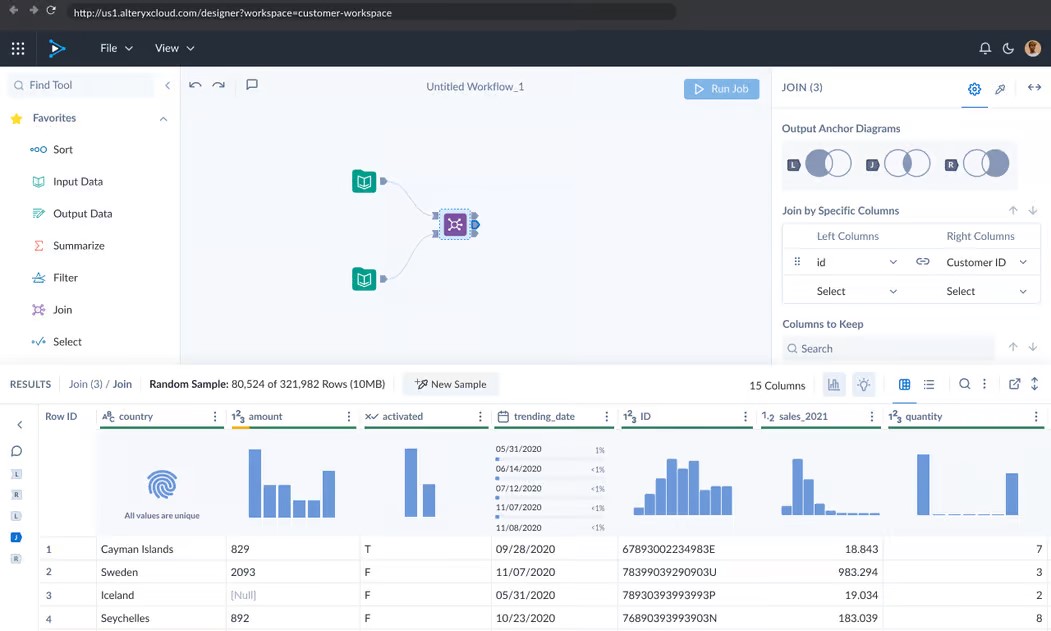
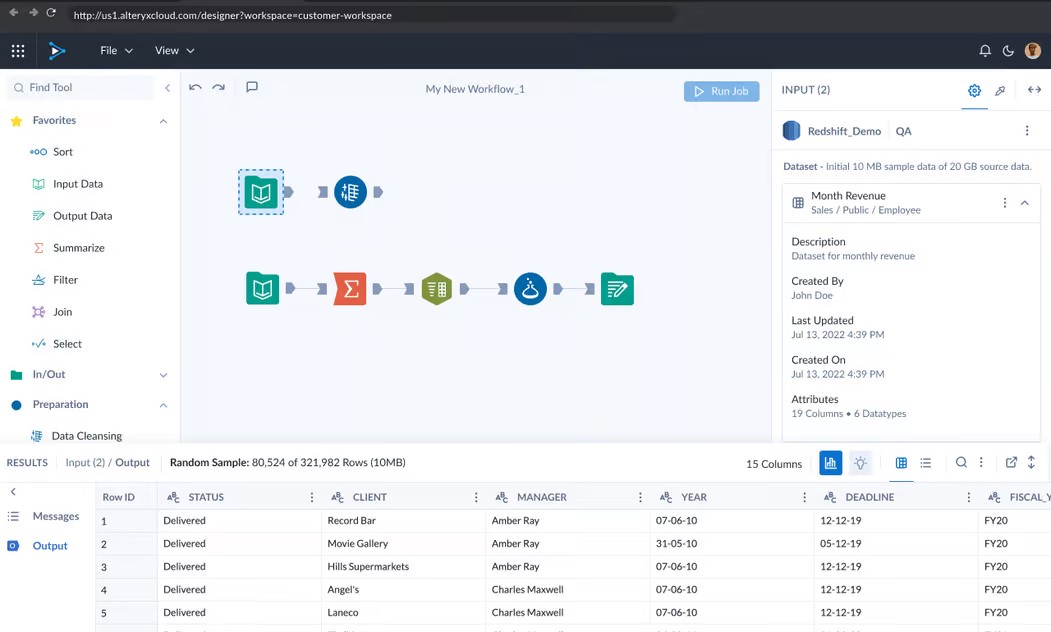
Last year, we were fortunate enough to successfully transform the majority of our clients’ businesses with Analytic Process Automation by quickly automating analytics and the entire data-driven business processes, resulting in quick wins and faster returns on ROI. We were also awarded with Alteryx 2020 Partner of the Year award, Middle East.
With the preferred partner status, we will be able to make even greater collaboration with the Alteryx team, helping us extract its possibilities to the next level.
Alteryx always stands for developing data-driven technical solutions to business problems by empowering its clients to be self-sufficient in handling data analytics and continues to provide unmatched services, like;
-
- Collecting data from multiple sources for quick analysis and faster insight generation.
- Exploration of data from on-prem databases, the cloud, and big or small data sets, and more.
- Analysis with maps, addressing solutions to deeply understand your customers and locations.
- Augmenting your team’s analytic output to gain insights by using data without any coding or analytics expertise.
- Embracing automation to effectively communicate with your stakeholders and enable intelligent decision-making to drive better, faster business outcomes.

Organisations take advantage of advanced analytics using the techniques given below:
Data Mining
Data mining is extracting useful information from large, raw chunks of data to find trends, plan new business strategies, increase revenue, decrease costs, reduce risks and enhance customer relationships. It establishes relationships and finds patterns and correlations to detect dangers and frauds and to make a profit out of businesses.
The data mining process constitutes many steps like the following:
- Identifying the data needed for the company's purposes*
- Preparing and assembling data to find remedies,
- Evaluating data models
- Deploying the results to make the right decisions
Sentiment Analysis (Opinion Mining)
Sentimental Analysis technique is used by businesses to detect emotion or feelings in textual data. It categorises the tone of writing as positive, negative or neutral. Organisations are benefitted in many ways by aiding in crisis prevention and understanding and analysing customers' opinions about their particular products or services. The companies monitor online conversations to learn about the customers' tastes, needs, and expectations.
Sentiment analysis' fully automated tools assist businesses in extracting information from unstructured and unorganised material found on the internet, such as blog posts, email, webchats, social media channels, and comments.
Cluster Analysis
It's a popular data-mining technique that matches unstructured data fragments based on commonalities discovered between them. Cluster analysis is instrumental for companies to identify different consumer groups and sales transactions or detect fraud. It is used in Machine Learning, image analysis, pattern recognition, information retrieval, data compression, bioinformatics and computer graphics.
Cluster analysis is a powerful data-mining tool for any company that wants to recognise discrete groupings of consumers, sales transactions, or other types of behaviours and things. Insurance firms use cluster analysis to identify fraudulent claims, and banks use it for credit scoring.
Retention Analysis
Studying user analytics to determine how and why consumers churn is known as retention analysis (or survival analysis). Retention analysis is crucial for learning how to keep a lucrative client base by increasing retention and new user acquisition.
You'll learn the following things if you do a retention analysis regularly:
- Why are customers leaving?
- When clients are more prone to abandon a purchase.
- The impact of churn on your bottom line.
- How to make your retention strategies more effective.
Customer retention is a crucial practice in every business; companies can quickly decrease churn rates and increase customer satisfaction by tracking and taking advantage of customer behaviour.
Complex Event Analysis
Complex data analytics is the application of complex algorithmic approaches to effectively process huge unstructured data volumes. Computers perform data analysis; this was done mainly by individual machines acting on well-defined data structures in the past. This method uses technology to forecast high-level occurrences that are likely to occur due to a series of low-level factors.
This technique is often employed in the following scenarios:
- Stock market trading: To recognise the stock price, compare it to a pattern, and prompt the proper buying/ selling response.
- Predictive maintenance: Used by manufacturing facilities to collect data regularly to see any trends and signal the need to shut down equipment for predictive maintenance.
- Real-time marketing: This allows marketers to spot trends in consumer behaviour, giving personalised offers to customers in real-time.
- Operation of autonomous cars: It determines when to perform specific actions like spotting a stop sign in the distance, calculating the space, and selecting a deceleration rate to assure complete stopping at the movement.
Predictive Analysis
Predictive analysis is a technique used to analyse data and forecast the possibility of an event occurring in the future, allowing businesses to plan. It uses historical data combined with statistical modelling, data mining techniques and Machine Learning to predict risks and opportunities. Predictive analysis uses a scientific approach to forecast the future with a high degree of accuracy.
Predictive analytics improves corporate performance in a variety of ways:
- Optimisation of marketing campaigns: Useful in forecasting consumer reactions to changes in product offerings and in assisting a company in determining the best ways to attract and retain customers.
- Streamlined operations: It helps to manage resources as needed, such as storing inventory to keep storage expenses low or recruiting additional temporary personnel during peak times to save money on HR. This aids in streamlining the company's operations, resulting in increased efficiency and lower expenses.
- Enhanced cybersecurity: Assist to discover anomalies and patterns in real-time, allowing fraud or other persistent threats to be identified and addressed.
- Reduced risk: It helps to examine and predict whether your buyer will pay you on time. Predictive analysis can be performed using a prediction algorithm to calculate the buyer's credit score based on creditworthiness.
Machine Learning
Machine Learning is a crucial part of the AI subset of advanced analytics. This advanced analytic tool uses computational approaches to find patterns in data. It then uses them to build statistical models that can produce solid results without human participation. It falls into the following categories:
Supervised learning: The more common type of Machine Learning is supervised learning, which uses labelled data sets to allow you to search for specific patterns in the data. It requires vast datasets for the process; the more the amount of data, the more chances of getting accurate results.
Unsupervised learning: It employs various methods to find patterns and correlations in a subset of data. On the other hand, these algorithms are unable to recognise specific data sets, but they sort the information based on similarities and anomalies. However, it is applied in cybersecurity to find patterns from data.
Semi-supervised learning: It combines the benefits of supervised and unsupervised learning approaches. This technique uses unlabelled and labelled data to help the systems understand the challenge. The labelled data set is then utilised to aid in the model's training, with the results being used to mark the remaining unlabelled data. When all of the data has been labelled, the model is trained on it.
Reinforced learning: A relatively new advancement in Machine Learning, a reinforcement learning algorithm learns and develops to achieve a specific goal through trial and error. It tries out numerous choices before using rewards or penalties to help it make the best decision to achieve the goal.
Data Visualisation
Data representation in a visual or graphical style is known as data visualisation. It allows decision-makers to see analytics visually, making it easier to grasp complex topics or spot new patterns. Data visualisation aids in telling tales by transforming data into a more understandable format and showing trends and observations. A good visualisation tells a story by reducing noise from data and emphasising the essential facts. The common types of data visualisation include charts, tables, graphs, maps, infographics and dashboards.
It helps the businesses in the following ways:
- To determine which areas require attention or improvement.
- To determine which elements have an impact on customer behaviour.
- Assist in deciding which products to place where.
- Help to estimate sales volume.
Cohort analysis
Cohort analysis is employed to analyse the data and group it based on shared user behaviours during a specific period. It is a beneficial technique for boosting customer retention and happiness. By analysing behavioural patterns, it is possible to gain valuable information about what type of campaign is most likely to be successful, which customer group is most likely to buy your goods, and their expectations from a product. Cohort analysis can bring several advantages to a company:
Increased Customer Lifetime Value (CLV): Cohort analysis' capacity to assist a firm in improving client retention improves the CLV, which is the total money a business generates from a customer throughout their relationship.
Stronger relationships with loyal customers: Cohort analysis helps you discover your most loyal customers, allowing you to target them more precisely and encourage them to stay with you for as long as possible.
Better testing of new designs: In most cases, tests cannot predict how well a new design of a product will perform in the market. With the aid of cohort analysis, generate a cohort based on interactions with the latest design and compare it to the conversion rate of those that haven't.
Regression Analysis:
It is a powerful statistical method used to estimate the link between dependent (outcome) and independent (features) variables. The goal of regression analysis is to figure out how one or more factors may influence the dependent variable to spot trends and patterns. It is crucial for projecting future trends and generating forecasts.
To perform a regression analysis, you must first establish a dependent variable that you believe is influenced by one or more independent factors. After that, you'll need to create a comprehensive dataset to work with. Using surveys to get data from your target consumers is a great way to get started. All of the independent variables you are interested in should be addressed in your survey.
Different sectors like banking, insurance, retail, pharmacy, e-commerce and others used regression techniques to yield valuable, actionable business insights.
Advanced Analytics gives companies a greater understanding of data patterns and behaviour, allowing them to forecast future actions. It provides a substantial strategic advantage by revealing new business prospects and potential innovations, a deep awareness of customer and employee behaviours, fresh ways of looking at existing problems, and operational improvement opportunities, increasing revenue or lowering costs.Advanced Analytics analyses information from various data sources using predictive modelling, Machine Learning, and business process automation.