How AI Decision-Making is Improving Enterprise Outcomes
Blog
Share 
AI Agents Explained: How They Work, Types, Architecture & Use Cases in the UAE
 3 September 2026
  Subbayya
 AI agents are software systems that perceive their environment, reason over available data, and take action toward a goal with limited human input. Adoption is no longer experimental: AI agents are moving rapidly from experimentation into production, with enterprises increasingly deploying them in defined operational workflows. The global AI agents market is estimated at approximately $10.9 billion in 2026, up from the previous year. In the Middle East, the shift is even sharper: Microsoft's Q1 2026 Global AI Diffusion Report ranks the UAE first globally, with 70.1% of the working-age population using generative AI. This blog breaks down what an AI agent actually is, how its architecture functions, and where AI agent development services in UAE businesses are creating measurable value.
What Is an AI Agent and How Does It Work?
In simple terms, an AI agent observes an input (a query, a data stream, a system event), reasons about the best next step using a model or rule set, and executes an action, then repeats the cycle based on feedback. Unlike a static chatbot or script, an agent can plan multi-step tasks, call external tools, and adjust its approach without a human re-prompting it at every stage.
What Are the Key Functions of an AI Agent?
Most AI agents combine four core capabilities: perceiving inputs, reasoning or planning, acting through tools or systems, and maintaining state or responding to feedback. Learning over time may be added where the use case requires it.
Together, these capabilities allow agents to make context-dependent decisions and choose actions, rather than simply follow a fixed sequence of rules.
What Are the Different Types of Intelligent Agents in AI?
Understanding the types of intelligent agents in AI helps businesses pick the right fit for a use case.
Classical agent types:
- Simple reflex agents: act on current input only, using fixed condition-action rules.
- Model-based agents: maintain an internal model of the world to handle partial information.
- Goal-based agents: choose actions that move toward a defined objective.
- Utility-based agents: weigh multiple paths and pick the one with the best outcome.
- Learning agents: improve performance over time through feedback.
Multi-agent systems:
Multi-agent systems are an architectural pattern in which several specialized agents coordinate on a larger workflow. This approach is common in logistics and finance, where tasks are interdependent, and no single agent can handle the full scope alone.
How Does Intelligent Agent Architecture Work?
AI agent architecture explained simply: it's the structural blueprint connecting perception, decision-making, memory, and action into one loop. Modern enterprise agents typically combine a reasoning model, instructions, memory or state, tool access and orchestration, with guardrails, permissions, monitoring, and human approval points around higher-risk actions. This layered design allows an agent to handle long, multi-step workflows rather than single-turn responses.
What Are the Core Components of an AI Agent?
A production agent typically combines a reasoning model, instructions, tools, memory or state, and orchestration. Guardrails, identity and access controls, monitoring and evaluation are added to make the workflow reliable and governable. Getting this AI architecture right, rather than bolting tools onto a language model, is usually the difference between a reliable agent and a brittle one.
When Should You Use an AI Agent?
Not every workflow warrants an agent. Agents suit variable, judgement-heavy workflows that involve unstructured information, multiple tools, or decisions that depend on context gathered across steps. If the process is predictable and its rules can be specified upfront, conventional automation is often simpler, faster to build, and more reliable. The decision to use an agent should follow from the nature of the task, not from the appeal of technology.
How Are AI Agents Used in Enterprise Operations?
In enterprise settings, agents are moving beyond simple deflection bots into operational roles: investigating financial exceptions by retrieving supporting transactions and routing cases for review, monitoring inventory signals, checking supplier constraints and initiating replenishment actions within approved limits, and drafting compliance reports. Financial services is among the sectors moving fastest from agent pilots into production, while adoption in healthcare and government is still catching up. The common thread is narrow, well-scoped tasks with clear success metrics, not open-ended autonomy.
AI Agent Development Services in the UAE: What Businesses Need to Know
Regional demand for AI agent development services in the UAE is being pulled forward by policy as much as technology. The National Strategy for Artificial Intelligence 2031 set eight strategic objectives, including building AI infrastructure, attracting talent, and embedding AI across government services, as part of the UAE's long-term ambition to strengthen its position as a global AI hub. For businesses, this translates into stronger data infrastructure, active regulatory sandboxes, and growing local expertise, but also a genuine need for AI agent development partners who understand sector-specific compliance requirements before deployment.
High-Value AI Agent Use Cases Across UAE Industries
Potential and emerging enterprise use cases in the UAE include:
- Banking and finance: KYC review, reconciliation exception handling, collections and investigation workflows
- Government services: citizen query resolution and document processing
- Logistics and trade: shipment exception management, customs-document processing and supplier coordination
- Healthcare: appointment coordination, prior authorization, coding support and administrative workflow agents
- Tourism and hospitality: personalized booking assistants and multilingual customer support
How to Build and Deploy AI Agents Responsibly
Responsible deployment starts with narrow scope:
- Define the task, the data the agent can access, and the escalation path when it's uncertain.
- Add human review for high-stakes decisions.
- Log every action for auditability.
- Test for failure modes before scaling.
- Apply least-privilege access to tools and data, define approval gates for sensitive or irreversible actions, monitor agent behavior and outcomes, and test security and prompt-injection failure modes before scaling.
Governance isn't a slowdown; it's what keeps an agent program from becoming one of the many pilots that stall before reaching production.
AI agents have moved from a research concept to a working part of enterprise infrastructure, and the region's policy backing gives businesses here an unusually strong starting point to build on. The organisations that gain ground won't be the ones that deploy the most agents; they'll be the ones that scope each agent carefully, measure its output, and expand only what proves reliable.
Ready to explore what an AI agent could do for your operations? Beinex has been named a Major Player in the IDC MarketScape for Gulf Countries AI Professional Services 2025 and is a recipient of the Dubai AI seal, with capabilities across AI agents, data governance, and bilingual AI solutions for enterprises across the region.
Get in touch with our team to scope a pilot built around your workflows and compliance needs.
Related Articles
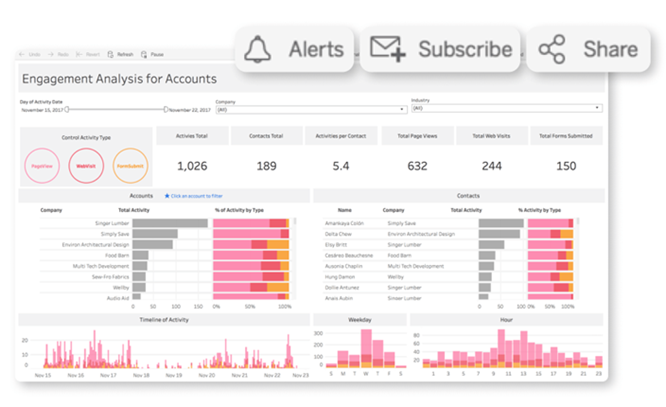
Infusing a Dash of Freshness in Tableau: Relaunching Tableau Online as Tableau Cloud!
Tableau Cloud is a web-based data visualization tool. It is a part of the futuristic notion that enabled the evolution of a completely hosted, cloud-based solution, enabling wiser decisions through quick, flexible, and simple analytics. Tableau Cloud helps more people and teams obtain insights and become more innovative and competent decision-makers by distributing reliable data across enterprises, eventually leading to better, data-driven outcomes.
Tableau Cloud takes pride in the fact that the system is built to fit any enterprise architecture, with industry-leading security features, the highest certification requirements such as SOCII and ISO, and best-in-class governance capabilities to guarantee your data is always in the right hands.
The expected features are all here, with solid and intelligent additions such as Advanced Management, Data Stories, new embedded functionality, etc. These vital advancements add to the advantages of moving Tableau to the cloud, such as time savings, flexibility, and decreased costs. Still, they also give insights that evolve scale without having to install or maintain any software or hardware.
The most wanted features are here:
Advanced Management - Advanced Management contains several operational insight elements to gain information into visualisation load times, user interactions, number of views, and more. Admin Insights delivers easy-to-understand visualisations derived from the environment's usage statistics, and the Activities Log gives granular event data to create a record of activity. The newly added feature helps to handle critical analytics with ease. Features like flexible control, better security and manageability, and limitless scalability are designed to help the business thrive.
Data Stories – Data stories help to get clear, automated explanations for dashboards in no time. Make dashboard analytics simple with clear, automatic explanations. Big data is divided into critical aspects, and insights are provided in simple terminology
Embedded Analytics – Embedded Analytics integrates analytics seamlessly into the products and applications, surfacing insights to the users wherever they are, including public domains. It's straightforward to configure, integrate, and deploy Embedded Analytics right into your applications, products, and online portals. Tableau Cloud will allow administrators to share their workbooks and visualisations with the public, enabling users to view their information without logging in.
Tableau Cloud is an easy-to-use self-service platform, and all you must do is prepare your data, author, analyze, collaborate, publish, and share on Tableau Cloud
 Source: https://www.tableau.com/products/cloud-bi
Tableau Cloud is user-friendly, and its activation can be done with a finger snap. The first step is to configure the authentication mechanism and securely publish interactive dashboards and data because it is managed and hosted by Tableau.
The material will then be accessible from any browser or mobile device, allowing the team to collaborate and share analytics with everyone, anywhere. Simple, right!
Feel free to request a free trial using this link.
The Transformative Power of AWS Cloud Infrastructure Services
AWS and Pay-as-you-go Model
AWS adopts a pay-as-you-go model for the majority of its cloud services. This means you pay only for the specific services you use, for the duration of your usage, and without the need for lengthy contracts or intricate licensing agreements. The pricing structure is akin to paying for utilities such as water and electricity – you are charged solely for the services consumed, and once you cease using them, no additional costs or termination fees apply.
The pay-as-you-go system with AWS ensures that you pay only for the resources your organisation utilises, promoting agility, responsiveness, and scalability. This approach allows you to effortlessly adjust to evolving business requirements without committing to fixed budgets, ultimately enhancing your ability to respond to changes promptly.
In essence, paying for services on a needed basis empowers your organisation to focus on growth and efficiency rather than getting bogged down by unnecessary expenses.
Let’s understand the key benefits AWS customers can reap from embracing AWS Cloud Infrastructure services, unlocking a world of possibilities for organisations seeking to transform their operations and drive unparalleled value.
AWS Economic Overview: Realizing Significant Savings
An economic analysis by the Enterprise Strategy Group highlights that migrating on-premises workloads to AWS results in substantial savings and benefits across various categories:
- Cost Optimization and Improved Operational Efficiency
- Faster Time to Value and Improved Business Agility
- Reduced Risk to the Organization
1. Cost Optimization and Improved Operational Efficiency
By transitioning to AWS Cloud Infrastructure, organisations shed the complexity and burden associated with on-premises operations. This shift allows IT infrastructure teams to focus on business innovation rather than managing hardware, creating a ripple effect that enhances the efficiency of application, development, and data service teams. The move to AWS results in simplified administration, automated tasks, and substantial time savings, with reported efficiencies ranging from 60% to 70%.
a. Designed for Best Price-Performance: Employing Customized SolutionsAWS's commitment to delivering the best price-performance for many applications and workloads is evident in its continuous innovation. From the Nitro System and AWS Graviton processors to AWS Trainium and Inferentia accelerators, AWS has engineered custom silicon that optimises performance and efficiency, allowing organisations to achieve cost savings while enjoying top-notch performance.
b. Financial Flexibility, Predictability, and Visibility: Enabling Decision-MakingAWS offers a transparent monthly billing model, shifting organisations from up-front capital investments to a more flexible and predictable cost structure. With tools like AWS Cost Explorer, customers gain visibility into resource utilisation and identify cost-saving opportunities. Flexible purchase models, including On-Demand Instances, Spot Instances, and Savings Plans, provide financial flexibility, enabling organisations to meet infrastructure needs while staying within budget constraints.
c. Managed Services: Enabling Business TransformationAWS-managed services not only free up internal teams from infrastructure maintenance but also allow them to scale operations using fully managed services. By reducing administrative burdens through offerings for monitoring, incident detection, security functions, and more, organisations can focus on delivering superior data services and business logic. The AWS Partner Network (APN) further enhances this capability, offering a global community of partners to collaborate with and derive greater business value.
d. Improved Environmental Sustainability: A Commitment to a Greener FutureAs environmental, social, and governance goals take centre stage, organisations benefit from AWS's global infrastructure to lower their carbon footprint. Moving from on-premises to AWS Cloud Infrastructure can lead to a significant reduction in electricity consumption and associated costs. AWS's commitment to powering operations with renewable energy aligns with the sustainability goals of organisations, contributing to a greener and more responsible future.
2. Faster Time to Value and Enhanced Business Agility
Embracing change can be challenging for any IT organisation, particularly for large enterprises deeply invested in on-premises technology. Overcoming hurdles such as standardising organisational structures and adopting best practices adds complexity to the transition. However, AWS offers a compelling solution, guiding organisations seamlessly through the shift from on-premises environments to the cloud. This transition not only occurs swiftly and securely but also brings about a significant improvement in business agility, unlocking outcomes that were previously unattainable.
a. Faster time to migrationTransitioning on-premises workloads to AWS Cloud Infrastructure enables organisations to swiftly leverage modern end-to-end data architectures. This facilitates immediate benefits in storing, protecting, analysing, visualising, and extracting valuable insights from data. Remarkably, a customer successfully migrated their business applications to AWS in a single weekend, involving over 200,000 business customers and 400 internal users across three global locations.
AWS, as a cloud provider, offers a comprehensive range of services and features within those services, making the process faster, easier, safer, and more cost-effective. Whether rehosting workloads or relocating entire data centres, AWS empowers organisations to build virtually anything, providing confidence through proven phased methods, assessment tools, and mobilisation support.
AWS stands out by delivering unique capabilities and technologies that enable customers to experiment and innovate rapidly. The cloud infrastructure allows customers to benefit from continuous innovation in modern computing, networking, and storage technologies without needing on-premises forklift refreshes.
Technologies like the AWS Nitro System, Amazon FSx for Lustre, and various deployment options empower organisations to modernise applications, accelerate development, and explore edge computing solutions seamlessly. AWS connects containers and microservices with application-level networking, secure API gateways, and advanced tools for modernising or re-platforming applications.
The AWS Global Infrastructure facilitates secure, extensive, and reliable global cloud operations. Customers can seamlessly deliver data, applications, and services to regions worldwide while meeting SLAs. Leveraging AWS Direct Connect, customers can run applications using on-premises and cloud resources without compromising performance, ensuring private, secure connections bypassing the internet.
AWS tools and services enable the transformation, enrichment, and accessibility of data for diverse workloads such as AI, ML, HPC, and BI. Customers experience improved data-driven services, efficient access for remote workers through AWS Client VPN, and high-performance applications at the edge using CDN services like Amazon CloudFront.
AWS empowers organisations to scale computing, networking, and storage resources swiftly in response to changing business demands. With minimal planning, customers can provide additional resources in minutes, starkly contrasting the weeks or months required on-premises. Leveraging AWS Auto Scaling and intelligent optimisation tools, customers ensure predictable, steady performance while optimising costs.
Enhanced scalability allows for dynamic adjustments to resource capacity, saving developers significant time in manual infrastructure maintenance and scaling. Customers can precisely provision resources, proactively reducing infrastructure costs, and flexibly choose from 600 compute instances to meet workload requirements. This flexibility extends to running applications on VMs, containers, or serverless services, enabling deployment options across geographic regions, data centres, or at the edge.
Reduced Risk to the Organization
In prioritising security, AWS is a trusted partner for organisations, addressing concerns related to data protection, service interruptions, data corruption, compliance, and malicious intent. Security holds paramount importance in the design of the AWS Global Infrastructure, custom-built for the cloud and continuously monitored to ensure the confidentiality, integrity, and availability of customer data.
a. Comprehensive Security Measures:Protection at all levels, including physical security, infrastructure security, network backbone security, and data security. Rigorous access controls, encryption, retention, and auditing to meet compliance requirements. AWS’s commitment to ongoing investments in security technologies and operational best practices.
b. Shared Responsibility Model:Security and compliance shared responsibility between AWS and the customer. AWS manages components from the host operating system to physical security, while customers handle the guest operating system, application software, and AWS security group firewall configuration.
c. Data Protection and Security:AWS offers built-in security features at the chip level through the Nitro System, ensuring continuous monitoring and verification. Virtualisation resources are offloaded to dedicated hardware and software, minimising the attack surface. The security model of the Nitro System is locked down to prevent administrative access, reducing the risk of human error and tampering. AWS provides tools for data resiliency, including snapshots, versioning, and full backup and recovery solutions.
d. Secure Access Control and Operations:AWS customers have tools for securing access, including a centralised firewall, AWS Identity and Access Management, encryption features, and more. Features like Amazon S3 Object Lock, checksums, replication, and versioning ensure data integrity. Protection against exploits and DDoS events with AWS Web Application Firewall (WAF) and AWS Shield.
e. Improved Compliance:AWS customers receive tools and visibility to demonstrate compliance locally and regionally. AWS CloudTrail helps organisations avoid penalties for regulatory non-compliance.
f. Data Sovereignty and Privacy:Organisations retain control over data storage, security, and access. AWS ensures data remains within chosen AWS Regions and is committed to confidential computing. Specialised hardware and firmware protect customer code and data from external access.
Summing Up
Embracing AWS Cloud Infrastructure services is not just a technological upgrade; it's a strategic move that unleashes innovation, enhances efficiency, and aligns businesses with the future of digital transformation. The transformative journey with AWS goes beyond cost savings; it's about realizing the full potential of technology to drive growth, agility, and sustainability in an ever-changing landscape. As organisations navigate the complexities of the digital age, AWS stands as a trusted partner, offering a robust foundation for a future-ready enterprise.

Top 15 Tableau LOD Expressions
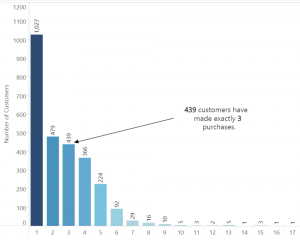
Customer Order Frequency
This scenario involves understanding customer order frequency, specifically determining the count of customers who made varying numbers of orders. While calculating the number of orders per customer is straightforward, discerning how many customers placed one, two, or multiple orders requires breaking down the count of customers based on order frequency. Utilizing LOD (Level of Detail) Expressions becomes essential in transforming the count of orders into a dimension that segregates customers by their order count. This process aids in unraveling insights about customer behavior in relation to their order frequency within a sales database where multiple items are present per order.

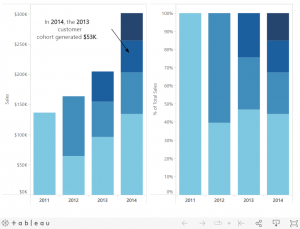
Cohort Analysis
In the pursuit of understanding the impact of customer tenure on sales contributions, cohort analysis is employed to assess whether longer-tenured customers hold more significant sales influence. The presented view categorizes customers based on the year of their initial purchase, facilitating an annual comparison of sales contributions among these cohorts. To determine the first purchase date for each customer, the minimum order date per customer is crucial. However, as the displayed data isn’t structured by customer, employing an LOD (Level of Detail) Expression becomes necessary to establish and retain the minimum order date per individual customer for accurate cohort analysis.

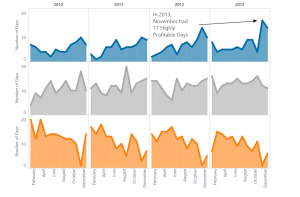
Daily profit KPI
In evaluating daily profit as a key performance indicator (KPI), the focus shifts from observing profit trends over time to quantifying success based on total profit per business day. Understanding the count of profitable days per month or year becomes essential, particularly in investigating potential seasonal impacts. Utilizing LOD (Level of Detail) Expressions, this view demonstrates the seamless creation of bins for aggregated data, like profit per day, despite the underlying data being recorded at a transactional level. This approach allows for efficient analysis and visualization of daily profitability trends within the context of the broader business calendar.

Percent of Total
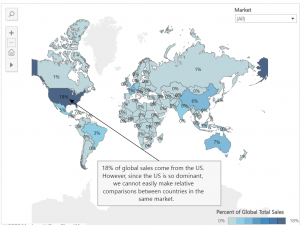
Determining each country's revenue contribution to global sales is crucial for assessing market performance. When visualized by coloring contributions as percentages, it's apparent that the US holds the highest share of global sales revenue. However, focusing on markets like the EU, which might have a relatively smaller absolute contribution, becomes challenging without LOD Expressions. Without this capability, filtering by market could lead to recalculating the percent of total, displaying each country's contribution relative to its market. Using a straightforward LOD Expression enables filtering by market while preserving the measurement of each country's global contribution, facilitating a more nuanced analysis of market performance within the broader global context.

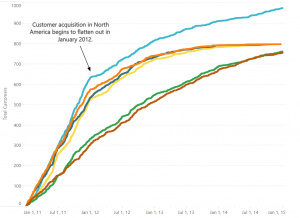
New customer acquisition
Analyzing the daily trend of total customer acquisition across different markets serves as a crucial metric in assessing the effectiveness of regional marketing and sales efforts in generating new business. By tracking this trend, we gain insights into the performance of these organizations. A steeper line signifies a stronger acquisition trend, while a flattening line suggests a need for increased lead flow.
To accurately measure this trend, it's imperative to ensure that repeat customers aren't erroneously counted as new customers. This necessitates using an LOD (Level of Detail) Expression, allowing data evaluation at the customer level despite its visual representation being segmented by market and day. This meticulous approach ensures a precise assessment of new customer acquisition, enabling strategic actions to be taken based on the observed trends.

Comparative Sales Analysis
When aiming to determine the difference from a selected category rather than the average, the process becomes more intricate. Initially, isolating the sales figures of the chosen category is necessary. Subsequently, employing an EXCLUDE Expression becomes crucial to reiterate that value across all other categories. This technique enables a straightforward calculation of the difference between each category's sales and the rest, allowing for a comparative sales analysis that emphasizes the disparity between the selected category and others.


Average of top deals by sales rep
Determining the largest deal closed by each sales representative and subsequently computing the average of these top deals by country is a multi-layered analysis. LOD (Level of Detail) Expressions play a pivotal role in dissecting data down to the sales rep level, even when the visualization displays information at the country level.
The presented view showcases the average top deal size by sales rep, offering insights where countries colored blue exhibit higher average top deal sizes, while those colored orange indicate comparatively lower averages. This information serves as a guide for further drill-down analysis from the country level to the sales rep level, facilitating a deeper understanding of performance variations across both geographical and individual sales rep perspectives.


Actual vs. Target
Within this visualization, we present the variance between actual and target profits per state for a chain of coffee houses. The top view distinctly showcases states surpassing or falling short of set targets. Yet, this aggregated view might overlook subtleties: some states exceed targets due to every product sold meeting or exceeding goals, while others rely on a single product surpassing its target to compensate for others missing theirs. Employing an LOD Expression enables the identification of the percentage of products sold within a state that surpass their set targets, offering a more nuanced assessment.


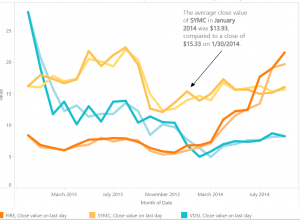
Value on the Last Day of a Period
Data reflecting specific day statuses—like inventory, employee headcounts, or daily stock values—require distinct handling compared to aggregatable metrics like sales or profit. Displaying the value on the last calendar day of a month holds significance in such cases. Moreover, transitioning from a monthly to a weekly view should dynamically update to showcase the last day of the week. For instance, in the stock data example below, assessing multiple ticker values at a daily level compares the average daily close value against the close value on the final day of the period. Employing a straightforward LOD Expression enables diving into daily granularity even within a visual display at a higher level of aggregation.

The following 6 examples illustrate how level of detail expressions can be applied to more advanced scenarios:
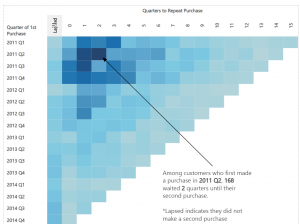
Evaluating the return purchases among customers holds significance, especially considering the costliness of acquiring new customers. Understanding the patterns of customers making repeat purchases within varying quarters—whether it's the first, second, third, or beyond—is essential. Additionally, assessing the count of customers who have never made a repeat purchase contributes valuable insights. This analysis, segmented by quarterly cohorts, sheds light on customer behavior over time.
Leveraging a FIXED Expression becomes instrumental in identifying each customer's first and second purchase dates, enabling the derivation of the time span in quarters for a repeat purchase. This nuanced approach offers a comprehensive understanding of customer return behavior within distinct quarterly cohorts.

Percent Difference from Average Across a Range
While Example 6 highlights comparing against a single selected item, what if the aim is to assess comparisons across a spectrum of values? Consider a scenario where one desires to evaluate the daily close value of a stock against the average daily close value before a significant industry-impacting event occurs.
In such instances, examining the percent difference becomes essential. By comparing the daily stock close values against the pre-event average, insights into the magnitude and impact of the event on stock performance can be gleaned. This analysis offers a broader perspective, aiding in understanding the deviation from the average within the context of industry-wide fluctuations.

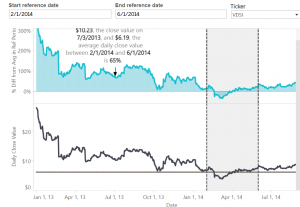
Relative period filtering
When analyzing performance through year-to-date (YTD) and month-to-date (MTD) comparisons relative to the previous year, filtering relative to today is straightforward. However, when data undergoes weekly refreshes, discrepancies can arise. For instance, if the last refresh was on March 1 but the current day is March 7, a month-to-date comparison might inadvertently compare March 1 through March 7 of the previous year against March 1 of the current year, potentially causing unwarranted concern.
Employing a simple LOD (Level of Detail) Expression resolves this issue by identifying the maximum date within the dataset. This approach ensures accurate time-based comparisons, preventing misleading contrasts between different periods and providing a more precise evaluation of performance trends.

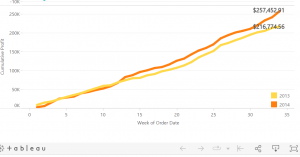
User login frequency
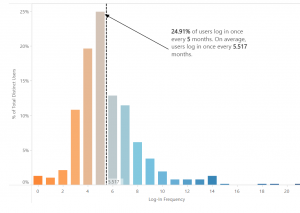
Understanding user login frequency is pivotal for assessing user engagement on websites or applications. This analysis aims to segment users based on their login frequency—whether it's monthly, bi-monthly, quarterly, and so on—and derive insights regarding the average login rate and its distribution around this average.
The dataset's granularity involves a log-in date per user ID, implying a row for each day a user accesses the platform. Slicing the number of customers by their login rate entails a more intricate analysis, necessitating the slicing of one measure by another measure. As showcased in Example 1, leveraging LOD (Level of Detail) Expressions streamlines this analysis, enabling an easy breakdown of user cohorts based on their login frequency and facilitating a comprehensive understanding of user behavior.

Proportional Brushing
In the realm of analysis, the pivotal question often revolves around comparison—specifically, "Compared to what?" Proportional brushing introduces a valuable technique for filtering where the aim is not merely to narrow down to the selection but to compare the selection against the total context.
This approach allows for a more comprehensive analysis by providing insights into how the selected subset relates to the entirety of the dataset. Proportional brushing aids in understanding the significance and impact of the chosen subset within the broader context, offering a richer perspective for informed decision-making.


Examining the correlation between customer tenure, measured by the year of acquisition, and loyalty, gauged through annual purchase frequency, provides valuable insights into customer behavior.
While Example 1 illustrates customers purchasing a specific number of times, marketers often seek insights beyond exact counts—particularly identifying customers who purchased at least a certain number of times. Moreover, understanding the loyalty trends within different acquisition cohorts is crucial. Simply assessing absolute customer numbers across cohorts might not reveal nuanced insights. Therefore, a more insightful approach involves evaluating the percentage of total customers within each cohort based on their purchase frequency thresholds.
In essence, this analysis combines variations of the number of orders LOD Expression, cohort Expression, and percent-of-total Expression to determine what percentage of customers within each cohort made at least one, two, three, or more purchases in a year. This approach offers a comprehensive understanding of loyalty trends across different customer acquisition periods.

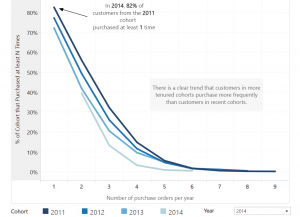

Tableau Server Health Check: Ensure Peak Performance for Your Tableau Environment
What is Tableau Server Health Check?
Tableau Server Health Check comprehensively evaluates the server's performance, configuration, and overall health. It aims to ensure that the server operates optimally, providing a seamless and efficient user experience. Regular health checks can prevent performance degradation, identify potential issues before they become critical, and ensure that the server environment is configured according to best practices.Critical Components of a Tableau Server Health Check • Server Performance • Server Configuration • Resource Utilization • Content and Workbook
When Should You Perform a Tableau Server Health Check?
- Regular Maintenance • Quarterly or Bi-Annually: Conducting a health check every three to six months helps identify potential issues early and maintain optimal performance over time.
- Performance Issues • Slow Load Times: If users experience slow load times for dashboards and reports, it clearly indicates that a health check is needed to diagnose and resolve performance bottlenecks. • Frequent Server Crashes: Regular crashes or downtime are signs of underlying issues that need immediate attention.
- Major Updates or Upgrades • Before and After Upgrades: Perform a health check before upgrading to a new version of Tableau Server to ensure the current environment is stable. Conduct another check after the upgrade to verify everything is working correctly and optimize new features.
- Changes in Usage Patterns • Increase in User Base: A health check ensures the server can handle the new load effectively if the number of users or the volume of data being processed significantly increases significantly.
- User Feedback • Negative User Feedback: If users report consistent issues with dashboard performance, accessibility, or other aspects of Tableau Server, it’s crucial to perform a health check to address these concerns.
- System Configuration Changes • Infrastructure Changes: Changes to the underlying infrastructure, such as hardware upgrades or network configuration changes, should be followed by a health check to ensure everything is configured optimally.
What are the Benefits of Tableau Server Health?
• Improved Performance • Better User Experience • Improving allocation of server resources and license management. • Increasing server stability, reliability, and uptime. • Scalability and Future Planning
How Does Beinex Conduct Tableau Health Check?
Our certified Tableau experts will evaluate your server environment and deliver a comprehensive report to help you identify and mitigate risks. Our process is structured into three main phases: Evaluation, Diagnosis, and Recommendation. Each phase focuses on different aspects of the server's operation to ensure that it meets your organization's needs and performs optimally. • Evaluation - We assess the size and configuration of your server, the performance of all data extracts and dashboards, server security, and more • Diagnose - We parse through server logs and review usage metrics to diagnose the root cause of any issues • Recommend - We present findings, best practices, and recommendations that you can act on immediately
Why Choose Beinex?
• Certified Team of Server Experts At Beinex, we pride ourselves on having a team of certified Tableau experts who bring extensive knowledge and experience to every project. Our specialists have the latest certifications and are continually updated with the newest Tableau features and best practices. • 300+ Tableau Deployments & Upgrades With over 300 successful Tableau deployments and upgrades under our belt, Beinex has a proven track record of delivering exceptional results. Our extensive experience spans various industries and business sizes, allowing us to understand and address the unique challenges different organizations face. • Tableau Premier Partner As a Tableau Premier Partner, Beinex stands among a select group of top-tier Tableau partners worldwide. This prestigious partnership recognizes our commitment to excellence and ability to deliver high-quality Tableau solutions.
How Beinex Can Assist You
Beinex, a premier Tableau partner, provides sustainable analytics solutions to organizations and helps to build superior data visual analytics capabilities internally through our bespoke training programs. Our team of Tableau-certified consultants are real-life Tableau business users passionate about Tableau and delivering a world-class experience. Connect with us: https://www.beinex.com/tableau-beinex/

Supercharge Your Tableau: Benefits of Tableau Accelerators
