How AI Decision-Making is Improving Enterprise Outcomes
Blog
Share 
Agentic AI and Enterprise Intelligence: Leading Trends, Challenges, and Opportunities in 2026 and Beyond
 24 March 2026
  Sumi S
 For a long time, enterprise intelligence relied on dashboards, reports, and predictive systems. These tools helped leaders see what happened and predict what could happen next. However, the users still had to interpret the results and act on them themselves.
Now, that approach is changing with the adoption of Agentic AI. According to Gartner research, 40% of enterprise applications are expected to include task-specific AI agents by 2026, up from less than 5% in 2025.
Understanding Agentic AI and Why It Matters
Before considering its impact, it’s worth asking: what exactly makes AI “agentic”?
In simple terms, Agentic AI refers to AI systems that act independently. They decide what to do and carry it out on their own, with little human support. Thus, Agentic AI serves as an active participant in business operations rather than a passive AI assistant. Unlike traditional AI models that call for constant human prompts, agentic systems operate more like digital coworkers. They observe, plan, act, and learn constantly.
This shift to Agentic AI matters because enterprise environments are becoming too complex for static automation. Agentic AI provides a framework in which systems can respond in real time rather than waiting for human action.
Traditional AI vs Agentic AI: What’s Changing?
| Traditional AI | Agentic AI |
| Supports decisions | Makes and executes decisions |
| Analyzes data and provides insights | Plans and acts independently |
| Requires constant human input | Operates with less human intervention |
| Slower, depends on human response | Acts in real time, proactively |
| Used for reporting, predictions, and dashboards | Used for workflow automation and decision orchestration |
| Limited to predefined models | Continuously learns and adjusts |
| Reactive in nature | Proactive in behaviour |
How AI Agents Change Enterprise Systems
AI agents will monitor systems and automatically trigger actions, leaving little to no room for manual control.
For example:
Finance: Without manual involvement, an AI agent observes transactions in real time and automatically flags suspicious payments, initiates compliance checks, and alerts the risk team.
Operations: AI agents easily detect port congestion or supply interruptions, reroute shipments, recalculate schedules, and automatically update stakeholders.
Customer Experience (CX): An AI agent identifies churn risks, triggers retention offers, schedules follow-ups, and notifies account managers before the customer disengages.
Key Trends and Signals Emerging After 2026
Looking beyond 2026, several trends will shape how enterprises adopt autonomous systems. First, organizations are shifting toward multi-agent ecosystems instead of isolated AI tools. Gartner predicts that by 2027, many implementations will involve collaborative agents working together across applications and data ecosystems.
Second, investment is increasing rapidly. Studies show that nearly 88% of executives plan to increase AI budgets due to agentic capabilities and expect considerable returns.
Third, AI agents are becoming part of daily enterprise workflows. Reports indicate that more than 50% of large companies have already deployed AI agents in some capacity.
Challenges Enterprises Have to Navigate While Adopting Agentic AI
Adopting agentic AI comes with challenges despite its potential:
- Governance: When AI systems begin making decisions on their own, companies need to confirm that those decisions remain transparent, secure, and accountable.
- Cultural: Many organizations are comfortable with automation, but handing over decision-making to AI can feel like a big step. Building confidence in AI-driven operations will take time, testing, and gradual adoption.
A Practical Roadmap for Agentic AI Adoption
- Organizations exploring this shift should approach adoption strategically.
- Start with narrow use cases such as workflow monitoring or anomaly detection.
- Introduce task-specific AI agents within existing enterprise platforms.
- Incorporate an Agentic AI maturity model to guide progress from experimentation to scaled adoption.
- Build governance layers that track agent actions and decision trails.
- Expand toward multi-agent orchestration once systems prove reliable.
Risks and Pitfalls to Avoid in Agentic AI Adoption
- Don’t treat agentic AI as just another automation tool. Poor design or biased data can lead to larger errors.
- Avoid giving AI full control. A balanced approach, with humans guiding strategy while AI manages operations, works best.
Gazing Forward: Enterprise Systems Between 2028 and 2030
By the end of the decade, enterprise systems may look fundamentally different from today. Instead of employees navigating dozens of dashboards, AI agents will coordinate tasks, manage resources, and surface only the most important insights.
Enterprises that treat AgenticAI as just another layer of automation risk will fall behind, and those that embrace it as a strategic shift will certainly lead the way.
Related Articles

Transforming Patient Care: The Role of Artificial Intelligence in Healthcare
AI in Healthcare: Building a Health-Smart Future
AI can leverage high-volume patient datasets to detect patterns, enabling medical experts to personalize treatments, optimize costs, manage medication, improve general health management, enhance healthcare research, help clinicians make informed decisions, etc. Besides automating hospital administrative tasks, AI implements technologies that improve patient care. However, medical institutions must also address challenges like data privacy and the need for human support while implementing AI in healthcare. Accurate diagnosis, early disease detection, tailored treatments, and prediction of outcomes powered by AI help build a health-smart future by delivering swift and efficient care to people around the globe. In short, AI is truly transforming patient care by enhancing outcomes and survival rates while mitigating expenses for service providers.
AI-Powered Diagnosis & Treatment
|
REIMAGINING HEALTHCARE MANAGEMENT WITH AI |
Personalized Medication
|
Virtual Nursing Assistants
|
Real-time Analysis of Patient Data
|
|
Predictive Insights
|
AI Chatbots
|
From AI chatbots to personalizing treatments to robotic surgeries, the prospect for AI to revolutionize patient care is vast and exciting.
AI-Powered Diagnosis & Treatment
Detects patterns in patient histories and laboratory results, resulting in more accurate diagnoses, enabling early disease detection, and developing tailored treatment plans.Personalized Medication
Tailors treatment plans to an individual based on specific attributes like lifestyle elements, medical histories, and genetic profiles, helping identify possible responses to specific medications.Virtual Nursing Assistants
Offers personalized guidance and support, monitoring remotely in real-time and improving patient engagement to ensure quality care.Real-time Analysis of Patient Data
Analyzes high volumes of medical data in real-time, resulting in prompt insights for faster decision-making, earlier detection for timely intervention and enhanced results, and discovery of possible safety issues.Predictive Insights
Identify high-risk patients earlier and deliver personalized recommendations by detecting patterns and anticipating future patient outcomes.AI Chatbots
Provides services like initial symptom evaluation, medication management, and health support by analyzing the patient's responses regarding their inquiry about symptoms, resulting in effective communication and enhanced healthcare delivery.How does AI in Healthcare Transform Patient Care?
Given the rising adoption of AI, the healthcare sector is experiencing a profound transformation. With the advancement of AI technologies in healthcare, hospitals can now redefine the boundaries of patient care, allowing healthcare providers to deliver personalized and effective treatment options. Let's look at how AI is revolutionizing the patient care experience.Supporting Healthcare Professionals through Virtual Assistants
To align with the demand for healthcare services, healthcare experts avail the support of virtual assistants to provide tailored support based on patient queries regarding symptoms, medical advice, medication reminders, monitoring vital signs, and scheduling appointments. Besides, virtual assistants generate routine reports based on patients' health, helping improve patient outcomes and offer a better experience.Accelerating Drug Recovery & Research
AI expedites drug discovery by analyzing genomic data, clinical trial results, and more to predict drug safety and how they interact with the body. It facilitates the faster detection of effective treatments, leading to quicker medical breakthroughs. Moreover, AI can help tailor treatment plans to patients based on their medical histories, genetic profiles, and lifestyle factors, enabling more effective targeted therapies.Facilitating Early Disease Detection & Diagnosis
AI analyzes vast amounts of medical data, including images, lab results, and patient histories, to detect anomalies and patterns that may signify the presence of a disease. This can lead to improved accuracy, earlier intervention, and personalized medicine. It also predicts the likelihood of disease progression or response to treatment, enabling healthcare providers to take proactive measures and improve patient outcomes.Offering Mental Health Support
AI supports mental health by offering personalized and accessible patient care through digital applications. Research has proven the efficacy of AI-powered cognitive-behavioral therapy (CBT) in diagnosing and managing conditions like depression. Such tools offer 24/7 support to track patient progress and improve treatment adherence to ensure effective and empathetic treatment.Improving Patient Education
AI has become an effective tool for patient education, with AI-powered chatbots being used for diet recommendations, smoking cessation, and cognitive-behavioral therapy. Educating patients about their diagnoses, treatments, and preventive care improves adherence and health outcomes. AI can personalize and simplify medical information, empowering patients to take control of their health. The future of AI in healthcare holds enormous prospects for augmenting diagnostics, treatment, and patient management. The capabilities of advanced AI tools extend to predicting disease progression and improving surgical assistance through remote collaboration. Though challenges exist in integrating AI into clinical practice, the power of AI to enhance outcomes, efficiency, and patient experiences is undeniable. Beinex collaborated with Sultan Qaboos University Hospital (SQUH), University Medical City, and Novartis to combat Atherosclerotic Cardiovascular Disease (ASCVD) using AI and analytics, reimagining cardiovascular health. Beinex adopted a data-driven methodology to manage ASCVD risks, facilitating proactive disease identification and intervention. By employing NLP, BI, Data Engineering, and Data Science and leveraging innovative data analytics and real-time insights, we helped revolutionize cardiovascular disease risk management, improve prevention strategies, and offer personalized patient care in the GCC region. Explore the success story and get in-depth insights into how we redefined healthcare and established new standards with life-saving intelligence. Download the case study titled 'Revolutionizing Healthcare in 2025: How AI is Transforming Hospitals of the Future' to discover how AI disrupts healthcare and builds a health-smart future. Click here: https://beinex.com/artificial-intelligence-in-healthcare-case-study-download
How to Automate and Improve Your Data Governance Processes for Better Results
What is Data Governance?
Data governance is the process of managing the availability, usability, integrity, and security of data in an enterprise system. It establishes policies, procedures, and standards for how data is collected, stored, used, and shared. It's about ensuring the right data is available to the right people at the right time, in a secure and compliant manner.Why Automate Data Governance?
Automating data governance processes brings several benefits, including: • Improved Data Quality: Automation can identify and correct data errors, inconsistencies, and duplicates, leading to improved data quality and more reliable insights. • Increased Efficiency: Automation streamlines data governance processes, reducing manual effort, freeing up valuable time, and accelerating decision-making. • Reduced Costs: Automation helps reduce the costs associated with manual data governance processes, minimizing errors and the need for rework. • Enhanced Compliance: Automation helps ensure compliance with data privacy regulations, such as GDPR, CCPA, and HIPAA, minimizing risk and potential penalties. • Better Decision-Making: By improving data quality and accessibility, automation enables better, more data-driven decision-making. • Scalability: Manual processes struggle to keep up with growing data volumes. Automation allows your governance framework to scale effectively.How to Automate Data Governance Processes?
Several approaches exist for automating data governance, and often a combination is most effective: • Data Discovery and Classification: Automated tools, like data catalogs, can help discover and classify data based on its content, sensitivity, and other criteria. This is the foundation for understanding your data landscape. • Data Quality Monitoring: Automated tools can continuously monitor data quality, identify potential issues, and trigger alerts for remediation. • Data Lineage Tracking: Automated tools can track the origin and movement of data, providing a clear audit trail and helping to ensure data quality and compliance. This is crucial for understanding how data is transformed and used. • Data Access Control: Automated tools can enforce data access policies, ensuring that only authorized users can access sensitive data, protecting privacy and security. • Data Masking and Anonymization: Automated tools can mask or anonymize sensitive data to protect privacy while still allowing for data analysis and testing. • Metadata Management: Automated tools can capture and manage metadata, providing context and meaning to data assets, making them easier to find and understand.The Role of Data Catalogs like Alation
Data catalogs play a critical role in automating data governance. They act as a central inventory of all data assets, providing a single source of truth about your data. Modern data catalogs like Alation offer: • Automated Data Discovery and Profiling: Automatically scan and profile data sources to identify and catalog data assets. • Data Lineage: Visually map the journey of data from its origin to its consumption, showing transformations and dependencies. • Data Quality Rules and Monitoring: Define and enforce data quality rules and automatically monitor data for compliance. • Collaboration and Knowledge Sharing: Enable data users to collaborate, share knowledge about data assets, and contribute to data governance efforts. • Search and Discovery: Empower users to easily find the data they need, along with relevant metadata and context.Best Practices for Automating Data Governance
• Develop a Data Governance Strategy: Before automating, define clear goals, objectives, and metrics for your data governance program. • Identify Key Stakeholders: Engage business users, IT, compliance, and other stakeholders to ensure alignment and buy-in. • Choose the Right Tools: Select tools that meet your specific needs and integrate with your existing data infrastructure. Consider a platform approach that can address multiple aspects of governance. • Implement a Phased Approach: Start with a pilot project to demonstrate value and refine your approach before scaling to the entire organization. • Focus on Data Literacy: Train your employees on data governance policies, procedures, and the use of automated tools. • Monitor and Evaluate: Continuously monitor the effectiveness of your automated data governance processes and make adjustments as needed.How to Embrace Better Data Governance?
Data governance doesn’t have to be a bottleneck. Organizations can reduce manual workloads, improve compliance, and drive innovation by adopting automation and leveraging tools like data catalogs. Ready to transform your data governance strategy? Get a Free Assessment Now!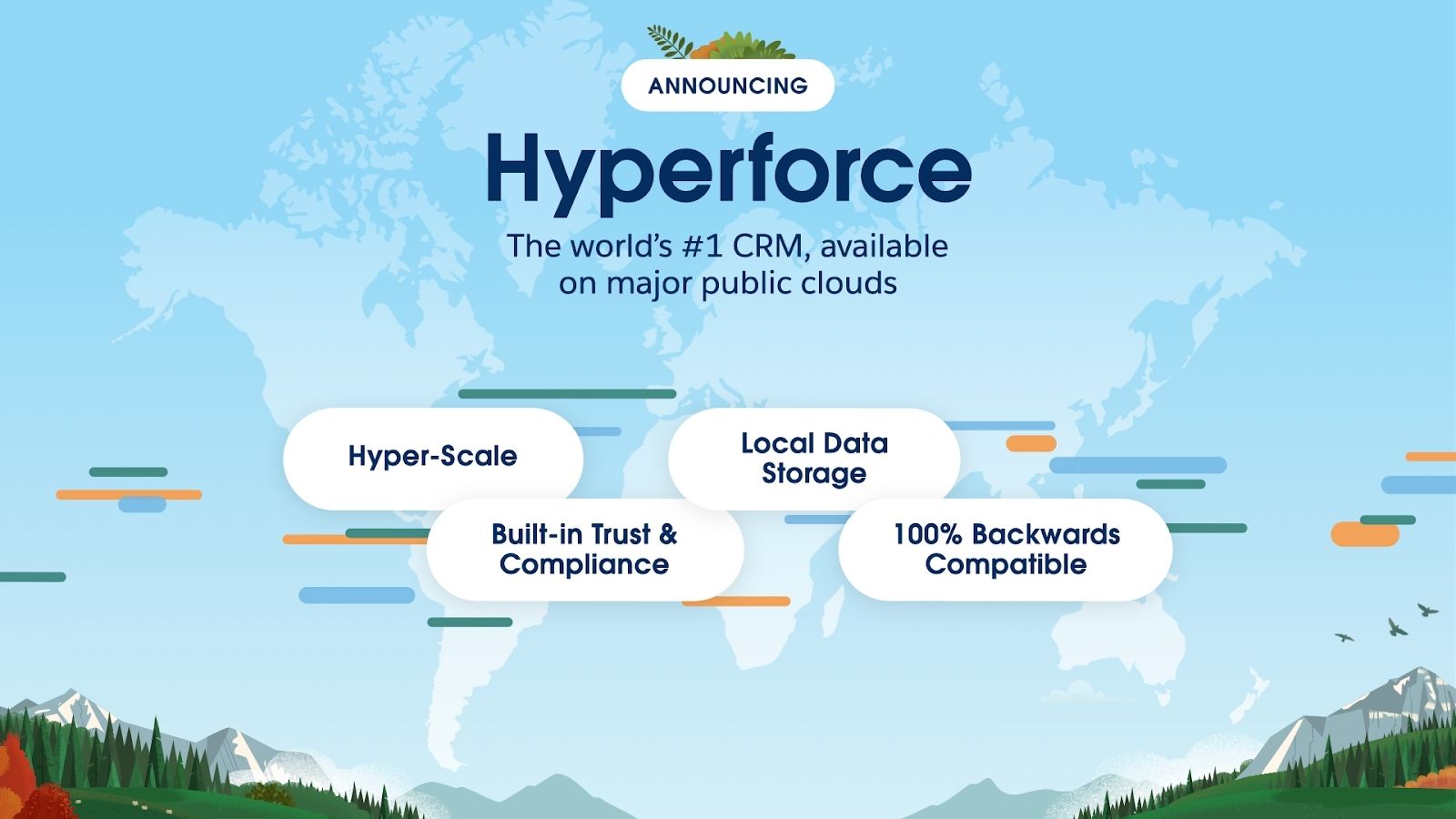
Let the force be with you: Data residency and Hyperforce
After two very long masked years, the world has slowly started to breathe, again!
With lockdowns on and work taking place from the very room you had slept a couple of hours back -- the human universe has been phenomenally re-engineered by a microscopic organism.
Your geographical location has been made immaterial in the digital world. But the same cannot be said about data, and this may sound paradoxical and ironic. For instance, an MNC’s location of the data now matters more than ever before. With a major chunk of data of many entities, especially government ones, on the public cloud, the airing of concerns related to data security, data sovereignty, data localisation/ data residency is growing louder in decibel terms.
This is where Hyperforce comes in.
Hyperforce is how Salesforce has reimagined its platform. It is now horizontally scalable, and through tie-ups with major cloud providers, the scalability has grown by leaps and bounds. Imagine you are a B2B company with 10,000 customers or a B2C company with tens of millions of customers: Hyperforce lets you scale up your capabilities and provides you with a single source of truth. But what if you are a multi-geographic business conglomerate in a heavily regulated industry like finance or health? How will you comply with data sovereignty, data localisation/ data residency requirements? Hyperforce’s collaboration with public cloud companies ensures that the data can be located at any specified place in the world, adhering to the local rules of data governance and storage locations. “Choose the location where your data will be stored to comply with regulations specific to your company, region, or industry — even in highly regulated industries like the public sector,” the store-data-locally-keep-it-compliant-globally mantra tells. Other features Hyperscalable: Hyperforce also enables you to scale the infrastructure as per the needs of the business by letting you access extra computing capacity as and when required. You can employ resources in the public cloud rather quickly. Yes, it is your decision whether to scale up or not, and the elasticity can be dictated by the nature of your requirements. Hypersecure: Also, trust is built-in, which puts security at the forefront of the architecture. Data privacy and security are sacrosanct. This leaves you with enough room to focus on innovation. Hypercompatible: And most important of all, backward compatibility ensures that all the extant Salesforce apps, customisations and integrations will continue to work on Hyperforce regardless of cloud. In the physical world, your geographical location assumes importance. But in the digital world, it is the location of the data that matters. Hyperforce, by virtue of its collaboration with major players in the cloud domain, ensures data residency requirements are adhered to when and where needed. The architecture is hyper-scalable, secure, and comes with backward compatibility. Hyperforce is soon to be launched in the UAE, and Beinex, a Salesforce partner, is all set to carry out implementation and consulting of and for Hyperforce.
Snowflake's Evolution: A Look at the New Features in 2024
1. Snowpark Container Services:
This innovative feature allows you to deploy and manage containers directly within Snowflake. Imagine leveraging secure and scalable infrastructure, similar to Kubernetes, without leaving the Snowflake environment. Use containers to build and run data products like large language models and full-stack applications. You can even utilize containers from the Snowflake marketplace or create custom ones for sharing.
Getting started is simple. Create a Docker image with your code and dependencies, push it to a Snowflake registry, and then create a service, job, or function using the Snowpark API. Snowflake handles the rest, including provisioning, scaling, and monitoring your containers.
2. Snowpark Model Registry:
Data scientists and ML engineers require a secure and efficient way to manage and deploy machine learning models. Snowpark Model Registry, currently in public preview, addresses this need by providing a native solution within Snowflake. This integrated registry allows you to register, manage, and use models and their metadata directly in the platform.
The benefits of the Snowpark Model Registry are numerous:
3. Streamlit in Snowflake for Azure:
Snowflake's commitment to platform flexibility is evident in its expansion to Azure. The general availability of Streamlit in Snowflake for Azure empowers Python developers to create data applications directly within the Snowflake environment. Streamlit simplifies the creation of interactive dashboards and data visualizations, bridging the gap between data and actionable insights for business teams.Here's how Streamlit in Snowflake for Azure benefits users:
4. Security Enhancements in Snowflake Horizon:
Security is paramount for any data platform. Snowflake Horizon takes data security to the next level with a range of enhancements:
These security enhancements within Snowflake Horizon empower organizations to meet stringent compliance requirements and safeguard their valuable data assets.
5. Snowflake Unistore:
Snowflake Unistore is a game-changer for working with both transactional and analytical data within a single platform, often referred to as Hybrid Transactional/Analytical Processing (HTAP). This feature introduces the 'hybrid' table type, supporting fast single-row operations.
Hybrid tables utilize a new row-oriented store within Snowflake, enabling functionalities typically associated with transactional data stores:
Snowflake's global services layer and query engine seamlessly manage the underlying row and column stores, allowing you to join hybrid and standard tables natively.
6. Snowflake Iceberg:
The Apache Iceberg format acts as a metadata layer for data files stored in open formats like Parquet and ORC. It enables querying this data using SQL, regardless of the specific query engine (Spark, Hive, Impala).
'Snowflake Iceberg' leverages this open format, allowing you to directly query data files stored in cloud storage services like S3 buckets. This eliminates the need to move or copy data into Snowflake while maintaining interoperability for users already working with that data location.
Snowflake Iceberg offers significant advantages over the existing external table type:
7. Document AI:
Typically, data systems struggle with unstructured data formats like PDFs. Snowflake's answer to this challenge is Document AI, a tool currently in private preview. It allows you to process any document and answer questions using natural language without requiring machine learning expertise.
Document AI draws power from Snowflake's first-party large language model (LLM) built on Applica's generative AI technology. This, combined with Snowflake's support for unstructured data (announced in June 2023), empowers you to store, query, and analyze all data types within the platform.
Document AI represents just one facet of Snowflake's vision for generative AI and LLMs, a dominant trend in 2023 that is poised to continue its dominance in 2024.
Looking Ahead
Snowflake started strongly in 2024 with exciting releases like Snowpark Model Registry, Streamlit in Snowflake for Azure, and security enhancements in Snowflake Horizon. These anticipated features position Snowflake as a frontrunner in the data cloud landscape, offering a comprehensive data management, analytics, and application development platform.
Beinex + Snowflake Partnership
Beinex is a Snowflake Services Partner Premier Tier, and the partnership reaffirms Beinex’s commitment to delivering exceptional data solutions and positions the company at the forefront of industry advancements. Harnessing the true potential of the data, partnership drives innovation and success in the digital era. Belonging to Snowflake Services Partner Premier Tier, Beinex leverages Snowflake’s advanced capabilities and seamlessly integrates them into its comprehensive data solutions.

Mastering AWS Key Management Service (KMS) for Secure Data Management: Protect, Encrypt, Comply
What is AWS KMS?
AWS KMS is a managed service that enables you to create, control, and use encryption keys to protect data across your applications. By leveraging AWS KMS, businesses can confidently manage data encryption with a variety of flexible tools and practices. Here’s a breakdown of the key components and functionalities of AWS KMS.
What are KMS Keys?
KMS keys are central to AWS KMS’s operations. They are cryptographic keys used for data encryption and decryption. Each KMS key has its own unique characteristics:
• Symmetric KMS Keys: These are 256-bit Advanced Encryption Standard (AES) keys, used for both encrypting and decrypting data and cannot be exported from AWS KMS.
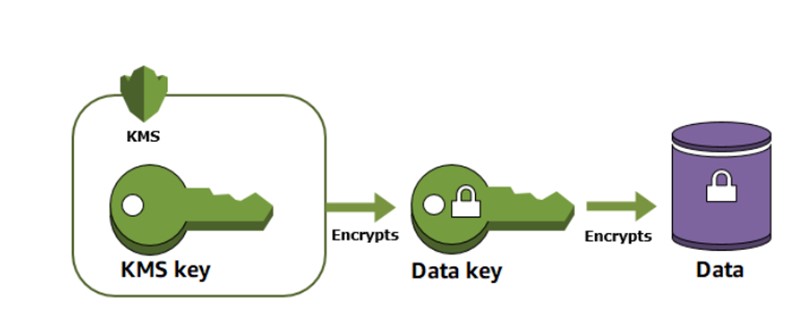
• Data Keys: Data keys can encrypt larger volumes of data. AWS KMS can generate and encrypt these keys, though it doesn’t store or manage them directly.
 Source: https://docs.aws.amazon.com/kms/latest/developerguide/overview.html
Why Use AWS KMS?
When you encrypt data, you need to protect your encryption key. If you encrypt your key, you need to protect its encryption key. Eventually, you must protect the highest-level encryption key (known as a root key) in the hierarchy that protects your data. That's where AWS KMS comes in. AWS KMS protects your root keys. KMS keys are created, managed, used, and deleted entirely within AWS KMS. They never leave the service unencrypted. Additionally, you can create and manage key policies in AWS KMS, ensuring that only trusted users have access to KMS keys.
Key Features of AWS KMS:
• Key Creation and Management: You can easily create and manage various types of cryptographic keys, including symmetric keys and asymmetric key pairs. • Key Rotation: KMS supports automatic key rotation, which helps to enhance security by minimizing the lifetime of keys. • Key Usage Restrictions: You can define specific usage restrictions for your keys, such as limiting them to certain AWS services or requiring additional authentication factors. • Centralized Key Management: KMS allows you to manage all of your cryptographic keys from a single location, simplifying key management tasks. • Integration with AWS Services: KMS integrates seamlessly with many AWS services, such as Amazon S3, Amazon RDS, and Amazon EBS, making it easy to encrypt data at rest. • Compliance and Auditing: KMS helps you meet compliance requirements by providing features such as key audit logs and access controls. • HSM-Based Key Protection: KMS offers HSM-based key protection, which provides an additional layer of security for sensitive data.Key Benefits of Using AWS KMS:
• Enhanced Security: KMS helps to protect your data by providing strong encryption and key management capabilities. • Simplified Key Management: KMS streamlines the process of creating, managing, and controlling access to cryptographic keys. • Improved Compliance: KMS can help you meet compliance requirements by providing features such as key audit logs and access controls. • Cost-Effective: KMS is a cost-effective solution for managing cryptographic keys. • Scalability: KMS can scale to meet the needs of your growing business.
Types of KMS Keys
AWS KMS provides three types of KMS keys to suit different security needs: • Customer Managed Keys: You create and control these keys, customizing policies and permissions. This control extends to managing key rotations, setting up aliases, and even scheduling deletions. • AWS Managed Keys: These are managed by AWS on behalf of a specific AWS service, though they cannot be directly managed or used outside that service. • AWS Owned Keys: AWS owns and manages these keys across multiple accounts, making them inaccessible for direct management or auditing by customers.
How Does AWS KMS Encrypt Data?
AWS KMS employs several methods for data encryption:Data Keys and Envelope Encryption
In envelope encryption, data is first encrypted with a data key, which is then encrypted by a KMS key known as the root key. This two-layer encryption ensures an additional level of security.Encryption Context
KMS operations accept an optional encryption context, a set of key-value pairs providing additional information about the data being encrypted. This helps add context to the encrypted data, making it easier to identify and validate in future processes.Managing AWS KMS Keys and Access
Managing access to KMS keys is critical for security, especially when multiple teams or departments are involved. Here are some key components for effective key management: • Key Policies and Grants: Permissions to access KMS keys are managed through key policies. Alternatively, temporary access can be granted using grants, which can be applied, utilized, and revoked as needed without affecting long-term permissions. • Grant Tokens: To mitigate delays in grant permissions due to eventual consistency, grant tokens can be used for faster access rights activation.
Custom Key Stores and VPC Integration
For highly sensitive data, AWS KMS allows integration with AWS CloudHSM (Hardware Security Module) clusters through custom key stores. A custom key store provides a dedicated, secure storage location for cryptographic keys. Additionally, KMS allows you to connect directly through a private VPC endpoint, ensuring that all communication between your Virtual Private Cloud (VPC) and AWS KMS remains within the AWS network, bypassing the public internet for added security.
Rotating, Importing, and Deleting KMS Keys
Managing the lifecycle of encryption keys is a vital aspect of data security. AWS KMS provides several features to handle key management effectively: • Key Rotation: AWS KMS can automatically rotate customer-managed KMS keys annually, maintaining historical key material for decryption purposes. • Importing Keys: Businesses can import their own key material to AWS KMS, with options to set expiration dates or delete key material on demand. • Deleting Keys: When a KMS key is deleted, all associated metadata and key material are removed, making it impossible to decrypt any data previously encrypted with that key. AWS KMS also offers the ability to disable keys temporarily if access restrictions are needed.
Monitoring Key Usage with CloudWatch
To ensure robust monitoring, AWS KMS integrates with CloudWatch to track key usage and send notifications when certain actions are taken. For instance, you can create a CloudWatch alarm that triggers an alert if someone tries to use a key that’s pending deletion. AWS KMS is an indispensable tool for organizations needing to secure sensitive data efficiently. By understanding KMS keys, managing access, and leveraging encryption best practices, companies can create a reliable data protection framework that scales with their needs.
AWS + Beinex Partnership: How Can We Help You
Beinex is proud to be an AWS consulting partner dedicated to empowering our customers with AWS-managed services to host their BI solutions and beyond in the cloud. Our cloud migration experts deliver top-tier stability and reliability by aligning with your business strategy and collaborating closely to implement AWS infrastructure as a service. Experience AWS for free: https://beinex.com/beinex-amazon-web-services/